Diving the Great Barrier Reef, Australia: A Beginner's Guide
The Great Barrier Reef stretches over 2,300 km along Queensland's coast. It's one of the world's most famous dive destinations and a great place to learn.
On this page
- Best season
- Jun–Nov (dry season, best visibility)
- Water temp
- 23 °C (Jul) to 29 °C (Jan–Feb)
- Visibility
- 10–30 m (outer reefs clearer)
- Difficulty
- Beginners
- Excellent
- Open Water
- ~AUD 800–1,500
The Great Barrier Reef (GBR) is the world's largest coral reef system: nearly 3,000 individual reefs and around 900 islands, protected as a marine park and a UNESCO World Heritage Site. Australian dive operators are well regulated and professional, which makes it a safe and comfortable place for new divers.
The GBR has suffered several mass coral bleaching events linked to marine heatwaves, as well as cyclones and crown-of-thorns starfish outbreaks. Some areas are damaged while others are in good condition or recovering. Reputable operators choose the healthiest sites and contribute to monitoring. Visiting responsibly supports reef conservation funding through the Environmental Management Charge.
Where to base yourself
Cairns
The main gateway, with dozens of day-trip boats, courses and liveaboards. Day boats travel 1–2 hours to outer reefs such as Norman, Saxon, Hastings, Michaelmas, Flynn and Moore reefs. Many operators run training for Open Water in combination with pool sessions in town.
Port Douglas
About an hour north of Cairns, with a more relaxed vibe and access to the Agincourt Reefs and Low Isles. Day trips reach ribbon-shaped outer reefs with good visibility.
The Whitsundays and Airlie Beach
Beautiful islands and fringing reefs, great for sailing and snorkeling combined with diving. Visibility is generally lower than on the outer reefs.
Southern GBR: Lady Elliot and Heron islands
Island resorts right on the reef with excellent shore diving, manta rays (Lady Elliot), turtles (nesting season November–March), and humpback whales passing in winter (roughly June–October).
Day trips vs liveaboards
| Day trip | Liveaboard | |
|---|---|---|
| Dives | 2–3 per day | 3–5 per day |
| Sites | Outer reefs within ~1–2 hours | Further reefs: Ribbon Reefs, Cod Hole, Osprey Reef (Coral Sea) |
| Best for | Beginners, mixed groups with snorkelers | Keen divers wanting fewer crowds |
| Price | ~AUD 250–450 incl. dives, gear, lunch | ~AUD 800–1,000+ for 2–3 days; AUD 2,500–4,500+ for 4–7 days |
The Ribbon Reefs and Cod Hole (friendly giant potato cod) are highlights, as is Osprey Reef in the Coral Sea (sharks, walls, for experienced divers). Many liveaboards offer dwarf minke whale swims in June–July.
What you'll see
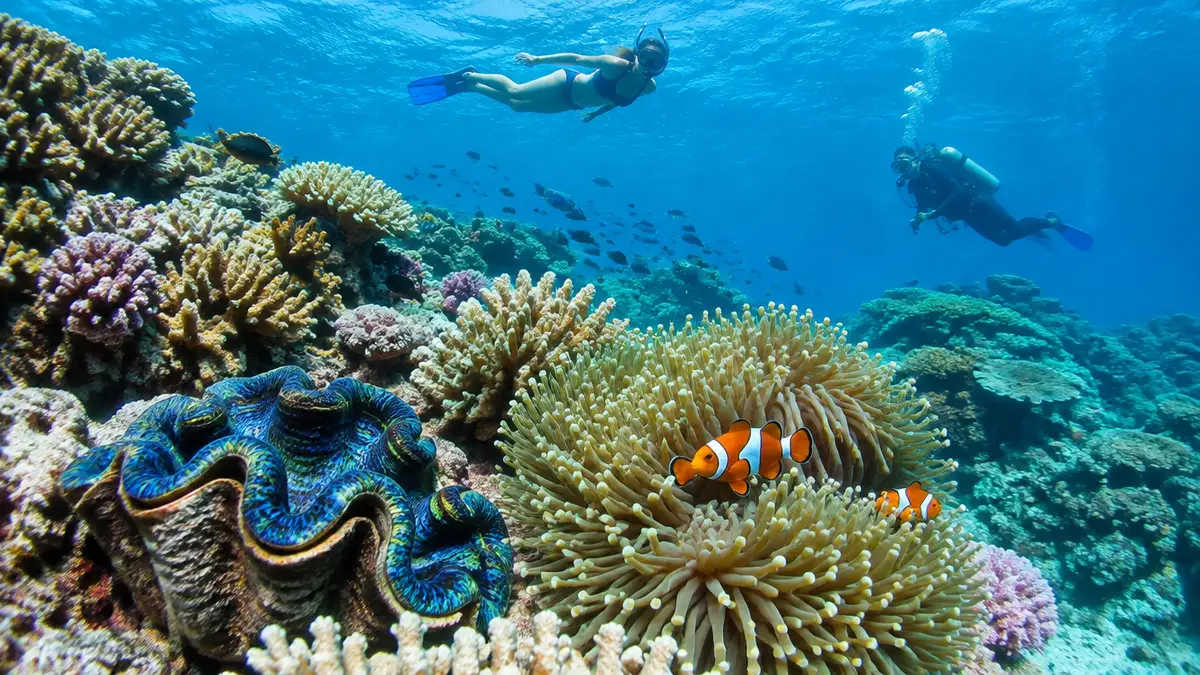
- Hundreds of hard and soft coral species; giant clams
- Clownfish, Maori wrasse, parrotfish, groupers, giant trevally
- Green, hawksbill and loggerhead turtles
- Whitetip and blacktip reef sharks, manta rays, eagle rays
- Humpback and minke whales (seasonal)
When to go
| Months | Conditions |
|---|---|
| Jun–Aug | Dry, mild air; water 23–25 °C; best visibility; minke whales (Jun–Jul); 5 mm suit |
| Sep–Nov | Warming water, calm seas, often excellent. Coral spawning (usually Nov–Dec, after full moons) |
| Dec–Mar | Wet season, hottest water (28–29 °C), possible cyclones; stinger season |
| Apr–May | Transition; good diving |
Stinger season
From roughly November to May, dangerous jellyfish (box jellyfish near the coast, and Irukandji) can be present in tropical Queensland waters. They're far less common on the outer reef, but operators provide full-body stinger suits (lycra) and keep vinegar on board. Always wear the suit you're given. See dangerous marine life.
Practical tips
- Australia is strict about medicals: some operators require a diving medical from a doctor for courses, especially if you answer "yes" on the questionnaire. Check before booking
- Book liveaboards well in advance for June–November
- Bring seasickness remedies. The outer reef boat trip can be rough
- Most visitors need an Australian visa or ETA
Choosing a day-trip operator
- Outer reef vs inner reef: outer reefs usually have clearer water and healthier coral
- Small boats (under 50 guests) often visit quieter sites; large pontoon boats suit families with non-divers
- Guided vs unguided dives: new divers should choose guided dives
- Eco-certification: look for operators with advanced ecotourism certification
Sample week from Cairns
- Day 1: arrive and rest.
- Days 2–4: Open Water course with pool sessions and outer reef training dives (or two day trips if certified).
- Days 5–6: a 2-night liveaboard to the outer reefs for night dives and more sites.
- Day 7: no-dive day: Daintree Rainforest or Kuranda.
Frequently asked questions
Is the Great Barrier Reef good for beginners?
Yes. Many outer reef sites are calm and shallow, and operators are highly professional. Try-dives and full courses are widely available from Cairns and Port Douglas.
When is the best time to dive the Great Barrier Reef?
June to November generally offers the best visibility and calmer conditions, outside the main stinger and cyclone season.
Keep reading
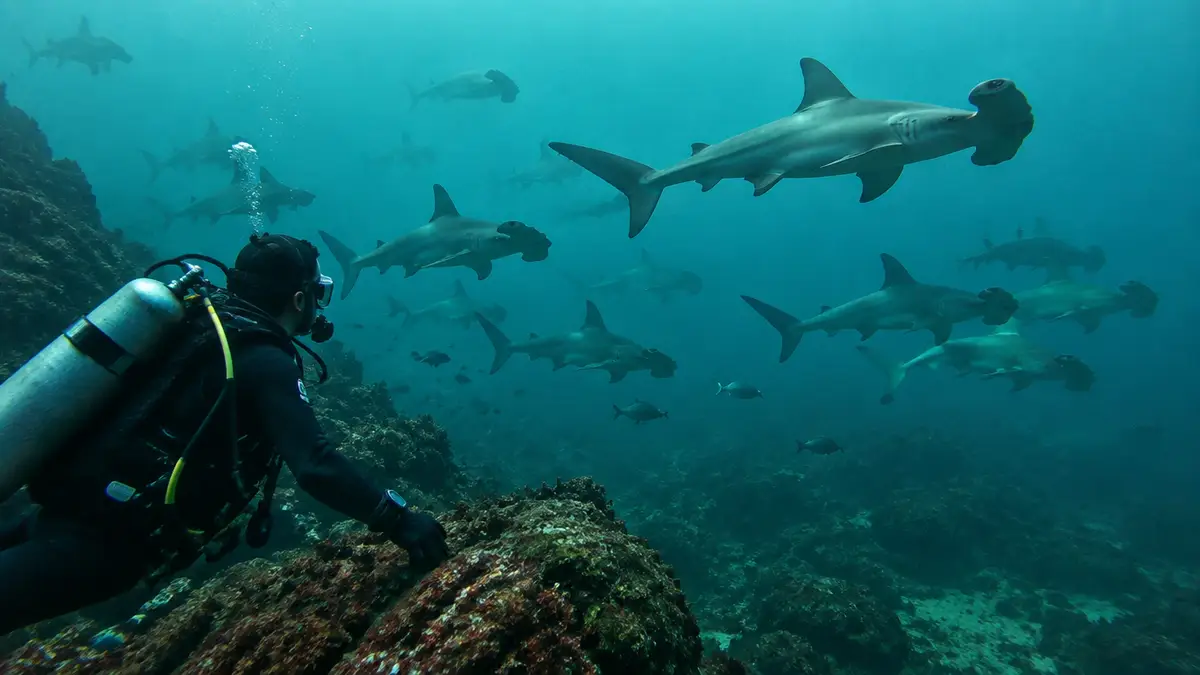
Diving the Galápagos Islands: Hammerheads, Whale Sharks and Why You Need Experience
Schools of hammerheads, whale sharks and marine iguanas. A bucket-list trip for experienced divers.
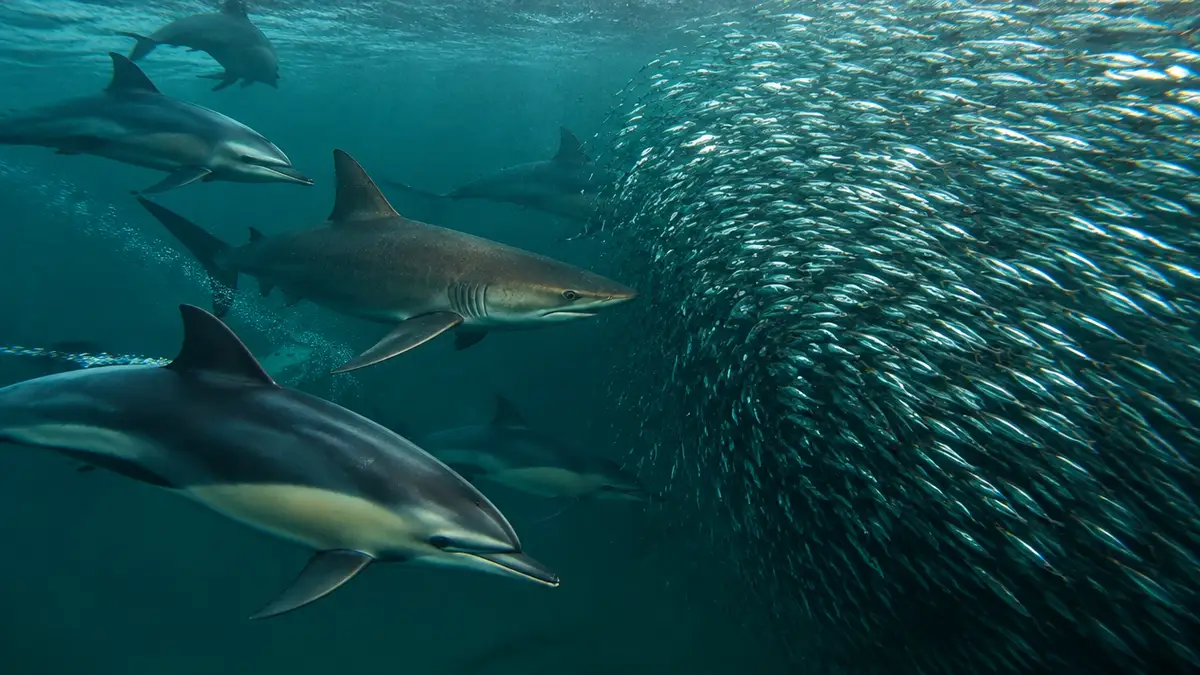
Diving in South Africa: The Sardine Run, Shark Dives and Aliwal Shoal
The Sardine Run and world-famous shark dives for experienced divers; Sodwana Bay for beginners.
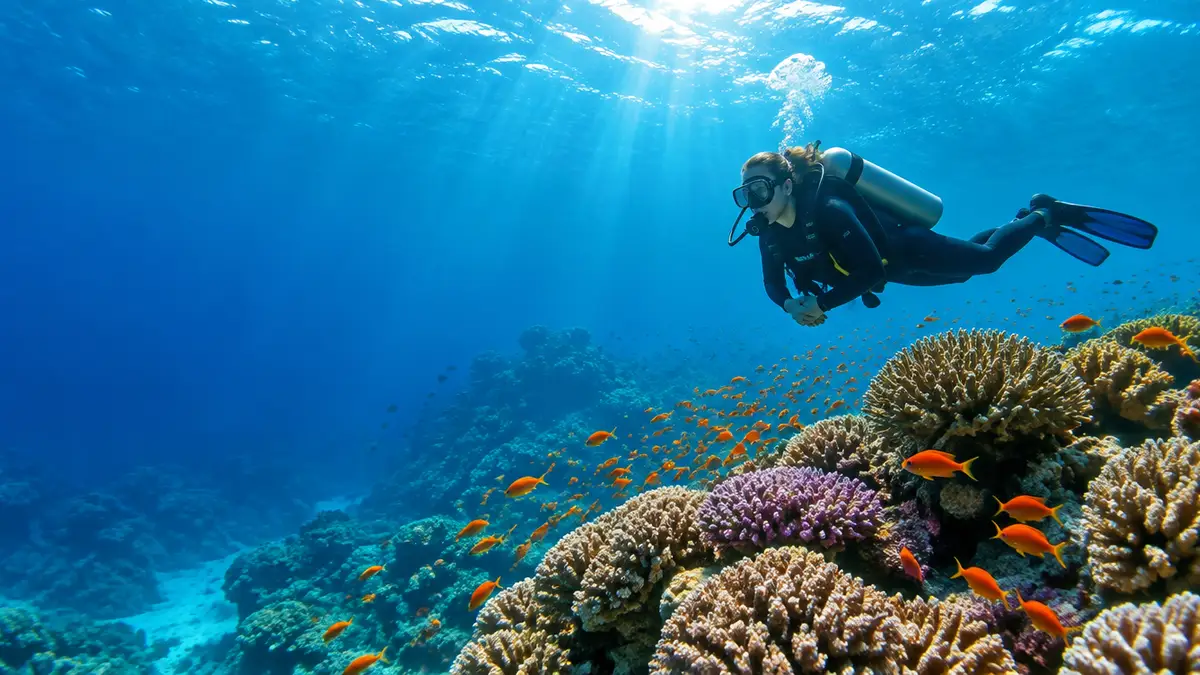
The 10 Best Places in the World for Your First Dive
Warm, calm, clear and affordable: our top 10 places to take your first breath underwater.