Diving in the Caribbean: Bonaire, Belize's Great Blue Hole and the Bahamas
Warm water, relaxed island life and reefs that are easy to reach. The Caribbean has something for every diver, and Bonaire may be the most beginner-friendly dive island on Earth.
On this page
- Best season
- Dec–May (outside hurricane season)
- Water temp
- 25–29 °C
- Visibility
- 20–40 m
- Difficulty
- to
- Beginners
- Bonaire excellent
- Open Water
- ~US$450–650
Bonaire: the shore-diving capital
Bonaire, a Dutch Caribbean island off Venezuela, is legendary among divers. Its entire coastline, down to 60 m, is part of the Bonaire National Marine Park, protected since 1979. The island's licence plates even say "Diver's Paradise".
- Shore diving: more than 80 marked sites along the coast. Rent a pickup truck, load tanks, stop at a yellow painted stone, and walk in
- Calm and sheltered: the western (leeward) coast is protected from trade winds
- Outside the main hurricane belt: year-round diving with low hurricane risk
- Great for beginners: gentle slopes, shallow reefs from about 5 m, little current
- Well regulated: a nature fee and orientation dive are required
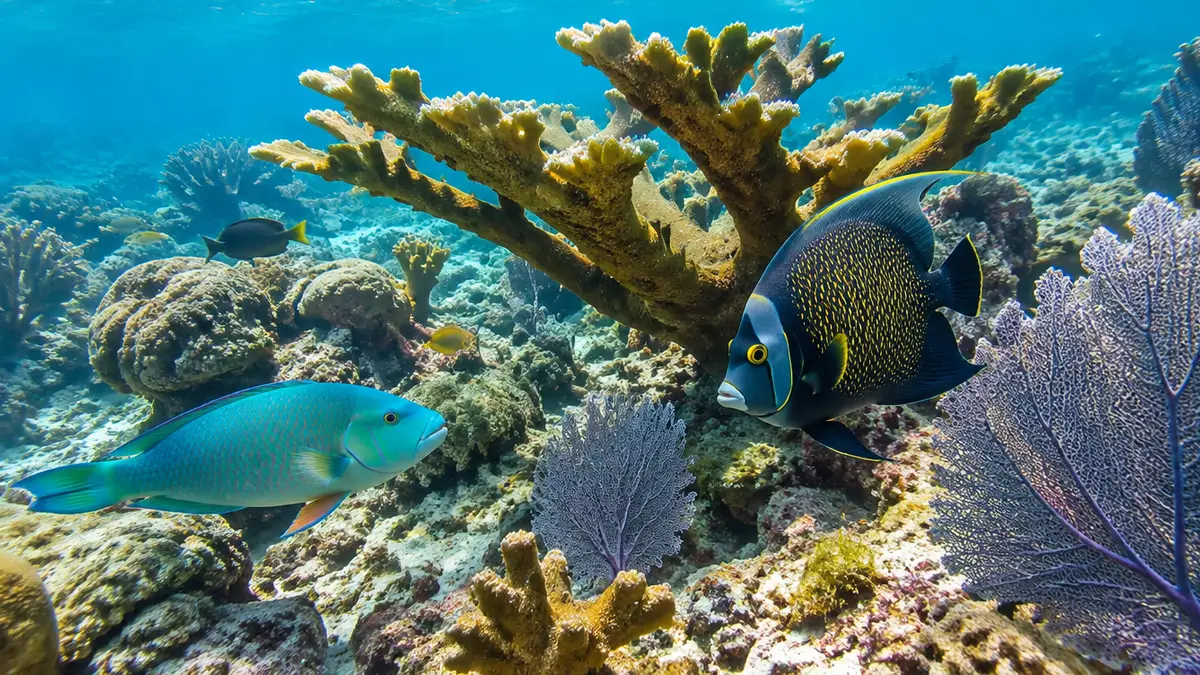
Highlights: the Hilma Hooker wreck (about 18–30 m), Salt Pier (pillars covered in life), 1000 Steps, Klein Bonaire's reefs, tarpon, frogfish, seahorses, turtles, and huge parrotfish. Unlimited shore-diving packages are good value.
Note that stony coral tissue loss disease has affected some Caribbean corals, including on Bonaire, in recent years. Follow local decontamination and conservation guidance.
Belize
Belize has the largest section of the Mesoamerican Barrier Reef, plus three of the Caribbean's four coral atolls.
- The Great Blue Hole: a near-perfect circular sinkhole about 300 m across and around 125 m deep, famous from aerial photos. The standard dive goes to around 40 m to see stalactites and, often, Caribbean reef sharks. It's for Advanced/Deep-certified divers, and many divers find the reef dives on the same trip (Lighthouse Reef, Half Moon Caye) more colourful.
- Hol Chan Marine Reserve and Shark Ray Alley: easy, shallow snorkeling and diving near Ambergris Caye and Caye Caulker with nurse sharks, rays and turtles.
- Turneffe and Glover's Reef atolls: pristine walls and reefs.
- Whale sharks at Gladden Spit: seasonal (often around spring full moons), with regulations.
Beginners can do courses on Ambergris Caye or Caye Caulker. Best time is roughly April–June for calm seas.
The Bahamas
Hundreds of islands just off Florida, famous for shark diving and blue holes.
- Shark dives: Caribbean reef shark dives in Nassau; tiger sharks at Tiger Beach (liveaboard, experienced); hammerheads at Bimini (winter, experienced).
- Wrecks and film sites around Nassau and New Providence.
- Blue holes: Dean's Blue Hole on Long Island is a famous freediving venue.
- Easy reef diving in the Exumas and Abacos, plus swimming pigs (a tourist attraction, not a dive).
Other Caribbean favourites
- Curaçao: Bonaire's neighbour, also great for shore diving.
- Roatán and Utila (Honduras): budget-friendly, great for courses; Utila has whale sharks at times.
- Cayman Islands: walls, Stingray City, the USS Kittiwake wreck.
- Turks & Caicos, Dominica, St Lucia, St Vincent and many more.
When to go
| Months | Conditions |
|---|---|
| Dec–Apr | Dry season, peak tourism; water 25–27 °C |
| May–Jul | Warming water, fewer crowds, good value |
| Aug–Nov | Warmest water (28–29 °C); hurricane season (June–November, peak Aug–Oct), except for places south of the belt like Bonaire, Curaçao and Aruba |
Typical prices (2026)
- Open Water course: about US$450–650 (Honduras cheaper, from about US$350)
- Bonaire unlimited shore-diving tanks: about US$250–350 per week
- Boat dive: about US$60–100
- Great Blue Hole day trip (3 dives): about US$300–400+ including park fees
- Marine park fees: e.g. Bonaire's annual nature fee for divers
Top Caribbean sites at a glance
| Site | Island | Type | Level |
|---|---|---|---|
| Salt Pier | Bonaire | Shore dive, pillars | |
| Hilma Hooker | Bonaire | Wreck, 18–30 m | |
| Hol Chan / Shark Ray Alley | Belize | Shallow reserve | |
| Great Blue Hole | Belize | Sinkhole to ~40 m | |
| Stingray City | Grand Cayman | Sandbar with rays | |
| Tiger Beach | Bahamas | Shark dives |
Getting there
- Bonaire: direct flights from Amsterdam and several US cities, or via Curaçao.
- Belize: fly into Belize City, then a short hop or water taxi to Ambergris Caye or Caye Caulker.
- Bahamas: many direct flights to Nassau from North America and London.
Frequently asked questions
Is Bonaire good for beginner divers?
Yes, it's one of the best places in the world for new divers: calm, clear water, easy shore entries, shallow reefs and a well-protected marine park.
Can beginners dive the Great Blue Hole?
The standard Blue Hole dive goes to around 40 m, so it's for Advanced or Deep-certified divers. Beginners can snorkel or dive easier reefs in Belize instead.
Keep reading
Diving the Mediterranean: Croatia, Malta and Cyprus (Zenobia Wreck)
Clear summer water, historic wrecks and dramatic rock formations, close to home for Europeans.
Diving the Great Barrier Reef, Australia: A Beginner's Guide
The world's largest reef system, with excellent day trips and training from Cairns and Port Douglas.
Diving the Galápagos Islands: Hammerheads, Whale Sharks and Why You Need Experience
Schools of hammerheads, whale sharks and marine iguanas. A bucket-list trip for experienced divers.