Fitness for Scuba Diving: How Fit Do You Need to Be (and How to Prepare)
Scuba is usually gentle exercise, until it isn't. A current, a long surface swim or a heavy boat ladder can demand real effort. A little preparation makes diving safer and more enjoyable.
On this page
Most dives are relaxed: you float, fin gently and look at fish. That's part of the appeal. But diving occasionally asks for bursts of effort, such as swimming against a current back to the boat, helping a tired buddy, climbing a ladder with 20 kg of gear, or walking over a rocky beach. Divers who are reasonably fit handle these moments with a margin, and that margin is safety.
Why fitness matters for divers
- Air consumption: fitter divers breathe more efficiently and use less air.
- Heart health: sudden cardiac events are one of the leading causes of death among older divers. Many had undiagnosed heart disease. Exertion, cold water and stress all strain the heart.
- Handling emergencies: helping a buddy or swimming out of a current needs reserve capacity.
- Comfort: good fitness reduces fatigue, cramps and back ache from lifting gear.
If you're over about 45, have risk factors (smoking, high blood pressure, high cholesterol, diabetes, family history of heart disease) or get breathless easily, see a doctor before diving. An exercise test may be recommended. See medical requirements.
A simple benchmark
Diving medicine experts often suggest that divers should be able to sustain moderate exercise, equivalent to around 6 METs, the level of a brisk uphill walk, jogging slowly or swimming steadily. A practical self-check: can you swim 200–300 m without stopping, and climb three or four flights of stairs briskly without being badly out of breath? If yes, you're in reasonable shape for recreational diving.
Swimming skills
The Open Water course requires a 200 m swim (or 300 m with mask, snorkel and fins) and a 10-minute float. Beyond passing the test, work on:
- Relaxed breathing and floating on your back
- Swimming with fins: long, slow kicks from the hip
- Comfort with your face in the water and a snorkel
- Staying calm in water too deep to stand in
A 6-week preparation plan
| Weeks | Cardio (3× per week) | Strength & mobility (2× per week) |
|---|---|---|
| 1–2 | 20–30 min brisk walking, cycling or easy swimming | Squats, lunges, planks, glute bridges: 2 sets of 10–12 |
| 3–4 | 30–40 min, include 2–3 harder intervals; 1 session swimming 400–600 m | Add rows/pull-downs and farmer's carries (for lifting gear) |
| 5–6 | 40 min, include a 10–15 min swim with fins if possible | Add calf raises, hip and shoulder mobility, core rotations |
Keep it enjoyable. Consistency beats intensity. If you're new to exercise, start slower and check with a doctor.
Specific tips for divers
Protect your back
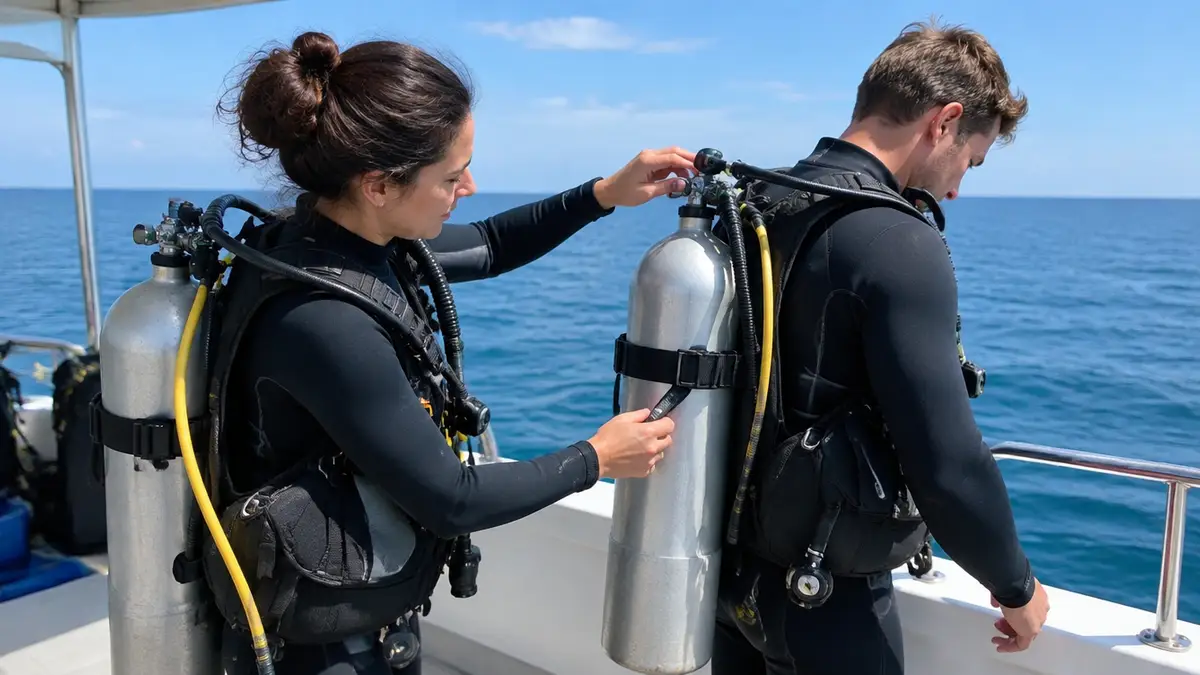
Put your BCD and tank on while sitting down or with the tank on a bench, lift with your legs, and ask for help on boats. Crew are used to it.
Prevent cramps
Calf and foot cramps are common, especially with new or stiff fins. Stay hydrated, warm up your calves, stretch before diving, and don't over-point your toes. Underwater, grab your fin tip and pull it towards you to stretch the calf.
Flexibility
Good shoulder mobility helps you reach your valve, weight releases and inflator. Good hip mobility helps with the frog kick and horizontal trim.
Breathing
Calm, slow breathing isn't just fitness. It's a skill. Practising relaxed belly breathing (for example, 4 seconds in, 6 seconds out) off the dive boat translates directly into better air consumption.
Weight and body composition
There's no weight limit for diving, but significant excess weight raises cardiovascular strain and may affect decompression risk. A gradual improvement in fitness, not weight loss alone, is what matters most for diving safety.
Before a dive trip
- Don't do a hard gym session right before or after diving. Moderate activity is fine.
- Avoid heavy exercise for several hours after diving, as a precaution for decompression stress.
- Sleep, hydrate and eat well. See sleep, food and alcohol.
Frequently asked questions
Do you need to be fit to scuba dive?
You need moderate fitness, not athletic ability. You should be able to swim a few hundred metres and handle occasional bursts of effort like swimming against a current or climbing a boat ladder.
Can I exercise after diving?
Light activity is fine, but it's generally recommended to avoid strenuous exercise for several hours after diving, since exertion may increase the risk of decompression sickness.
Keep reading
How to Equalize Your Ears When Diving: Techniques, Tips and Problems
Valsalva, Frenzel and other techniques, plus what to do when your ears won't clear.
Diving and Your Health: Colds, Blood Pressure, Medication, Seasickness and More
Colds, blood pressure, medication, seasickness: common health questions answered.
Flying After Diving: How Long to Wait (and Diving After a Flight)
The 12/18/24-hour rules explained, plus altitude, mountain roads and diving after a long flight.