Open Water Diver Course: What You Learn, How Long It Takes and What It Costs
The Open Water Diver course is your licence to explore the underwater world with a buddy, to 18 metres, anywhere on the planet. Here's exactly what it involves.
On this page
The Open Water Diver course (PADI and SSI), One Star Diver (CMAS) or Scuba Diver (NAUI) is the first full scuba certification. When you finish, you're qualified to plan and make dives with a certified buddy, without a professional, to a maximum depth of 18 metres (60 feet), in conditions similar to those you trained in.
- Duration
- 3–4 days (full-time)
- Minimum age
- 10 (Junior), 15 (adult)
- Max depth after
- 18 m / 60 ft
- Open-water dives
- 4 (plus pool sessions)
- Typical price
- US$350–900
The three parts of the course
1. Knowledge development (theory)
You'll learn how pressure affects your body and your air, how the equipment works, how to plan dives within no-decompression limits, how to handle problems, and how to protect the environment. Most people now do this through e-learning at home (about 8–12 hours), followed by a short review with the instructor. There's a multiple-choice final exam. Pay attention and you'll pass easily.
Topics usually include:
- Pressure, volume and density: why you equalize and why you never hold your breath
- Equipment: regulator, BCD, dive computer, exposure suits
- Dive planning, no-decompression limits and using a computer or dive tables
- The buddy system, hand signals and communication
- Problem management: out-of-air situations, cramps, entanglement, tired divers
- The aquatic environment: currents, waves, marine life and responsible behaviour
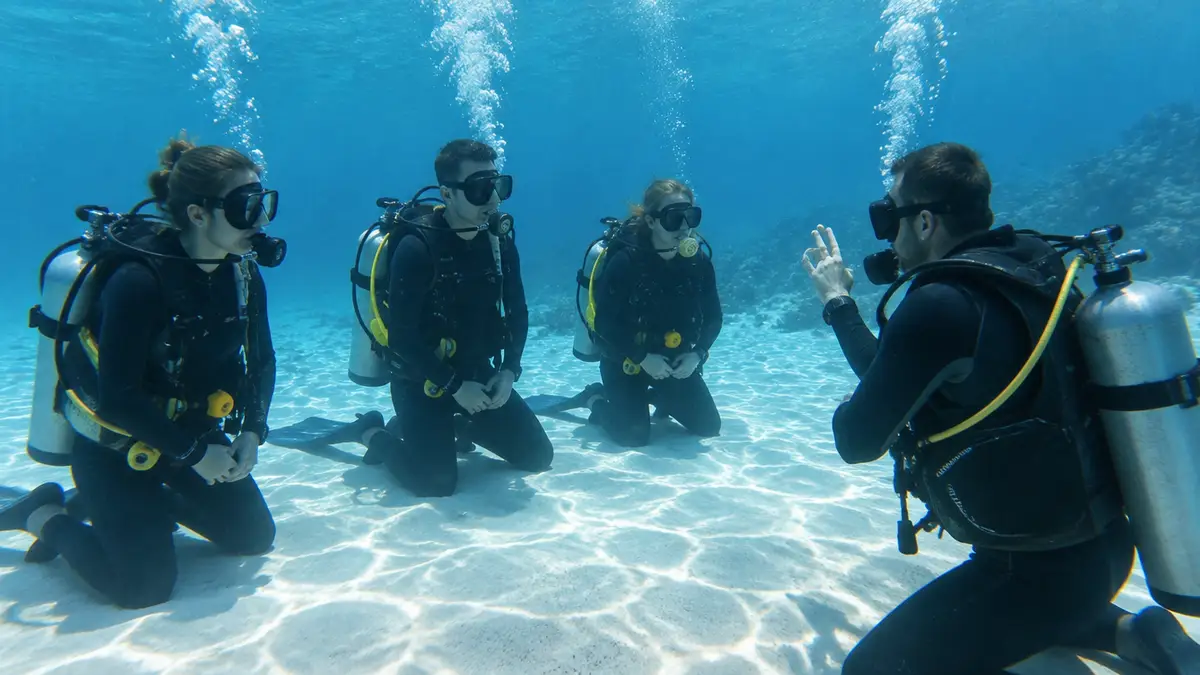
2. Confined water (pool or pool-like sea)
In a pool or calm shallow water, you'll learn and practise the core skills until they feel natural, typically over 4–5 sessions. Skills include:
- Assembling, checking and disassembling your equipment
- Regulator recovery and clearing
- Partial and full mask flood and clearing, mask removal and replacement
- Breathing from your buddy's alternate air source (octopus)
- Neutral buoyancy: fin pivots and hovering
- Controlled Emergency Swimming Ascent (CESA) practice
- Weight belt/weights removal and replacement
- Cramp release and tired-diver tow
3. Four open-water training dives
You'll then make four dives in open water (sea, lake or quarry) over at least two days, repeating the skills in real conditions. The first dives are shallow (up to 12 m); the last may go to 18 m. Between skills there's plenty of time to simply enjoy the dive. There's usually also a surface swim test and a snorkel/skin-diving skill.
Typical 4-day schedule
| Day | What happens |
|---|---|
| Before you travel | E-learning theory at home; medical questionnaire |
| Day 1 | Theory review, equipment set-up, pool sessions 1–2, swim test |
| Day 2 | Pool sessions 3–5, knowledge review, maybe final exam |
| Day 3 | Open-water dives 1 and 2 |
| Day 4 | Open-water dives 3 and 4, logbook, certification |
Some centres run it over three intense days; weekend and evening formats at home can spread over several weeks. Don't rush. A course with more pool time produces better divers.
How much does the Open Water course cost?
Typical 2026 price ranges (always check exactly what's included):
| Region | Price range |
|---|---|
| Thailand (Koh Tao), Philippines, Honduras | US$320–450 |
| Egypt (Red Sea) | €350–480 |
| Indonesia (Bali, Gili) | US$380–520 |
| Mexico, Caribbean | US$450–650 |
| Mediterranean, Western Europe | €450–700 |
| USA, UK, Australia, Maldives | US$600–1,000+ |
Check for extras: e-learning or manual fees, certification card fee, equipment rental, boat fees, marine park fees, logbook and accommodation. A very cheap course can end up costing more. More in cost of scuba diving.
Referral: split the course between home and holiday
With a referral, you complete the theory and pool training at a local dive centre (even in a cold country), then do the four open-water dives on holiday with another centre. You spend less holiday time in a classroom and get more time in warm water. Ask your local centre for referral paperwork. It's usually valid for 12 months.
Tips for passing (and enjoying) your course
- Finish e-learning before you travel.
- Buy a mask that fits. See choosing a dive mask.
- Practise mask clearing in the pool until it's boring. It's the skill that most often stresses students.
- Ask questions. There are no silly questions in diving.
- Sleep well and avoid alcohol during the course.
- Log every dive, starting with your training dives.
- Keep diving within a few weeks of certifying, while the skills are fresh.
What comes after Open Water?
Many new divers go straight into Advanced Open Water or do a few fun dives first to build confidence. Both are good choices. See Advanced, Rescue and specialty courses.
Frequently asked questions
Is the Open Water course hard?
No. It's designed for ordinary people with basic swimming ability. Most students find mask clearing the only challenging skill, and it gets easier with practice.
Can I fail the Open Water course?
You can't really "fail". If you struggle with a skill, you simply practise it more. Some students need an extra pool session, and good instructors allow for this.
How deep can I dive with Open Water certification?
18 metres (60 feet). Junior divers aged 10–11 are limited to 12 metres.
How long is the Open Water certification valid?
It never expires. After a long break, take a refresher course before diving again.
Keep reading
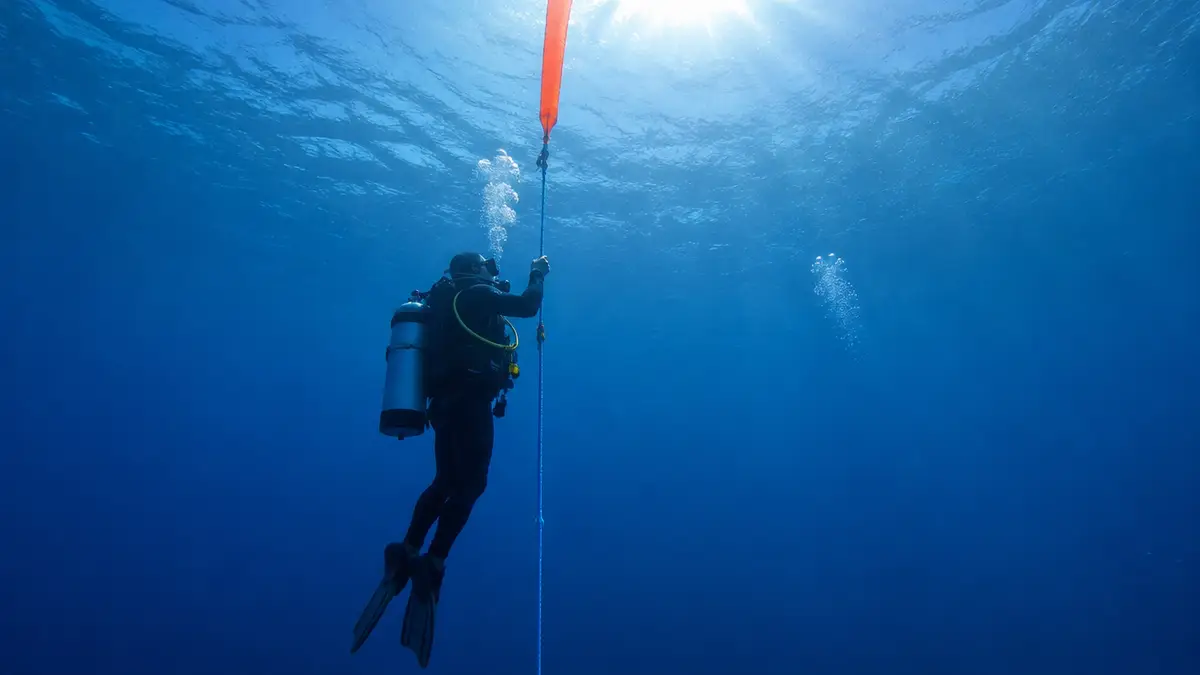
After Open Water: Advanced, Rescue and Specialty Scuba Courses Explained
Advanced Open Water, Rescue Diver, nitrox, night, wreck and deep: what each course gives you.
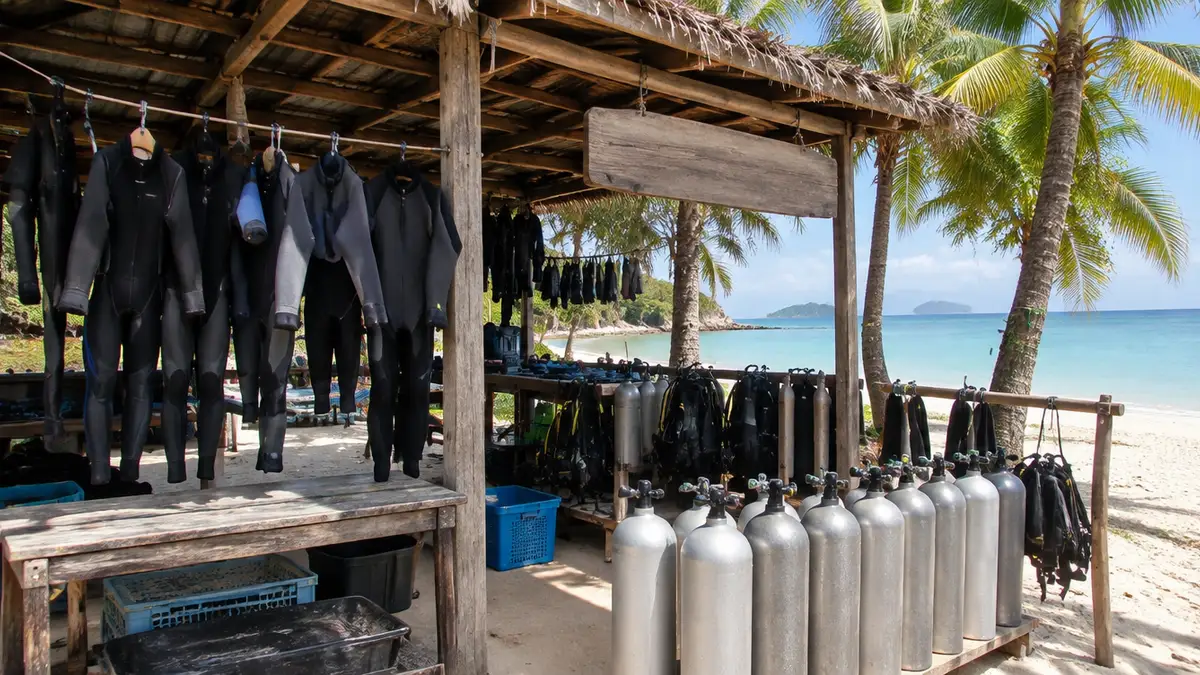
How to Choose a Dive Center and Scuba Instructor (and Red Flags to Avoid)
Group sizes, gear condition, oxygen on board and the warning signs that should make you walk away.
Why You Should Never Scuba Dive Without Training
The physics that can hurt untrained divers, and how a proper course protects you.