BCD Guide: Jacket vs Back-Inflate Wing, Integrated Weights and How to Choose
The BCD is your adjustable life jacket and the harness that holds your tank. It's the main tool you use to control buoyancy.
On this page
The BCD (Buoyancy Control Device, or Buoyancy Compensator, "BC") is a vest with an inflatable air bladder. Add air and you float; release air and you sink. At the surface it keeps you comfortably afloat. Underwater, small adjustments compensate for changes in buoyancy as your wetsuit compresses and your tank empties. The BCD also holds your tank on your back.
Parts of a BCD
- Air bladder: the inflatable cell (jacket or wing shaped).
- Low-pressure inflator: the hose unit with an inflate button (air from the tank) and a deflate button (lets air out through the corrugated hose). You can also inflate orally at the surface.
- Dump valves: pull-cord valves at the shoulder and lower back for releasing air in different positions.
- Tank band(s): secure the tank to the backplate.
- Weight pockets: integrated, quick-release weight pouches (on many models).
- D-rings and pockets: for clipping accessories such as an SMB, torch or octopus holder.
- Over-pressure valve: releases air automatically if the bladder is overfilled.
Three main styles
| Style | Feel | Pros | Cons |
|---|---|---|---|
| Jacket | Wraps around your chest and sides | Very stable upright at the surface; easy to learn; lots of pockets | Can squeeze your chest when inflated; tends to tilt you upright underwater |
| Back-inflate (hybrid) | Bladder behind you, jacket-style harness | Better horizontal trim; less chest squeeze | Can push you forward at the surface if over-inflated |
| Backplate & wing | Metal/plastic plate, harness, separate wing | Excellent trim, modular, durable, popular with tech divers | Takes set-up knowledge; fewer pockets |
Most dive centres rent jacket BCDs, and that's what you'll learn in. Many divers later move to back-inflate or wing styles for better horizontal trim.
Integrated weights vs weight belt
Integrated weights go in quick-release pockets on the BCD, which is more comfortable than a belt, especially for your lower back. Make sure you and your buddy know exactly how to release them in an emergency; it's part of every buddy check. Some BCDs also have small non-releasable "trim pockets" near the tank to improve horizontal balance.
How to choose a BCD
Fit
Try it on with the suit you'll wear. When inflated, it shouldn't squeeze your chest or ride up over your head. Many brands make models cut specifically for women's bodies, with shorter torsos and different strap placement.
Lift capacity
Warm-water divers in thin suits need less lift (around 10–15 kg). Cold-water divers with thick suits, lots of lead and steel tanks need more. Too much lift in a large bladder makes buoyancy harder to fine-tune.
Travel weight
Travel BCDs weigh 2–3 kg instead of 4–5 kg and fold small. They're ideal if you mainly fly to warm destinations.
Features that matter
- Easy-to-find, well-placed dump valves
- Reliable, easy-to-use weight release handles
- Enough D-rings for an SMB and torch
- A comfortable, well-padded back and shoulder straps
Using your BCD correctly
- At the surface: inflate enough to float comfortably, with your head well above the water.
- Descending: raise the inflator hose above your head and release air while exhaling. Add small puffs as you go deeper so you don't sink too fast.
- Underwater: make small adjustments with short bursts, then wait a few seconds to feel the effect. Fine-tune with your breathing.
- Ascending: air in the BCD expands as you rise, so vent it gradually to keep the ascent slow.
Pressing inflate repeatedly and then shooting upwards is the classic uncontrolled ascent. Use small bursts and wait. If you start rising, dump air immediately, exhale, and flare your body horizontally.
Buy or rent?
Rent for your first trips. The BCD is usually one of the last major items divers buy, after a computer, mask and fins, and often at the same time as a regulator. Expect US$350–900 for a quality jacket or wing system.
Care
- After diving, rinse inside the bladder: fill it partly with fresh water through the inflator, slosh it around, and drain through the deflator.
- Store it partly inflated, out of the sun.
- Check the inflator buttons don't stick, and service the inflator mechanism regularly.
Frequently asked questions
Is a jacket or wing BCD better for beginners?
Jacket BCDs are easiest to learn with and feel stable at the surface. Back-inflate or wing BCDs make horizontal trim easier as your skills improve. Either is fine if it fits well.
Can a BCD keep an unconscious diver's face out of the water?
Not reliably. A BCD is not a life jacket designed to turn an unconscious person face-up. That's why buddy diving and rescue training matter.
Keep reading
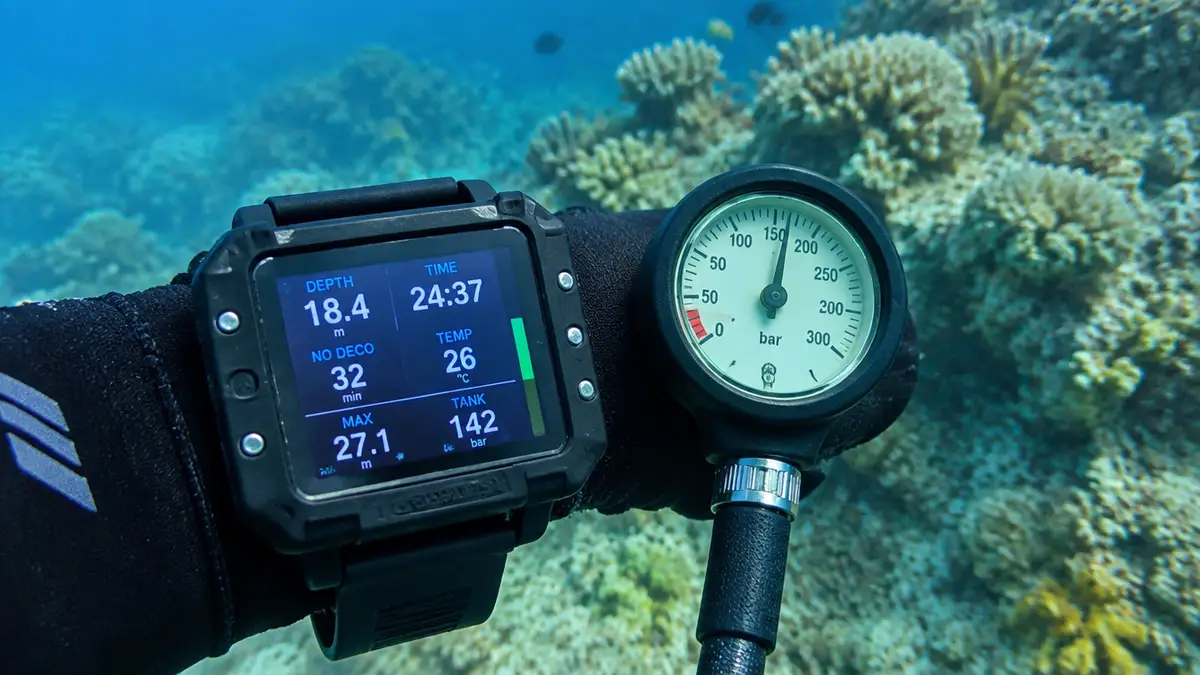
Dive Computers for Beginners: Why You Need One From Your First Dives
Why a dive computer should be your first big purchase, and which features really matter.
Scuba Accessories: Weights, Dive Lights, Knives, SMBs, Gloves and Boots
Weights, torches, cutters, surface marker buoys, gloves and boots: what's essential and what's optional.
What Scuba Gear to Buy First (and What to Rent): A Beginner's Buying Order
Mask, snorkel, fins and a computer first; the rest can wait. A realistic buying order and budget.