How to Choose a Dive Center and Scuba Instructor (and Red Flags to Avoid)
Your dive centre and instructor matter more than the agency, the price or even the destination. Here's a practical checklist for choosing well.
On this page
Two dive centres on the same beach can offer completely different experiences. One gives you patient, small-group teaching and well-maintained gear; the other crams eight students into a rushed course with leaky rental equipment. The difference affects your safety, your enjoyment and whether you keep diving at all.
Before you book: research
- Read recent reviews on Google, TripAdvisor and diving forums. Look for comments about safety, briefings, instructor patience and gear condition, not only "fun" and "friendly".
- Check affiliation. Is the centre a genuine member of PADI, SSI, CMAS or another agency? Most agencies have online dive centre locators. Individual instructors can be checked through the agency too.
- Email with questions. A good centre answers clearly and specifically. Vague or pushy replies are a warning.
Questions to ask the dive centre
- What is the maximum student-to-instructor ratio? For Open Water, 4:1 or fewer is ideal. Agency maximums are higher, but smaller is better.
- Who exactly will teach me? Is it one instructor for the whole course, and what languages do they speak?
- How much pool/confined-water time is included?
- What's included in the price? Materials, certification fee, gear, boat, park fees, taxes.
- How old is the rental equipment, and how is it serviced?
- Do the boats carry oxygen and a first aid kit? Where is the nearest hyperbaric chamber?
- What happens if I need extra time for a skill, or I get sick and miss a day?
- What's the cancellation policy?
On site: what to look for
Equipment
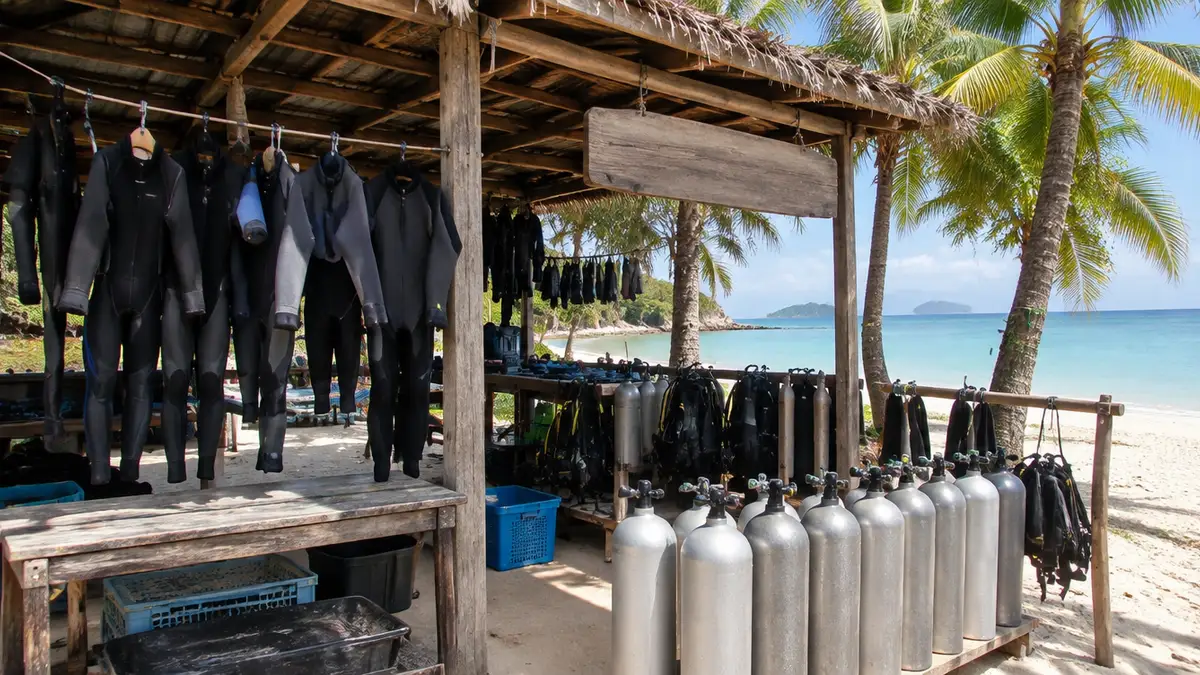
- Clean, organised equipment room; gear rinsed and hung to dry
- BCDs inflate and hold air; regulators breathe smoothly without free-flowing
- Pressure gauges read zero when not connected; tanks have up-to-date inspection stickers
- Masks and fins in a range of sizes; wetsuits without big tears
- Rental dive computers available (a big plus)
Safety culture
- Emergency oxygen and a first-aid kit on every boat and at the shop
- Thorough briefings before every dive, including emergency procedures
- Staff insist on buddy checks and a proper surfacing procedure
- Captain and crew keep track of who is in the water (a roll call before leaving a site)
- The centre asks about your experience and last dive, and checks your certification
Teaching quality
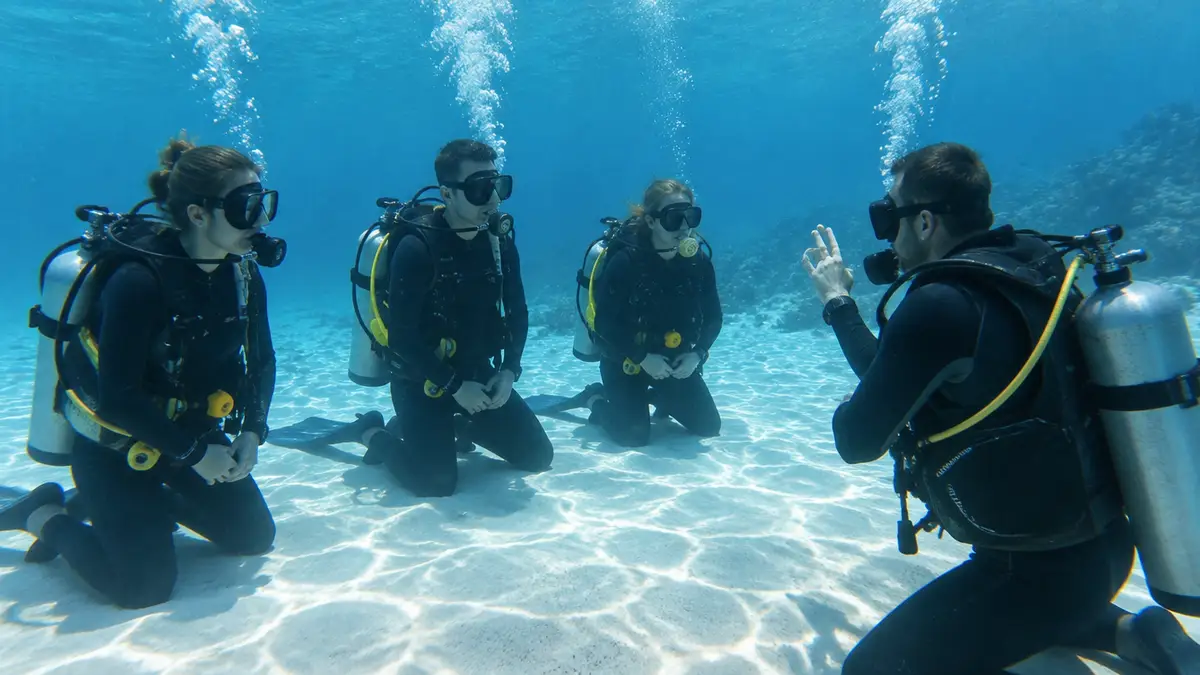
- The instructor explains why, not just what
- Skills are demonstrated slowly and practised until you're comfortable
- Nervous students get extra time without pressure
- Instructor shows good buoyancy and doesn't touch the reef themselves
Red flags: when to walk away
- "No need for the medical form" or pressure to answer "no" to everything
- Promising certification in 2 days, or skipping pool training
- Large groups (6–8+ students per instructor with no assistants)
- No oxygen on the boat
- Rental regulators that free-flow, BCDs that leak, gauges that stick
- Instructors who are hungover, rushed or constantly on their phone
- Taking beginners beyond their depth limit or into strong currents
- Touching, chasing or feeding marine life; standing on coral
- Very cheap prices with lots of hidden extras
- No written information about the dive plan
If something feels unsafe, you are allowed to say no, skip a dive, or leave a course. You can finish your training somewhere else. Your safety is worth more than a deposit.
Does price matter?
Price reflects local wages, boat costs and park fees more than quality. Egypt and Thailand are cheap because costs there are low, not because the teaching is worse. Within one destination, though, a centre that's much cheaper than its neighbours is cutting something: group size, pool time, gear maintenance or staff pay. Compare what you actually get. See cost of scuba diving.
Eco-friendly dive centres
Many good centres support conservation through reef clean-ups, mooring buoys instead of anchors, reef-safe briefings and programmes such as Green Fins (a UN Environment initiative in Asia). Choosing them helps protect the sites you came to see. Read our ocean etiquette guide.
Choosing an instructor, not just a shop
If possible, meet or message your instructor before you start. Ask how long they've been teaching and what they enjoy about it. Enthusiastic, patient instructors who've taught for a few years are usually a great bet. If you're nervous, ask about private lessons. They cost more but give you a much gentler start (see overcoming diving fears).
Frequently asked questions
What is a good student-to-instructor ratio?
For Open Water training in the sea, four students or fewer per instructor is ideal. Agency maximums are higher, often 8:1 with an assistant, but smaller groups mean more attention and safer training.
How can I check if an instructor is certified?
Ask for their instructor number and check it with the agency (PADI, SSI and others have online professional verification or can confirm by email). Make sure their status is current (teaching status).
Is it safe to learn to dive in cheap destinations?
Yes. Many of the world's best-run dive centres are in low-cost countries like Egypt, Thailand and the Philippines. Use the same checklist wherever you go.
Keep reading
Why You Should Never Scuba Dive Without Training
The physics that can hurt untrained divers, and how a proper course protects you.
PADI vs SSI vs CMAS vs NAUI: Which Scuba Certification Should You Choose?
How the big training agencies differ and whether it matters for you (spoiler: less than you think).
Open Water Diver Course: What You Learn, How Long It Takes and What It Costs
Theory, pool sessions, four open-water dives: a day-by-day look at your first scuba certification.