What Do You Need to Start Scuba Diving? (Less Than You Think)
You don't need to buy a pile of expensive equipment or be a super-fit swimmer. The real starter kit is mostly about attitude, health and good training.
On this page
A lot of people put off diving because they think it needs expensive gear, lots of time, or athletic ability. In practice, the barrier to entry is low. Here is what you really need, in order of importance, and what you can happily ignore for now.
1. Genuine interest and a bit of patience
The most important ingredient is curiosity. Scuba is a skill sport. The first dives feel awkward, your buoyancy will be wobbly, and you'll use air quickly. Everyone goes through this. Divers who enjoy the learning curve improve fast and get the most out of it.
2. Basic water comfort
You need to be comfortable in water where you can't touch the bottom. For certification you'll need to float or tread water for 10 minutes and swim 200 m (any stroke, no time limit). Speed doesn't matter. See Can I scuba dive? for full requirements.
3. Medical fitness
You'll fill in a standard diver medical questionnaire. Most healthy people answer "no" to everything and can start right away. If you answer "yes" to anything, you'll need a doctor's approval first. Sort this out at home, before you travel.
4. A course with a good instructor
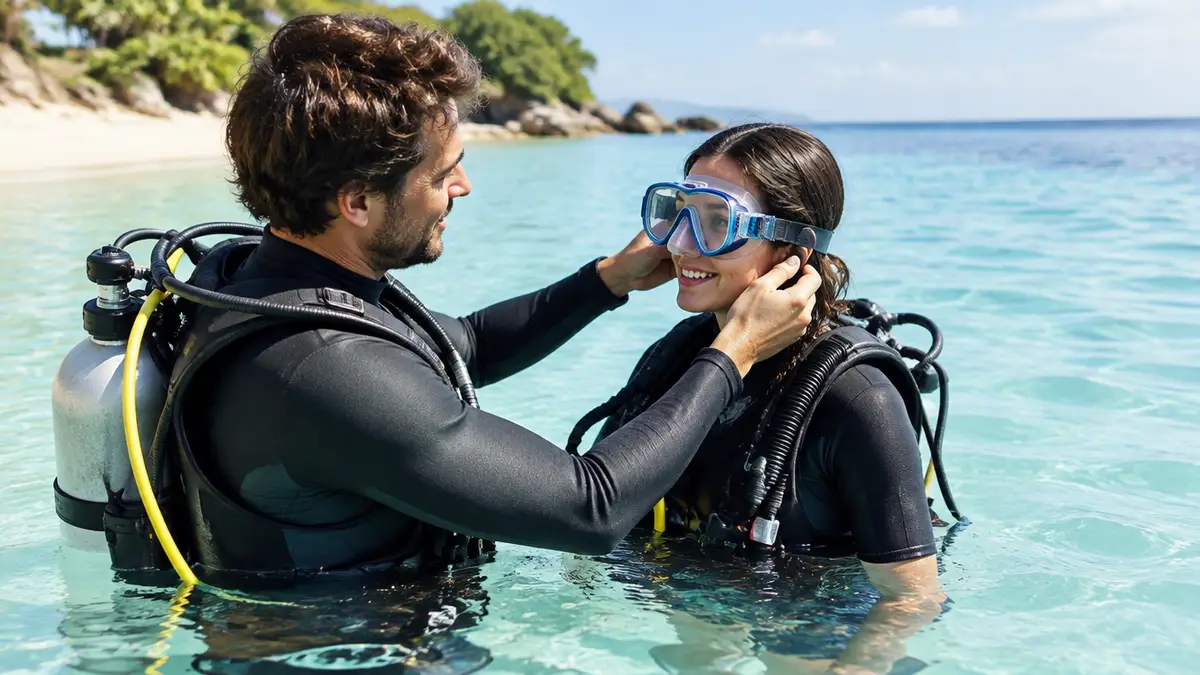
This is where your money should go. A certification course such as Open Water Diver teaches you to dive safely and independently. The quality of your instructor shapes your skills, confidence and habits for years. Read how to choose a dive centre and instructor.
If you're unsure whether you'll enjoy diving, start with a try-dive. It's cheaper, shorter and has no commitment.
5. Time
- Try-dive: half a day.
- Open Water course: 3–4 days full-time, or several evenings plus a weekend at a local centre.
- Theory: most agencies offer e-learning you can finish at home before your trip, so you spend your holiday in the water instead of the classroom.
What about equipment?
For your course and first dives, rent almost everything. Every course price includes the use of a BCD, regulator, tank, weights and usually a wetsuit, mask and fins. Buying a full kit before you know what you like, or where you'll dive, is the classic beginner mistake.
| Item | For your first course | Why |
|---|---|---|
| Mask | Consider buying | Fit is personal; a leaking mask spoils dives. Inexpensive. |
| Snorkel | Optional buy | Cheap and hygienic to own. |
| Fins | Rent (or buy for frequent trips) | Rental fins are usually fine. |
| Wetsuit | Rent | Thickness depends on destination. |
| BCD, regulator | Rent | Expensive; learn what you like first. |
| Tank, weights | Always provided | Almost nobody travels with these. |
| Dive computer | Rent, then buy soon after | The first big purchase most divers make. |
Our guide to what gear to buy first explains the order that makes sense as you get more serious.
What does it cost to start?
Roughly speaking, in 2026:
- Try-dive: US$60–300, depending on destination.
- Open Water course: about US$350–500 in Southeast Asia or Egypt, and US$500–900+ in Europe, North America and Australia.
- Own mask and snorkel: US$40–120.
See the full cost of scuba diving guide for fun dives, gear and trips.
Things you don't need
- To be a fast or strong swimmer
- Your own tank, BCD or regulator
- To live near the sea (many people learn in a pool and finish on holiday)
- Expensive cameras or accessories
- A dive buddy before you start. Dive centres pair you with one.
A simple starting plan
- Read what scuba diving is and complete the medical questionnaire.
- Pick a destination with easy conditions, see best places for your first dive.
- Book a try-dive or go straight into an Open Water course with e-learning.
- Buy a well-fitting mask before you go.
- Pack using our dive trip checklist.
Frequently asked questions
Do I need to buy scuba gear before my course?
No. Course fees include rental of the main equipment. Many students buy their own mask (and sometimes fins) for comfort and fit, but nothing else is necessary.
Can I learn to dive if I don't live near the ocean?
Yes. Many people complete the theory and pool sessions at home and then do the four open-water training dives on holiday with a "referral" programme.
How long does it take to learn scuba diving?
A basic certification takes about 3–4 days. Becoming a confident, relaxed diver takes a few dozen dives. Keep diving regularly after your course.
Keep reading
What Is Scuba Diving? Types of Diving Explained for Beginners
Recreational, technical, freediving or snorkeling? How each one works and which is right for you.
Can I Scuba Dive? Age, Swimming Ability and Medical Requirements
Age limits, how well you need to swim, and how the diver medical questionnaire works.
Discover Scuba Diving: What to Expect on Your First Try-Dive
How an intro dive works step by step, what it costs and how to get the most out of it.