Sleep, Food and Alcohol Before Diving: How to Prepare Your Body
How you treat your body the night before matters more than most new divers think. Rest, hydration and a sensible breakfast make dives safer and far more enjoyable.
On this page
Diving holidays often mix early boat departures, late dinners, sun and a few drinks at the bar. That's part of the fun, but your body's condition affects how you handle nitrogen, cold, stress and seasickness. A few simple habits make a real difference.
Sleep
Fatigue slows reactions, impairs judgement and increases anxiety and air consumption. Some research suggests that being tired may also increase susceptibility to decompression stress.
- Aim for 7–8 hours before dive days, especially early starts
- After a long-haul flight, take an easy first day. See flying and diving
- On liveaboards with 4–5 dives a day, skip a dive if you're exhausted. The reef will still be there
Food: what to eat before diving
Eat a light-to-moderate meal 1–2 hours before diving. Diving on an empty stomach can leave you weak, cold and light-headed; diving on a heavy, greasy meal can cause nausea, especially on a boat.
Good choices
- Oats or porridge with fruit
- Eggs on toast
- Yoghurt with granola and banana
- Rice or noodles with lean protein
- Bananas and nuts as snacks between dives
Go easy on
- Very greasy or spicy food (heartburn, nausea)
- Large amounts of fizzy drinks or gassy foods (bloating)
- Unfamiliar street food on the morning of a boat trip
Keep snacks handy for multi-dive days. Cold water and repeated dives burn a lot of energy.
Hydration
Breathing dry compressed air, sweating in the sun and wearing a wetsuit all dehydrate you. Dehydration may increase decompression risk and makes headaches and cramps more likely.
- Start the day hydrated: a glass or two of water with breakfast
- Drink water between every dive
- Check your urine; pale is good
- Electrolyte drinks can help in hot climates
Don't overdo it either. Drinking huge amounts right before a dive just means you'll need to pee in your wetsuit (which, honestly, many divers do).
Alcohol
No alcohol before diving, and keep it moderate the night before. Never dive drunk or hungover.
Alcohol:
- Impairs judgement, coordination and reaction time, and adds to nitrogen narcosis
- Dehydrates you
- Increases heat loss (it dilates blood vessels)
- Worsens seasickness
- Is linked in many diving incident reports
A hangover means dehydration, headache, poor sleep and nausea: exactly the state you don't want to be in underwater. Many dive centres refuse to take obviously hungover divers out, and they're right.
After diving
A drink after the last dive of the day is a diving tradition, but wait until you're well rehydrated, keep it moderate, and remember that alcohol can mask or confuse early symptoms of decompression sickness.
Caffeine
A normal morning coffee is fine for most people. Large amounts can make you jittery, increase anxiety and need a toilet break on the boat. Balance each coffee with water.
Between dives
- Stay warm: dry off, add a layer or windproof jacket, get out of the wind
- Rehydrate and snack
- Rest: avoid strenuous exercise, hot tubs or very hot showers immediately after diving
- Protect yourself from the sun
- Log your dive while details are fresh
A sample dive day
| Time | What to do |
|---|---|
| Night before | Early dinner, 0–1 drinks, pack your gear bag, sleep by 22:30 |
| 06:30 | Light breakfast + water; coffee if you like |
| 07:30 | Boat departs. Sit in fresh air if you're prone to seasickness |
| 09:00 | Dive 1 |
| 10:15 | Surface interval: water, banana, stay warm |
| 11:30 | Dive 2 |
| 13:00 | Lunch, rinse gear, rest |
| Evening | Log dives, rehydrate, moderate drinks only after diving is done |
Special situations
Liveaboards
With 4–5 dives a day, food, hydration and rest become even more important. Eat regular small meals, drink water between every dive, nap after lunch, and skip a dive when you're tired. Crews generally enforce a no-alcohol-until-the-last-dive rule.
Early morning and night dives
For a dawn dive, have a small snack, like a banana or a biscuit and some water, and eat properly afterwards. For night dives, eat a light meal a couple of hours before, and bring a warm layer for afterwards.
Frequently asked questions
How long after drinking alcohol can I dive?
There's no exact safe number. The practical rule is no alcohol on the day of diving before your dives, and only moderate drinking the night before so you wake up fully fresh and hydrated.
Should I eat before scuba diving?
Yes, a light, easily digestible meal 1–2 hours before diving provides energy and helps prevent seasickness and cold.
Keep reading
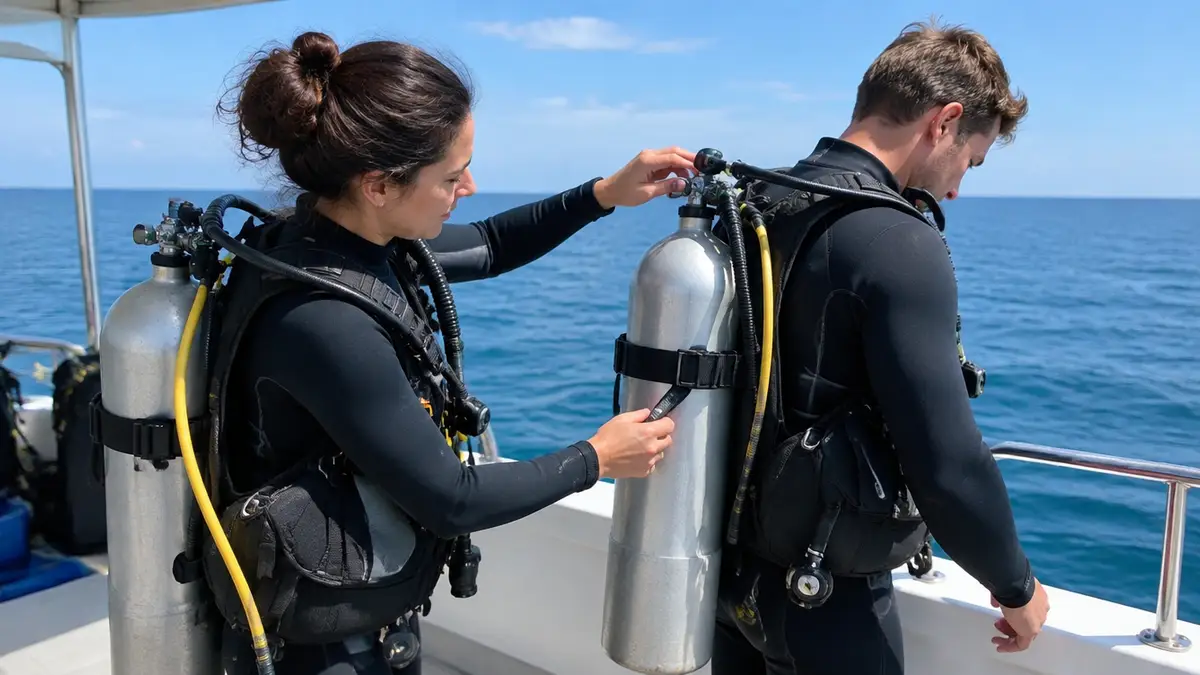
The Dive Briefing and Pre-Dive Buddy Check (BWRAF) Explained
What a good briefing covers and how to run the BWRAF buddy check in under two minutes.
Dive Insurance Explained: DAN and Alternatives, and Why Travel Insurance Isn't Enough
Why standard travel insurance often excludes diving, and what a proper dive policy covers.
Fitness for Scuba Diving: How Fit Do You Need to Be (and How to Prepare)
How fit divers really need to be, plus a simple 6-week plan to prepare.