Diving in Eilat (Israel) and Aqaba (Jordan): Easy Red Sea Shore Diving
At the northern tip of the Red Sea, Eilat and Aqaba sit just a few kilometres apart and share the same calm, clear water, with easy shore diving that's perfect for new divers.
On this page
- Best season
- Year-round; Apr–Jun & Sep–Nov ideal
- Water temp
- 21 °C (Feb) to 27 °C (Aug)
- Visibility
- 15–30 m
- Difficulty
- Beginners
- Excellent
- Diving style
- Mostly shore diving
The security situation in the region can change. Check your government's current travel advice for Israel and Jordan before planning a trip, and buy travel insurance that covers your destination.
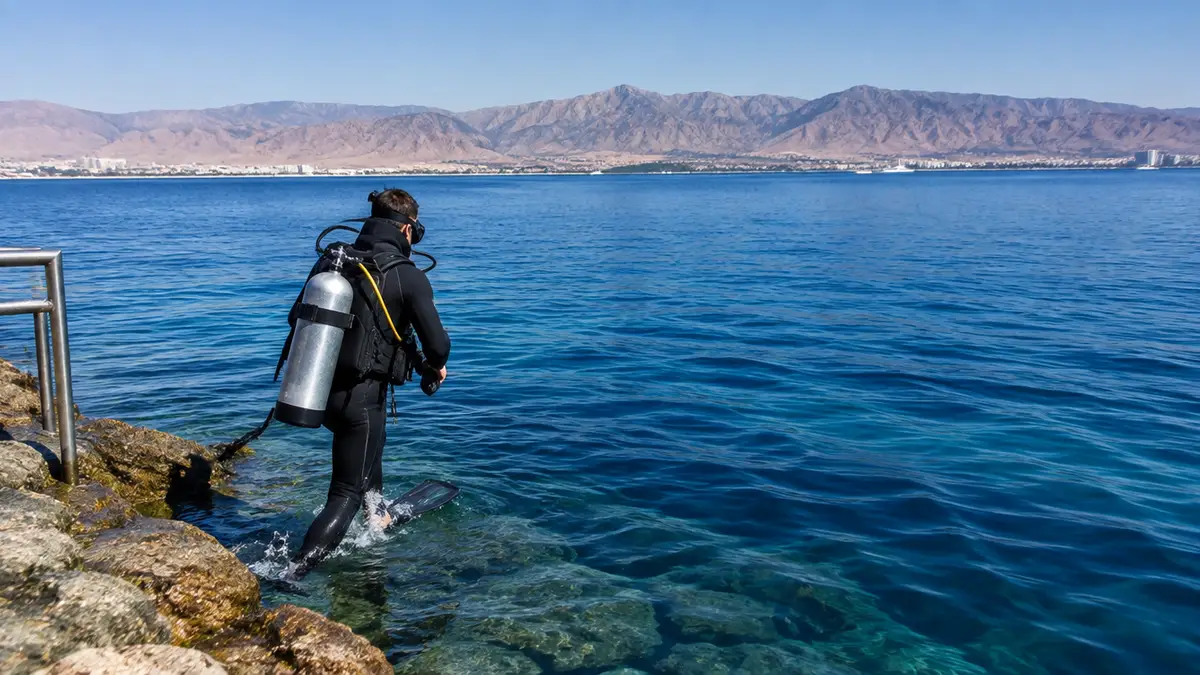
The Gulf of Aqaba is the narrow northern arm of the Red Sea. Its coastline drops steeply, so beautiful coral reefs start just metres from the beach. Most diving here is shore diving: you kit up at the dive centre, walk across the beach or down a jetty, and swim out. It's relaxed, flexible and ideal for training.
Eilat (Israel)
Israel's southernmost city is a busy resort with a strong diving tradition and well-regulated dive centres.
- Coral Beach Nature Reserve: a protected reef with bridges that let you enter without stepping on coral. Easy, colourful and full of fish.
- Satil wreck: a former navy missile boat deliberately sunk as an artificial reef, around 20–25 m.
- Japanese Gardens and Moses Rock: popular reef sites with coral pinnacles.
- Dolphin Reef: a private beach with a semi-open dolphin enclosure (debate exists about captive dolphin facilities; make your own ethical choice).
Aqaba (Jordan)
Jordan's only coastal city has around 20 km of coastline, much of it within the Aqaba Marine Park. It's quieter than Eilat and often cheaper.
- Cedar Pride wreck: a cargo ship scuttled in 1985, lying on its side at about 10–27 m, covered in soft corals. One of the most famous wrecks in the region and accessible from shore.
- Tank wreck: an M42 anti-aircraft tank sunk at about 6 m as an artificial reef. A fun, shallow dive for beginners.
- Underwater Military Museum: retired military vehicles and a helicopter placed on the seabed at 15–28 m to create a reef and attract divers.
- Japanese Garden and Rainbow Reef: lovely coral slopes with lots of fish.
- Tristar airliner: a Lockheed L-1011 sunk in 2019 as an artificial reef, about 15–28 m.
When to go
| Months | Water | Air | Notes |
|---|---|---|---|
| Dec–Mar | 21–22 °C | 18–24 °C | Pleasant days, cool evenings; 5–7 mm suit |
| Apr–Jun | 22–25 °C | 27–36 °C | Great conditions |
| Jul–Aug | 26–27 °C | 35–40 °C+ | Very hot on land |
| Sep–Nov | 24–27 °C | 28–35 °C | Warm water, excellent diving |
What you'll see
- Colourful hard and soft corals right off the beach
- Red Sea anthias, lionfish, scorpionfish, moray eels, clownfish, pipefish and seahorses in seagrass
- Turtles on some sites; frogfish and nudibranchs for keen-eyed divers
- Occasional dolphins and (rarely) whale sharks in spring
- Artificial reefs and wrecks, great for learning wreck diving within recreational limits
Is it good for beginners?
Yes, it's excellent. Calm water, easy shore entries, little current, warm temperatures most of the year, and shallow training areas. The Cedar Pride, Tank and Satil make it a great place to try your first wreck dives. Many divers do their Open Water course here.
Typical prices (2026)
- Open Water course: about US$450–650 (Eilat is usually pricier than Aqaba)
- Guided shore dive: about US$35–60
- Equipment rental: US$15–30/day
- Aqaba Marine Park fees may apply
Practical tips
- Combine Aqaba with a visit to Petra and Wadi Rum. Petra is roughly 900–1,300 m altitude, and parts of the Desert Highway route go higher, so observe no-fly/altitude intervals after diving
- The Jordan Pass (for many nationalities) can include visa fees and Petra entry. Check current rules
- Land border crossings between Eilat and Aqaba exist but opening status can change
- Bring a 5 mm suit for most of the year; 3 mm in summer
Top sites at a glance
| Site | Location | Depth | Level |
|---|---|---|---|
| Tank wreck | Aqaba | ~6 m | |
| Japanese Garden | Aqaba / Eilat | 5–30 m | |
| Cedar Pride | Aqaba | 10–27 m | – |
| Coral Beach Reserve | Eilat | 3–30 m | |
| Satil wreck | Eilat | ~18–25 m | |
| Tristar aircraft | Aqaba | ~15–28 m |
Why the Gulf of Aqaba's corals are special
Scientists have found that corals in the northern Red Sea and Gulf of Aqaba are unusually heat-tolerant, possibly because their ancestors passed through the hotter southern Red Sea after the last ice age. That makes these reefs an important research site for understanding how corals might survive warming oceans, and another reason to dive them gently and responsibly.
Frequently asked questions
Is diving in Aqaba good for beginners?
Yes. Calm, clear water, easy shore entries and shallow sites like the Tank wreck make Aqaba ideal for training and new divers.
How deep is the Cedar Pride wreck?
It lies on its side between about 10 and 27 metres, so Open Water divers can explore the shallower parts.
Keep reading
Diving in Thailand: Koh Tao, Phuket and the Similan Islands
Koh Tao is a world-famous place to learn cheaply; the Andaman Sea offers Similan liveaboards.
Diving in Indonesia: Bali, Komodo and Raja Ampat
Bali is great for new divers; Komodo and Raja Ampat reward experience with world-class reefs.
Diving in the Philippines: Moalboal, Malapascua and Anilao
Sardine runs, thresher sharks and world-class macro, at friendly prices.