Scuba Diving with Kids: Minimum Ages, Programmes and Safety Tips
Many children love the underwater world, and scuba can become a wonderful family activity. Here's how kids' diving works and how to tell whether your child is ready.
On this page
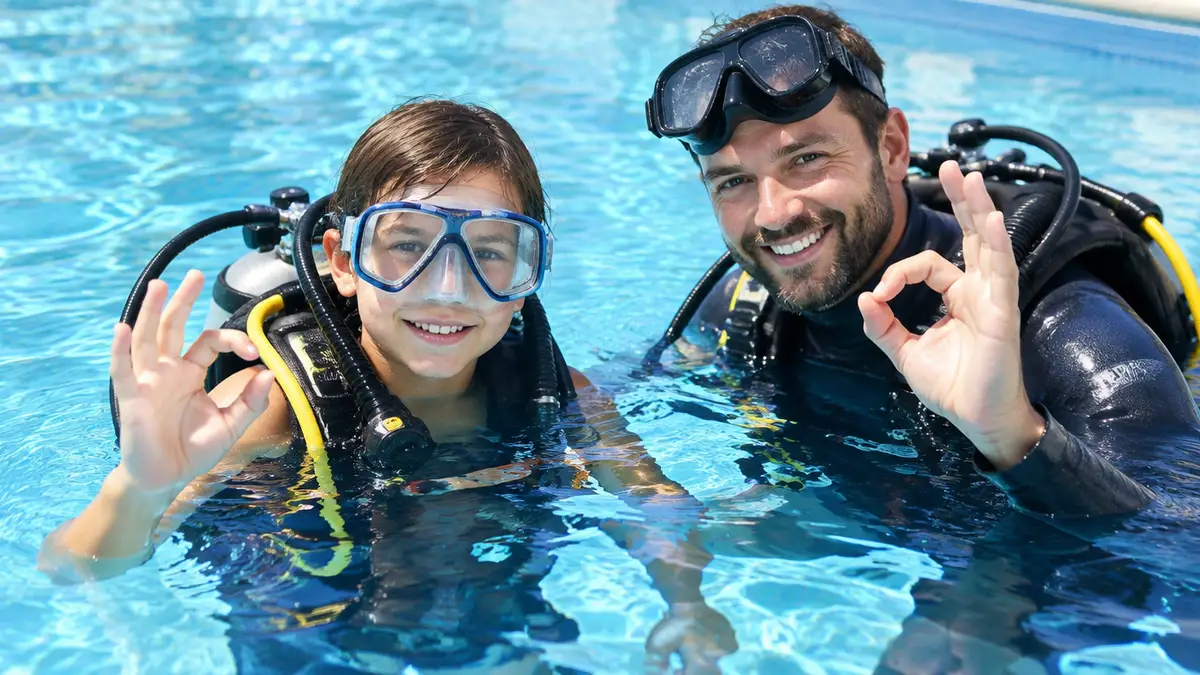
Children can start trying scuba from age 8 in pool programmes and earn a junior certification from age 10. But age isn't the only factor. Maturity, comfort in the water and genuine interest matter more. Diving should be their idea, not just yours.
Minimum ages and programmes
| Age | Programme (examples) | Where / how deep |
|---|---|---|
| 8+ | PADI Bubblemaker, SSI Scuba Rangers, PADI Seal Team | Pool or confined water, max about 2–5 m depending on programme |
| 10+ | Discover Scuba Diving / Try Scuba | Open water with an instructor, typically max 12 m (some agencies set lower limits for children) |
| 10–11 | Junior Open Water Diver | Max 12 m, with a certified parent/guardian or dive professional |
| 12–14 | Junior Open Water Diver | Max 18 m, with a certified adult |
| 15+ | Open Water Diver | Adult certification, max 18 m |
Junior certifications upgrade automatically at age 15. Kids can also take some junior specialties (such as Junior Advanced Open Water, with depth limits) and Junior Nitrox from about 12 with most agencies. Rules vary slightly by agency and country. Check with your dive centre.
Is my child ready? Signs to look for
- They want to do it, and ask about it on their own
- Comfortable in water: can swim and float confidently, and is happy putting their face in
- Can concentrate through a 20–30 minute briefing and follow instructions
- Understands rules and consequences, especially "never hold your breath"
- Can tell you when something's wrong rather than hiding discomfort
- Physically able to handle small gear (kids' kits exist)
- Medically fit: same medical questionnaire as adults. See medical requirements
If your child is anxious, easily distracted or just "doing it for you", wait. There's no rush. Snorkeling together is a great way to build confidence in the meantime. See snorkeling.
Why children need extra care
- Ears: children's Eustachian tubes are narrower, so equalizing can be harder. Descend slowly, and never force it. See ears.
- Cold: kids lose heat faster. Use a well-fitting wetsuit and keep dives short.
- Judgement: children may not recognise danger or may panic. That's why depth limits and close supervision matter.
- Lungs and development: medical experts recommend conservative profiles for young divers, with shallow depths, limited dives per day and long surface intervals.
Choosing a kid-friendly dive centre
- Instructors experienced with children (ask how many kids they teach)
- Small groups: ideally 1–2 children per instructor
- Kid-sized equipment: small BCDs, short regulator hoses, small masks and fins, and small tanks
- Calm, shallow, warm training sites
- A patient, fun approach, where children can stop at any time
See choosing a dive centre for more.
Family-friendly dive destinations
- Red Sea (Egypt): calm house reefs, family resorts, short flights from Europe
- Bonaire and Curaçao: easy shore diving in calm water
- Maldives: lagoon training and snorkeling for non-divers
- Great Barrier Reef: reef pontoons with snorkeling, try-dives and glass-bottom boats
- Malta: sheltered bays, English-speaking instructors
Tips for parents
- Get certified yourself, so you can dive with your junior diver.
- Keep it fun: short, shallow dives with lots to see.
- Don't push. Children who are pressured are more likely to have a bad experience.
- Watch for tiredness and cold and end dives early when needed.
- Buy a mask that fits small faces. Adult masks leak on children.
- Celebrate the experience, with a logbook, photos and stories. It builds lifelong ocean lovers.
Non-diving activities to keep kids engaged
- Snorkeling with a guide, to build water confidence and marine life knowledge
- Fish ID cards, turning each dive or snorkel into a spotting game
- Marine biology or reef conservation programmes at many resorts
- Glass-bottom boat trips for younger siblings
- Keeping a logbook with drawings and stickers
Kids who fall in love with the ocean at the surface often become confident, careful divers later.
Frequently asked questions
What is the minimum age for scuba diving?
Children can try scuba in a pool from age 8, and get a Junior Open Water certification from age 10, with depth limits and adult supervision.
How deep can a 10-year-old dive?
Junior Open Water divers aged 10–11 are limited to 12 metres and must dive with a certified parent, guardian or dive professional.
Keep reading
Liveaboard Dive Safaris: What They Are, Who They Suit and How to Choose
Eat, sleep, dive, repeat: how dive safaris work and whether you're ready for one.
Snorkeling for Beginners: How to Start, What Gear You Need and Safety Tips
Not ready for scuba? Snorkeling shows you the reef with minimal gear and no training.
Freediving for Beginners: What It Is, How to Start and How to Stay Safe
Diving on a single breath: what freediving involves, how to learn, and the one rule you must never break.