Snorkels for Scuba Diving: Types, Do You Need One, and How to Choose
The humble snorkel is the cheapest piece of dive gear, and there's more debate about it than you'd expect. Here's when it helps, which type to buy and how to use it.
On this page
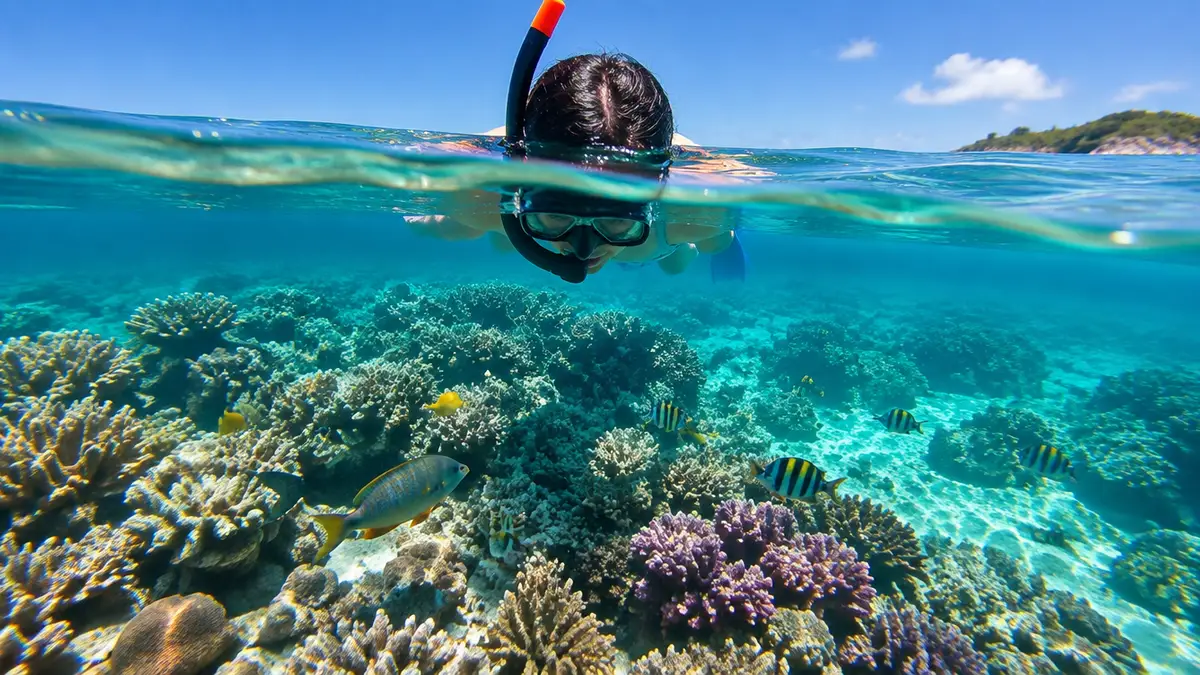
A snorkel is a tube that lets you breathe while floating face-down at the surface, without lifting your head. For scuba divers it's a surface tool: useful when swimming to or from a dive site, waiting in choppy water, or saving tank air. For snorkelers it's the main piece of equipment.
Do scuba divers need a snorkel?
Training agencies still include snorkel skills in the Open Water course, and many dive centres expect you to carry one. In practice, many experienced divers leave it in their BCD pocket instead of on the mask strap. Here's when it genuinely helps:
- Long surface swims from a beach to a reef, so you can breathe with your face in the water and save tank air
- Waiting at the surface in waves for a boat pick-up, if your tank is empty
- Checking the site from the surface before descending
- Snorkeling between dives on holiday
A snorkel on the mask strap can snag on lines or kelp and moves water into your face in currents. A foldable snorkel in a pocket is a good compromise.
Types of snorkel
| Type | How it works | Pros | Cons |
|---|---|---|---|
| Classic J-snorkel | Simple open tube with a mouthpiece | Cheap, reliable, easy to clear by blasting | Waves splash in |
| Semi-dry | Splash guard on top, purge valve at bottom | Less water from waves; easy to clear | Slightly more complex |
| Dry | Float valve closes the top when submerged | No water in when you duck under | Bulky, more drag; valve can stick |
| Flexible / foldable | Soft silicone lower section folds | Pockets easily; regulator-friendly | Some are harder to clear |
For beginners, a semi-dry snorkel with a purge valve or a simple foldable snorkel is a great choice. Dry snorkels are popular with nervous snorkelers, but the valve can occasionally jam, so learn to clear a snorkel anyway.
What to look for
- A comfortable mouthpiece: soft silicone that doesn't make your jaw ache; some are orthodontic.
- The right bore and length: standard adult sizes are fine. Very long snorkels don't let you go deeper; they only make breathing harder. Children need smaller sizes.
- A purge valve makes clearing easier.
- A quick-release clip to attach and detach from the mask strap.
- Bright colours on top help boats see you at the surface.
How to clear a snorkel
Blast method
After a dip, blow out sharply, like saying "TOO!" into the tube. The water shoots out. Then breathe in cautiously, in case a few drops remain, and blast again if needed.
Displacement method
As you surface, tilt your head back slightly and exhale gently. Expanding air pushes water out as the top of the snorkel breaks the surface.
Snorkel vs regulator on the surface
Your Open Water course teaches you to switch between snorkel and regulator at the surface. The standard advice: when in doubt, stay on your regulator in rough water. Breathing tank air at the surface is always better than struggling with a snorkel full of water.
Buy or rent?
Buy one. Snorkels cost about US$15–50, and a mouthpiece that's been in hundreds of other mouths isn't pleasant. Buy your mask and snorkel together; see first gear to buy.
Care
- Rinse in fresh water after use and let it dry fully.
- Check that the purge valve is clean and not stuck with sand.
- Store it away from direct sunlight.
- Replace the mouthpiece if it tears. A torn mouthpiece is a choking hazard for kids.
Common snorkel problems and fixes
| Problem | Likely cause | Fix |
|---|---|---|
| Jaw ache | Biting the mouthpiece | Relax your jaw; try a softer or orthodontic mouthpiece |
| Water in the mouth | Waves, looking up, loose lips seal | Keep your face down; try a semi-dry snorkel; seal lips around the mouthpiece |
| Gagging | Mouthpiece too big or too far back | Try a smaller mouthpiece or adjust the angle |
| Feeling short of breath | Shallow, fast breathing | Slow, deep breaths; stop and float on your back |
Frequently asked questions
Is a dry snorkel good for beginners?
It's comfortable for snorkeling because little water enters, but it's bulkier. For scuba, a foldable or semi-dry snorkel is usually more practical.
Can you breathe through a snorkel underwater?
No. A snorkel only works with the top above the surface. Longer tubes don't help, because your lungs can't pull air down against water pressure.
Keep reading
Dive Fins Guide: Open Heel vs Full Foot, Blade Stiffness and Travel Fins
Open heel vs full foot, soft vs stiff blades, and the best fins for travel.
Wetsuits, Semi-Drys and Drysuits: Which Thickness for Which Water Temperature?
Neoprene thickness by water temperature, shorty vs full suit, and when you need a drysuit.
Scuba Tanks Explained: Steel vs Aluminium, Sizes, Pressure, Air and Nitrox
Steel vs aluminium, the AL80, how long a tank lasts, and air vs nitrox.