Diving in Indonesia: Bali, Komodo and Raja Ampat
Indonesia sits in the Coral Triangle, the most biodiverse marine region on the planet. Bali is a great place to start; Komodo and Raja Ampat are bucket-list destinations for when you have more experience.
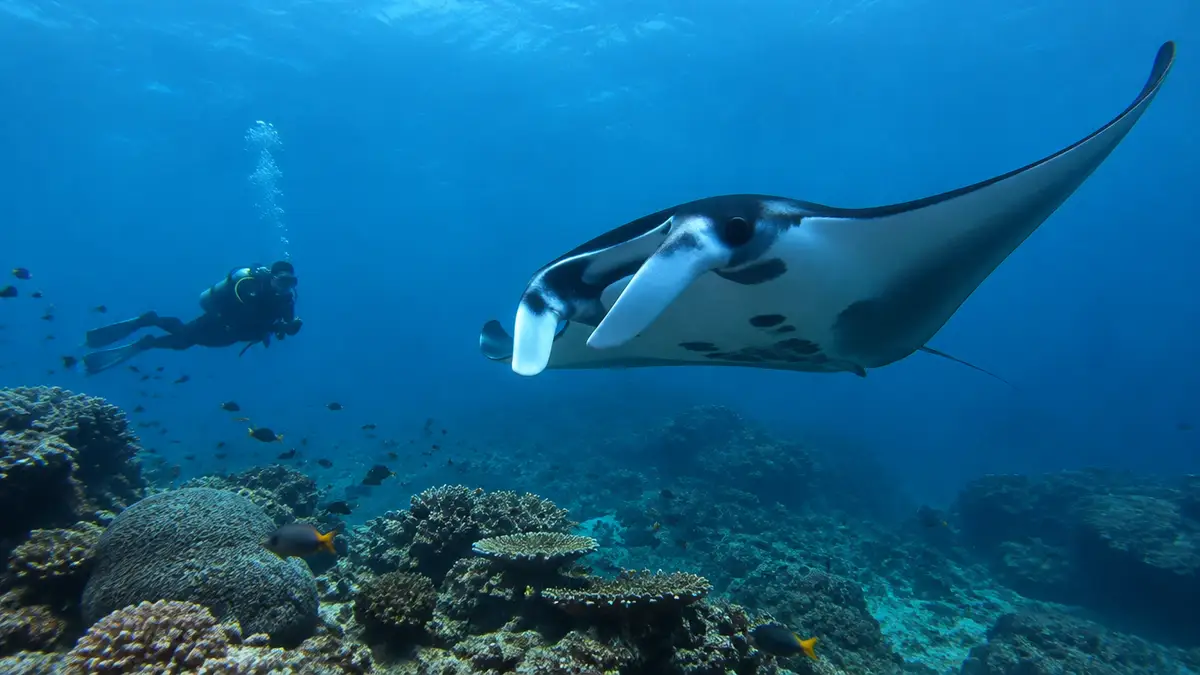
On this page
- Best season
- Bali: Apr–Nov · Komodo: Apr–Dec · Raja Ampat: Oct–Apr
- Water temp
- 26–30 °C (Nusa Penida can drop to 18–22 °C)
- Visibility
- 10–30 m
- Difficulty
- (Bali) to
- Beginners
- Bali yes; Komodo/Raja Ampat with experience
- Open Water
- ~US$380–520 (Bali)
Bali
Bali is an easy, affordable base with a wide variety of diving:
- Tulamben: home of the USAT Liberty wreck, a WWII US cargo ship lying just off a pebble beach at about 5–30 m. It's one of the easiest and most rewarding wreck dives in the world, perfect for Open Water divers, and covered in coral and fish.
- Amed: relaxed village with gentle reef slopes, shore dives, and good snorkeling.
- Padang Bai: sheltered bays with macro life and a good training area.
- Menjangan Island: in the West Bali National Park; calm walls and clear water.
- Nusa Penida and Nusa Lembongan: famous for manta rays at Manta Point (year-round) and Mola mola (oceanic sunfish), mainly around July–October, when upwellings bring cold water (sometimes 18–22 °C). Currents can be strong, so it's better with some experience.
Best time: the dry season, roughly April–November. Diving continues in the wet season (December–March), but with more rain and sometimes reduced visibility.
Komodo National Park
Between the islands of Sumbawa and Flores, Komodo is famous for dragons on land and big fish, mantas and strong currents underwater. Nutrient-rich water between the Indian and Pacific Oceans produces spectacular coral and fish life.
- Sites like Batu Bolong, Castle Rock, Crystal Rock and Manta Point
- Manta rays, reef sharks, huge schools of fish, turtles, dolphins, and excellent macro
- Access by liveaboard or day trips from Labuan Bajo
Level: some sheltered sites are fine for newer divers with a good guide, but many famous sites have strong, unpredictable currents and down-currents. Advanced certification and 30–50+ dives are recommended, along with drift diving experience and an SMB. Best time: roughly April–December; the north tends to be clearer, the south cooler and richer in plankton.
Raja Ampat
Off the western tip of New Guinea, Raja Ampat has the highest recorded marine biodiversity on Earth, with over 1,500 fish species and around 75% of known hard coral species. It's remote and relatively expensive, and it's one of the world's most spectacular diving areas.
- Healthy reefs, wobbegong sharks, mantas (reef and oceanic), pygmy seahorses
- Huge fish schools; mangrove and jetty dives
- Access mostly via liveaboards or eco-resorts, flying via Sorong
Level: currents are common; experienced divers get the most out of it. A marine park entry permit is required. Best time: roughly October–April for calmer seas; many liveaboards operate in this window.
Other Indonesian highlights
- Lembeh Strait (North Sulawesi): the world's muck-diving capital. Strange critters for macro fans.
- Bunaken: dramatic walls near Manado; good for beginners with guides.
- Gili Islands (Lombok): easy diving and courses, lots of turtles, and a backpacker vibe.
- Wakatobi, Alor, Banda Sea: remote and pristine.
Typical prices (2026)
- Open Water course (Bali/Gili): about US$380–520
- Fun dives Bali: about US$40–70 per dive; Nusa Penida trips US$90–150 for 2 dives
- Komodo day trip from Labuan Bajo: about US$120–200 for 2–3 dives plus park fees
- Komodo liveaboard: about US$1,200–3,500 per week; Raja Ampat US$2,500–6,000+
Practical tips
- Bring a 5 mm suit for Nusa Penida in mola season; 3 mm elsewhere
- Marine park fees apply in Komodo, Raja Ampat, Bunaken and others
- Always carry an SMB in current areas
- Internal flights have strict luggage limits. Consider travel gear
Top sites at a glance
| Site | Area | Highlight | Level |
|---|---|---|---|
| USAT Liberty | Tulamben, Bali | WWII wreck from 5 m | |
| Manta Point | Nusa Penida | Reef mantas | |
| Crystal Bay | Nusa Penida | Mola mola (Jul–Oct) | |
| Batu Bolong | Komodo | Fish-packed pinnacle | |
| Cape Kri | Raja Ampat | Record fish counts | |
| Lembeh Strait | North Sulawesi | Muck critters |
Getting around
Bali's Denpasar airport is the main hub. From there, short domestic flights reach Labuan Bajo (Komodo), and connections via Makassar or Jakarta reach Sorong (Raja Ampat) and Manado (Bunaken, Lembeh). Allow buffer days, as domestic flights can be delayed and luggage limits are strict.
Frequently asked questions
Is Bali good for beginner divers?
Yes. Sites like Tulamben, Amed and Padang Bai have calm conditions, easy shore entries and the famous USAT Liberty wreck in shallow water.
Is Komodo suitable for new divers?
Some sheltered sites are, but Komodo is known for strong currents. Advanced certification and some drift experience are strongly recommended.
When is the best time to see Mola mola in Bali?
Mainly July–October around Nusa Penida and Nusa Lembongan, when cold upwellings bring them up from deeper water.
Keep reading
Diving in the Philippines: Moalboal, Malapascua and Anilao
Sardine runs, thresher sharks and world-class macro, at friendly prices.
Diving in the Maldives: Atolls, Mantas, Whale Sharks and Liveaboards
Mantas, whale sharks and reef sharks in warm, clear water. Great for beginners at sheltered sites.
Diving in Malaysia: Sipadan and the Perhentian Islands
The Perhentians are perfect for learning; Sipadan is a bucket-list site for when you're ready.