Diving the Galápagos Islands: Hammerheads, Whale Sharks and Why You Need Experience
The Galápagos is one of the world's great big-animal dive destinations, but the currents, cold upwellings and open-ocean conditions make it a trip for experienced divers.
On this page
- Best season
- Jun–Nov (whale sharks) · Dec–May (warmer, calmer)
- Water temp
- 16–28 °C (varies by season and island)
- Visibility
- 10–25 m
- Difficulty
- Beginners
- Only with experience
- Liveaboard
- ~US$5,000–9,000+/week
About 1,000 km off the coast of Ecuador, the Galápagos Islands sit where several ocean currents meet, including the cold, nutrient-rich Humboldt and Cromwell currents. The result is an extraordinary concentration of marine life, much of it found nowhere else on Earth.
Why the Galápagos is for experienced divers
- Strong currents and surge. Divers often hold on to rocks with gloves or use a reef hook (where allowed) while watching sharks pass.
- Negative entries and blue-water drifts in open ocean.
- Cold water and thermoclines, sometimes below 20 °C, which require 7 mm suits with hood and gloves.
- Remote location: evacuation and chamber access are far away.
Most liveaboards heading to Wolf and Darwin require at least Advanced Open Water certification and 30–50+ logged dives, ideally including drift and cold-water experience. Nitrox is recommended and often included.
Main dive areas
Wolf and Darwin islands
The legendary northern islands, visited only by liveaboards. Famous for:
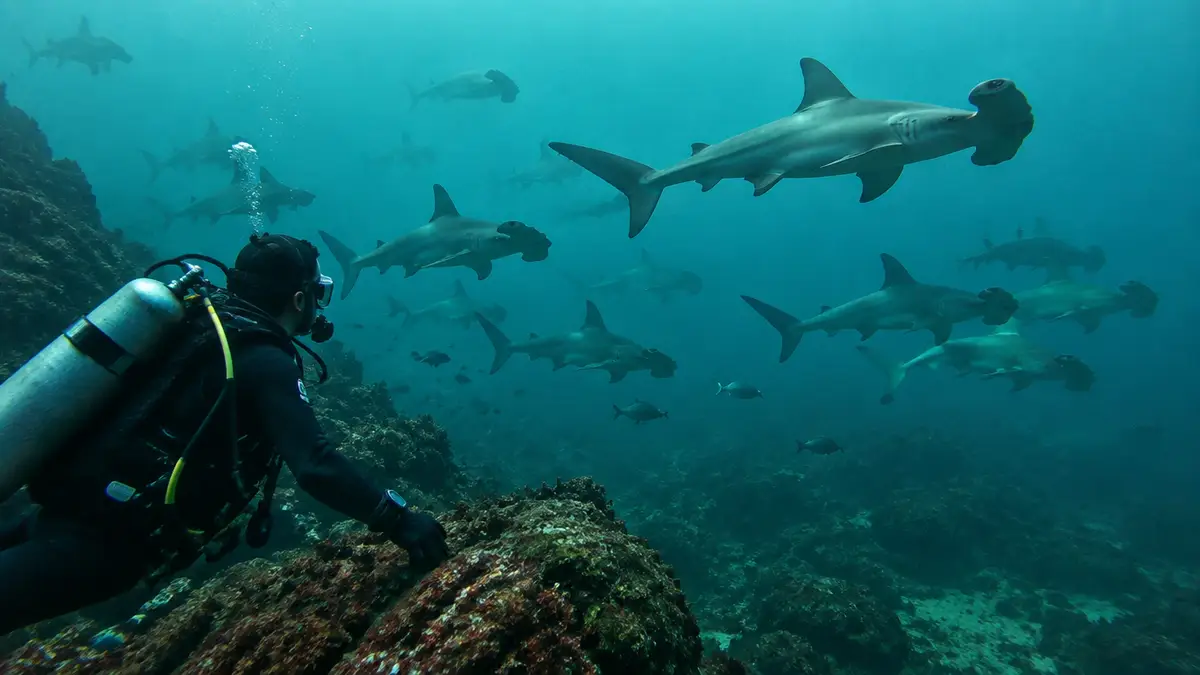
- Huge schools of scalloped hammerhead sharks
- Whale sharks, especially large females, mainly June–November around Darwin
- Silky and Galápagos sharks, eagle rays, dolphins, turtles and giant schools of jacks and tuna
Note: Darwin's Arch collapsed in 2021, leaving two pillars ("the Pillars of Evolution"); the dive site underwater remains outstanding.
Central and western islands
- Cabo Marshall (Isabela): manta rays.
- Punta Vicente Roca and Cabo Douglas (Fernandina): cold upwelling sites where you may see marine iguanas feeding underwater, flightless cormorants, Galápagos penguins and mola mola.
- Gordon Rocks and North Seymour: day-trip sites from Santa Cruz with hammerheads, sea lions and whitetip reef sharks. Gordon Rocks is known for strong currents.
- Kicker Rock (León Dormido): from San Cristóbal, with sharks, rays and sea lions.
When to go
| Season | Water | Highlights |
|---|---|---|
| Jun–Nov (cool/"garúa" season) | 16–23 °C | Whale sharks at Darwin, more plankton and big schools, rougher seas |
| Dec–May (warm season) | 22–28 °C | Calmer seas, better visibility at times, hammerheads, manta rays |
Options for less experienced divers
If you're a new diver but going to the Galápagos anyway, you can:
- Do land-based day trips from Santa Cruz or San Cristóbal to easier sites, choosing operators that match dives to experience
- Snorkel, which is spectacular in itself, with sea lions, turtles, penguins and marine iguanas
- Build experience first with an Advanced course, drift dives and cold-water dives elsewhere, then come back for the northern islands
Costs (2026, approximate)
- 8-day liveaboard including Wolf and Darwin: about US$5,000–9,000+
- Galápagos National Park entrance fee for foreign visitors: US$200 (increased in 2024) plus a transit card
- Day-trip dives from Santa Cruz: about US$200–300 for two dives
- Flights via Quito or Guayaquil
Practical tips
- Bring or rent a 7 mm suit with hood and gloves
- Carry an SMB and a signalling device; many boats provide GPS locator beacons
- Get comprehensive dive insurance with evacuation cover
- Book liveaboards up to a year ahead
Typical Galápagos liveaboard itinerary
| Day | Typical plan |
|---|---|
| 1 | Fly to Baltra or San Cristóbal; check-in dive (often at North Seymour or Punta Carrión) |
| 2 | Central islands, then an overnight crossing north |
| 3–5 | Wolf and Darwin: 3–4 dives a day with hammerheads, sharks, whale sharks (seasonal) |
| 6 | Cabo Marshall (mantas) or Fernandina / Isabela (marine iguanas, penguins, mola mola) |
| 7 | Final dives and a land visit (for example, giant tortoises on Santa Cruz) |
| 8 | Disembark and fly out (after a full no-fly interval) |
How to prepare
- Complete Advanced Open Water, Nitrox and ideally Drift training
- Log 30–50+ dives, including some in current and in cooler water
- Practise deploying an SMB from depth until it's routine
- Practise negative entries and fast group descents with a guide
- Get your own well-fitting 7 mm suit, hood and gloves
Frequently asked questions
Can beginners dive in the Galápagos?
Beginners can do some easier day-trip dives with suitable operators, but the famous northern islands (Wolf and Darwin) are for experienced divers with Advanced certification and typically 30–50+ logged dives.
When is the best time to see whale sharks in the Galápagos?
Mainly June to November, especially around Darwin Island.
Keep reading
Diving in South Africa: The Sardine Run, Shark Dives and Aliwal Shoal
The Sardine Run and world-famous shark dives for experienced divers; Sodwana Bay for beginners.
The 10 Best Places in the World for Your First Dive
Warm, calm, clear and affordable: our top 10 places to take your first breath underwater.
Winter Diving: Where to Dive from December to March
Escape the cold: the best warm-water dive destinations from December to March.