Diving in Mexico: Cozumel, the Yucatán Cenotes and Baja California
Mexico offers three very different dive worlds: Caribbean drift dives in Cozumel, crystal-clear freshwater caverns in the Yucatán cenotes, and wild Pacific encounters in Baja California.
On this page
- Best season
- Cozumel/cenotes: year-round (Dec–May driest) · Baja: Aug–Nov
- Water temp
- Cozumel 25–29 °C · Cenotes ~24–25 °C · Baja 19–29 °C
- Visibility
- Cozumel 20–40 m · Cenotes 50 m+
- Difficulty
- to
- Beginners
- Cozumel yes; cenotes after certification
- Fun dive
- ~US$60–100
Cozumel
Cozumel, an island off the Riviera Maya, sits on the Mesoamerican Reef, the second-largest barrier reef system in the world. Its signature is drift diving: a steady current carries you gently along reefs, walls and coral towers while the boat follows.
- Famous sites: Palancar Reef (Gardens, Caves, Horseshoe), Columbia, Santa Rosa Wall, Paradise Reef (easy, shallow), and the C-53 wreck.
- Marine life: turtles, eagle rays, nurse sharks, groupers, huge barrel sponges, the endemic splendid toadfish, and colourful reef fish.
- For beginners: many sites are relaxed, gentle drifts with a guide. Some walls go deep and currents vary, so tell your dive centre your experience.
Much of the reef is within the Cozumel Reefs National Park, with a daily fee (often via a wristband). Gloves are prohibited.
The cenotes of the Yucatán
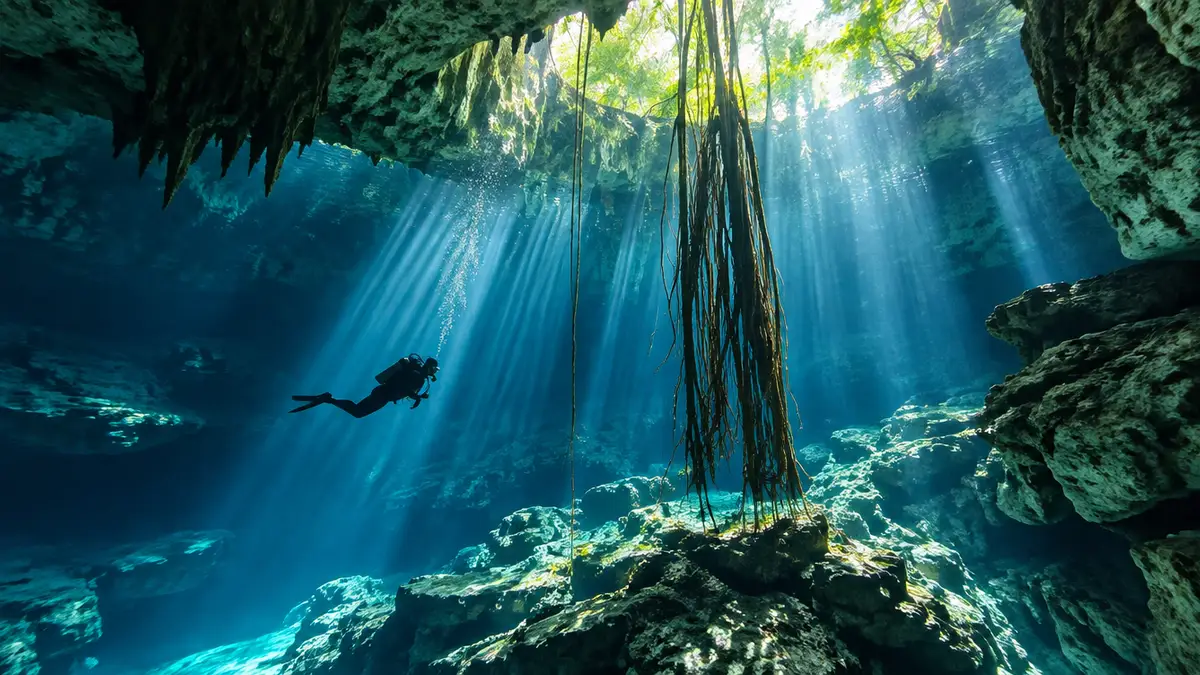
The Yucatán Peninsula is riddled with cenotes: sinkholes that open into the world's largest known underwater cave systems. Diving in them is an otherworldly experience, with crystal-clear freshwater, beams of sunlight and limestone formations.
- Dos Ojos, Chac Mool, Gran Cenote, Dreamgate, Car Wash, Angelita: famous sites near Tulum and Playa del Carmen.
- The halocline: in some cenotes, a blurry, shimmering layer where freshwater meets saltwater below.
- Angelita: a mysterious "underwater river" of hydrogen sulphide cloud at about 30 m (advanced).
Recreational divers do guided cavern dives, staying within the daylight zone and within set distances of the surface, with a certified cavern guide and small groups. Typical requirements are Open Water certification, good buoyancy and some recent experience. Some sites need Advanced or more dives. Going beyond the cavern zone requires full cave training. Many untrained divers have died in caves.
Tips: the water is about 24–25 °C year-round, so a 5 mm suit is recommended. Buoyancy control is essential to avoid stirring silt or touching delicate formations.
Baja California and the Sea of Cortez
- La Paz: snorkeling and diving with playful sea lions at Los Islotes, schooling hammerheads at El Bajo (seasonal, advanced), and whale sharks (snorkeling, roughly Oct–Apr).
- Cabo Pulmo: a marine park that is a conservation success story, where fish life recovered dramatically after fishing was banned. Big schools of jacks and bull sharks at times.
- Cabo San Lucas: easy dives at Land's End and sea lions.
- Socorro (Revillagigedo Islands): remote liveaboard trips (roughly Nov–May) for giant oceanic mantas, sharks, humpback whales (winter) and dolphins. For experienced divers only.
Water in the Sea of Cortez ranges from about 19 °C (winter) to 29 °C (late summer).
Other Mexican options
- Playa del Carmen: bull shark dives in winter (roughly Nov–Mar), advanced.
- Isla Mujeres and Holbox: whale shark snorkeling tours (about June–September).
- Banco Chinchorro: a remote atoll reef.
When to go
| Months | Caribbean side | Baja |
|---|---|---|
| Dec–Apr | Dry season, pleasant, great diving | Cooler water; whale sharks in La Paz; Socorro season |
| May–Jul | Warmer, some rain | Water warming |
| Aug–Nov | Warmest water; hurricane season (peak Aug–Oct) | Warmest water, best visibility, hammerheads possible |
Typical prices (2026)
- Open Water course (Cozumel/Riviera Maya): about US$450–650
- Two-tank boat dive in Cozumel: about US$90–150 plus park fee
- Two-cenote dive tour: about US$130–200 including entrance fees
- Socorro liveaboard: about US$3,500–5,500+ per week
Sample 10-day Riviera Maya dive trip
- Fly into Cancún; stay in Playa del Carmen.
- Days 1–2: reef dives off Playa del Carmen to warm up.
- Days 3–5: ferry to Cozumel for drift dives at Palancar, Columbia and Santa Rosa.
- Days 6–8: guided cenote cavern dives (Dos Ojos, Chac Mool, Gran Cenote) based in Tulum.
- Day 9: no-dive day: Mayan ruins at Tulum or Cobá.
- Day 10: fly home.
Cenote etiquette
- Shower before entering, with no sunscreen or insect repellent. Cenotes are drinking-water sources and delicate ecosystems
- Stay behind your guide and inside the guideline area
- Use the frog kick to avoid stirring up silt
- Never touch formations; they took thousands of years to form
Frequently asked questions
Can beginners dive in the Mexican cenotes?
Certified divers with good buoyancy can join guided cavern tours at many cenotes. It's not suitable for try-dives, and some sites require more experience.
Is Cozumel good for new divers?
Yes. Many sites are gentle drift dives with good visibility. Choose a centre that matches dives to your experience.
Keep reading
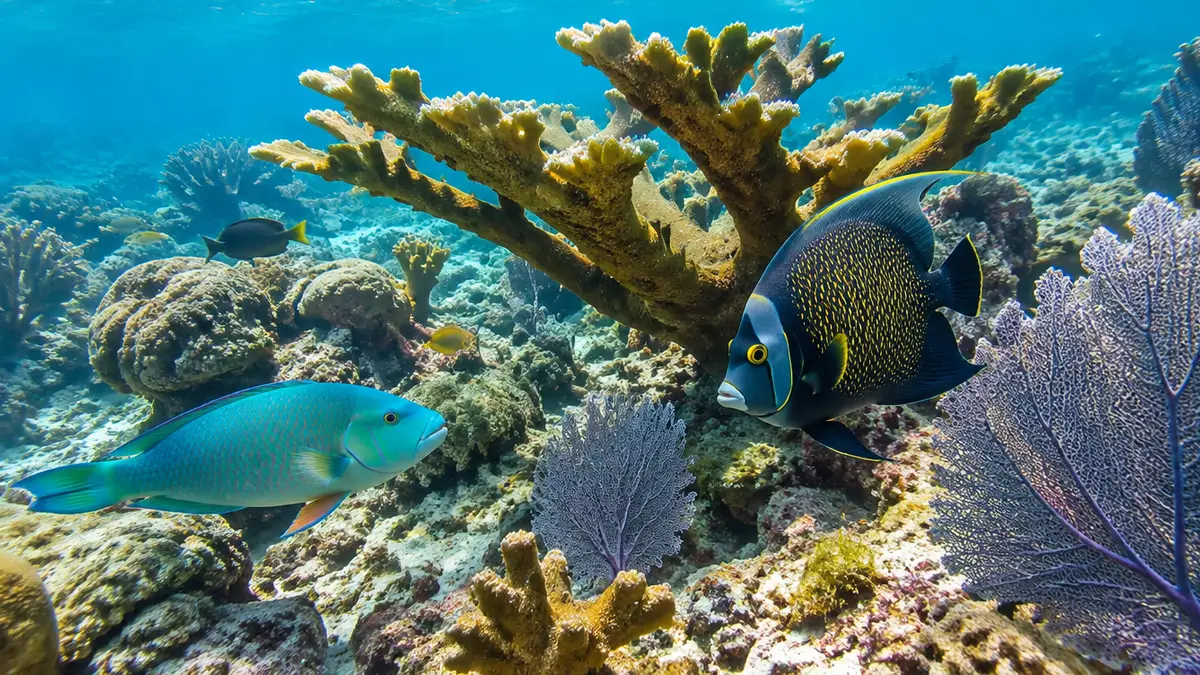
Diving in the Caribbean: Bonaire, Belize's Great Blue Hole and the Bahamas
Bonaire is a shore-diving paradise for beginners; Belize and the Bahamas add legendary sites.
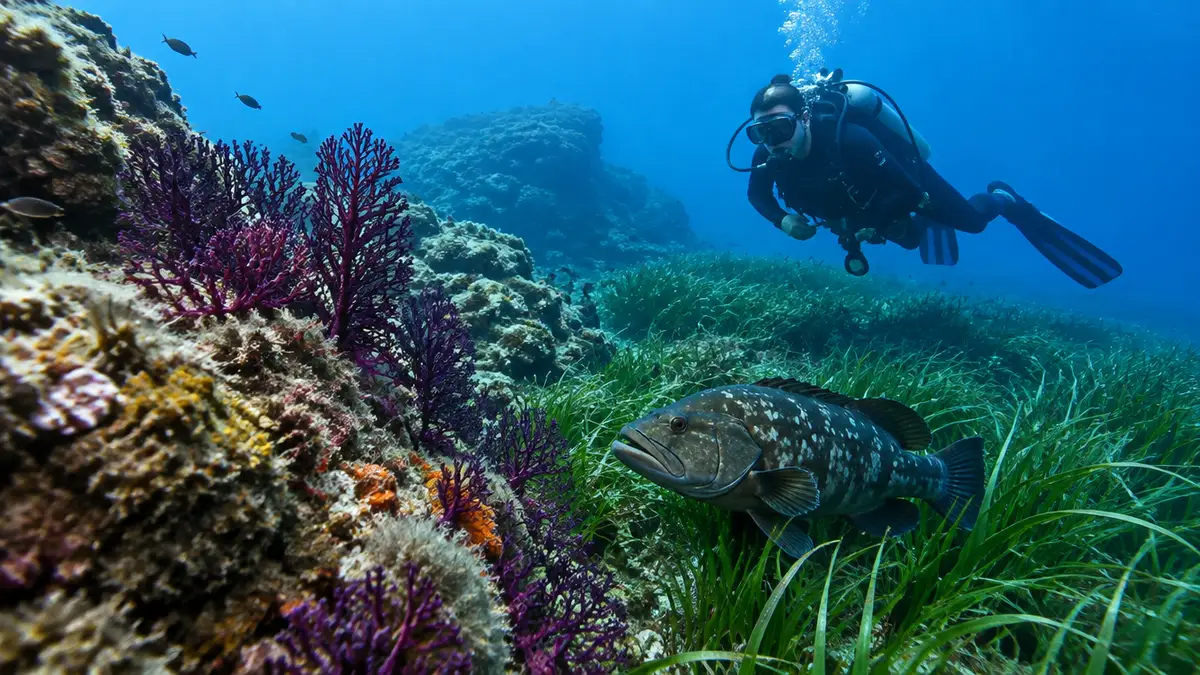
Diving the Mediterranean: Croatia, Malta and Cyprus (Zenobia Wreck)
Clear summer water, historic wrecks and dramatic rock formations, close to home for Europeans.
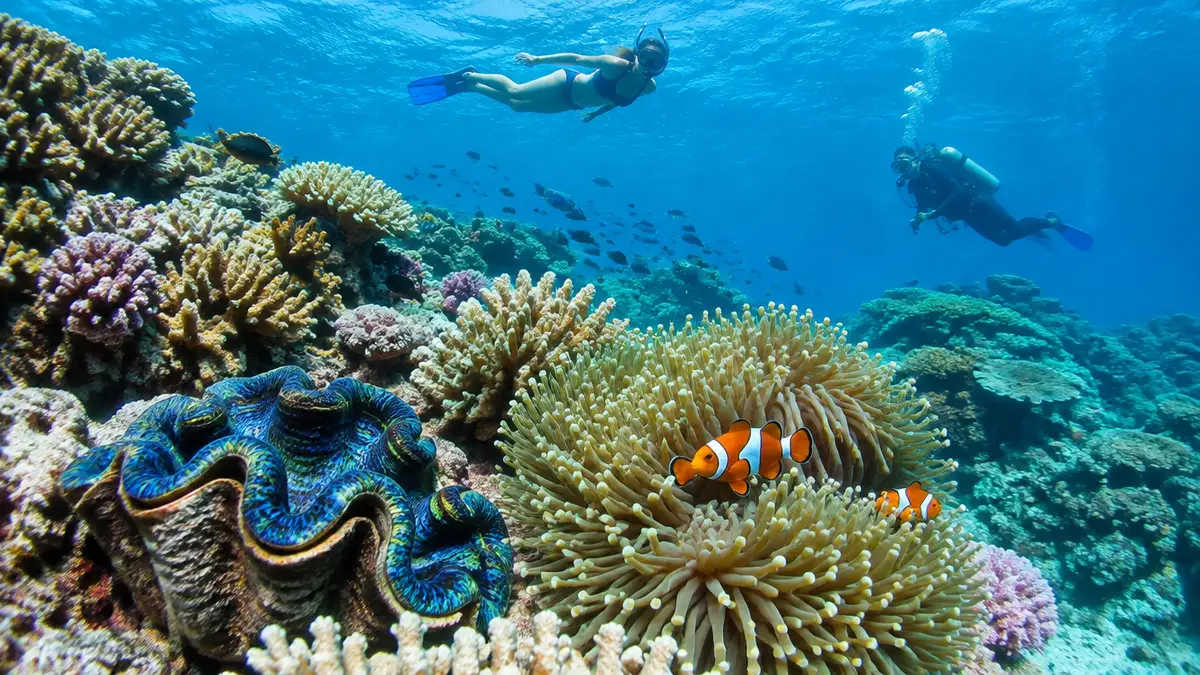
Diving the Great Barrier Reef, Australia: A Beginner's Guide
The world's largest reef system, with excellent day trips and training from Cairns and Port Douglas.