Where to See Manta Rays, Whale Sharks and Turtles While Diving
For many divers, the dream is a manta ray gliding overhead, a whale shark cruising past or a turtle munching on seagrass. Here's where and when to look.
On this page
Wild animals move with food, temperature and currents. Seasons below are typical, but sightings are never guaranteed. Be wary of operators who promise 100% success, especially if they use feeding.
Manta rays
Manta rays (reef mantas and the larger oceanic mantas) can reach several metres across. They visit cleaning stations where small fish remove parasites, and feeding areas where plankton concentrates.
| Where | Best time | Beginner-friendly? |
|---|---|---|
| Nusa Penida (Manta Point), Bali, Indonesia | Year-round | Yes, surge possible |
| Komodo, Indonesia | Year-round (peaks vary) | Currents, with experience |
| Maldives (Hanifaru Bay, Baa Atoll, and cleaning stations) | Jun–Nov (west side); Dec–Apr (east side) | Many sites yes; Hanifaru is snorkel-only |
| Koh Bon / Koh Tachai, Thailand | Feb–Apr | Moderate currents |
| Kona, Hawaii (manta night dive) | Year-round | Yes, very easy |
| Socorro, Mexico | Nov–May | Advanced liveaboard |
| Lady Elliot Island, Australia | May–Aug (peak) | Yes |
| Tofo, Mozambique | Year-round | Ocean conditions, moderate |
Whale sharks
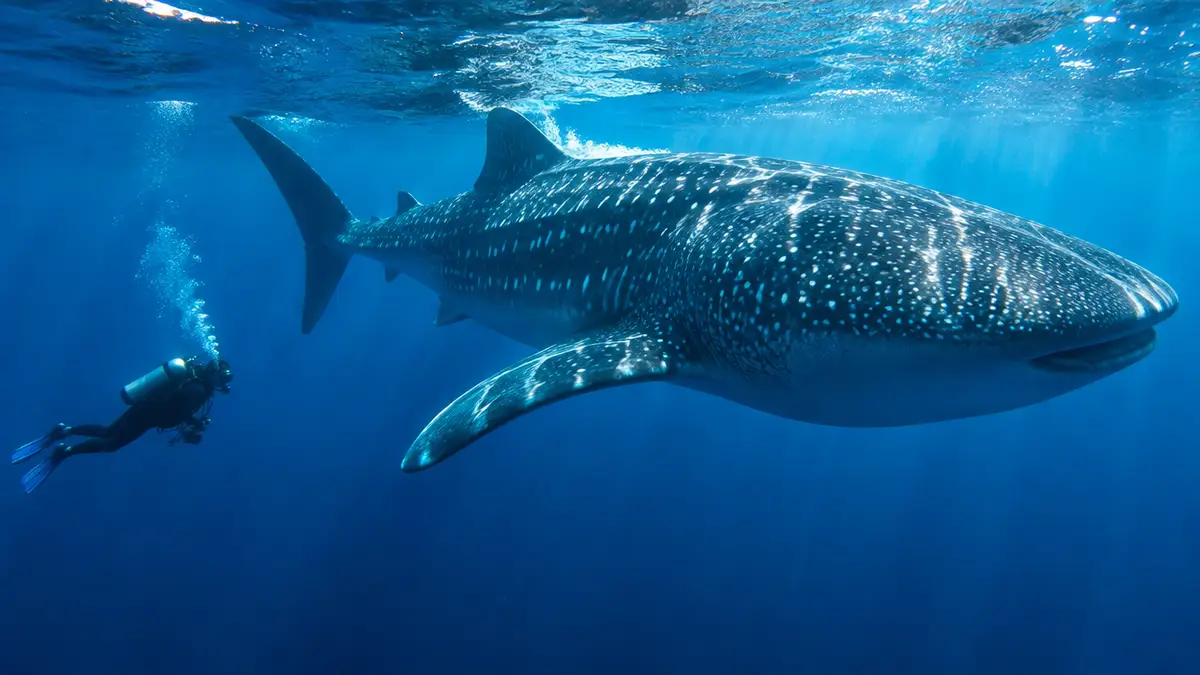
The world's biggest fish (up to 12 m or more) is a gentle filter feeder. Many whale shark encounters happen while snorkeling, since they often feed near the surface.
| Where | Best time | Notes |
|---|---|---|
| South Ari Atoll, Maldives | Year-round | Often seen snorkeling |
| Isla Mujeres & Holbox, Mexico | Jun–Sep | Snorkel tours with regulations |
| La Paz, Mexico | Oct–Apr | Snorkeling in the bay, regulated |
| Ningaloo Reef, Western Australia | Mar–Jul | Well-regulated snorkel tours |
| Donsol & Southern Leyte, Philippines | Nov–Jun (varies) | Choose non-feeding operators |
| Koh Tao & Richelieu Rock, Thailand | Mar–May, Sep–Oct (luck needed) | While diving |
| Utila, Honduras (Caribbean) | Mar–Apr, Aug–Oct | Chance encounters |
| Darwin Island, Galápagos | Jun–Nov | Advanced liveaboard |
| Djibouti | Nov–Jan | Juveniles in the Gulf of Tadjoura |
Some places (such as Oslob in the Philippines) attract whale sharks through daily hand-feeding. Scientists and conservation groups raise concerns about the effect on the animals' behaviour and health. We recommend choosing wild, non-feeding encounters.
Sea turtles
Turtles are among the easiest big animals to see, and many beginner-friendly sites have them almost daily.
- Sipadan and the Perhentians, Malaysia: green and hawksbill turtles on nearly every dive at Sipadan; common in the Perhentians.
- Moalboal and Apo Island, Philippines: resident green turtles in the shallows.
- Gili Islands, Indonesia: "turtle heaven" for snorkelers and divers.
- Marsa Alam, Egypt: turtles grazing in seagrass bays such as Abu Dabab.
- Great Barrier Reef and Heron Island: nesting season about November–March.
- Maldives, Bonaire and Akumal, Mexico.
How to have a responsible encounter
- Keep your distance: typically at least 3–4 m from whale sharks and mantas, and never block their path
- Never touch or ride them. Touching damages their protective mucus
- Stay low at manta cleaning stations, and don't swim over the top of the station
- No flash on whale sharks, and follow local rules
- Limit the number of swimmers per animal (good operators control this)
- Let turtles breathe: never block their way to the surface
More in our ocean etiquette guide.
Other bucket-list encounters
- Hammerhead schools: Galápagos (Wolf and Darwin), Cocos Island (Costa Rica), the Red Sea's offshore reefs in summer, and Layang Layang in Malaysia (spring). All for experienced divers.
- Thresher sharks: Monad Shoal, Malapascua, Philippines, at dawn year-round.
- Dolphins: the Red Sea (Samadai, with regulations), the Sardine Run in South Africa, and the Bahamas.
- Sea lions: La Paz in Mexico, the Galápagos, and Cape fur seals in South Africa.
- Mola mola (sunfish): Nusa Penida, Bali, roughly July–October.
- Dugongs: Marsa Alam, Egypt (rare), and parts of the Philippines.
Improve your chances
- Go in season: check our calendar.
- Stay longer. More days means more chances.
- Dive early. Many big animals are more active at dawn.
- Ask local guides about recent sightings.
- Be calm and patient: good buoyancy and slow movements let animals approach you.
Frequently asked questions
Where can beginners see manta rays?
Nusa Penida in Bali, the Maldives, Lady Elliot Island in Australia, and the famous manta night dive in Kona, Hawaii, are all accessible to newer divers and snorkelers.
Do I need to be a diver to see whale sharks?
No. Many of the best whale shark encounters, such as in the Maldives, Mexico and Ningaloo, are while snorkeling.
Keep reading
Cheap Diving: The Most Affordable Scuba Destinations in the World
Where your diving budget goes furthest, with typical course and dive prices.
Diving in Egypt's Red Sea: Hurghada, Sharm el-Sheikh, Marsa Alam and Dahab
Year-round warm, clear water, affordable courses and famous wrecks. One of the best places to learn.
Diving in Eilat (Israel) and Aqaba (Jordan): Easy Red Sea Shore Diving
Calm, clear shore diving at the tip of the Red Sea, with wrecks and coral gardens a few fins from the beach.