Diving the Mediterranean: Croatia, Malta and Cyprus (Zenobia Wreck)
The Mediterranean may lack tropical coral, but it makes up for it with superb visibility, dramatic underwater landscapes, octopus and groupers, and some of the world's best wrecks.
On this page
- Best season
- Jun–Oct
- Water temp
- 14–16 °C (winter) to 24–27 °C (Aug–Sep)
- Visibility
- 15–40 m
- Difficulty
- to (deep wrecks)
- Beginners
- Good in summer
- Open Water
- ~€450–650
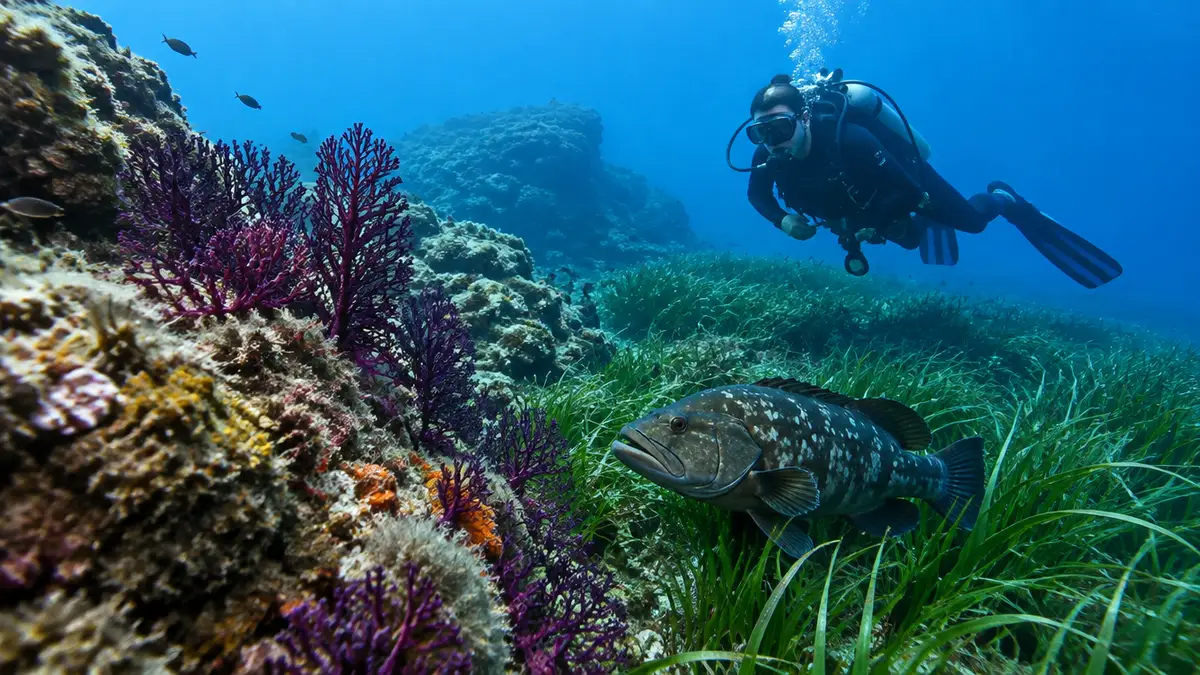
Mediterranean diving is about rocky reefs, caves, seagrass meadows, gorgonian fans and history: ancient amphorae, WWII wrecks and deliberately sunk ships. Low nutrient levels mean the water is often very clear. Marine life includes octopus, moray eels, groupers, barracuda, nudibranchs, seahorses and colourful red gorgonians on deeper walls.
Malta and Gozo
Malta is often called one of Europe's best dive destinations: reliable warm-season conditions, clear water, English widely spoken, and lots of shore diving.
- Wrecks: the Um El Faroud tanker (about 18–36 m), P29 patrol boat, HMS Maori, Rozi tug, and many WWII wrecks for technical divers.
- Gozo's Blue Hole: a natural rock pool leading to an arch and open sea. The famous Azure Window collapsed in 2017, and its remains are now a dive site.
- Caverns and arches: Cathedral Cave, Santa Maria Caves, Comino's reefs.
- Beginner friendly: many sheltered bays for courses; diving is possible year-round, with water around 15 °C in February and up to about 26–27 °C in August–September.
Cyprus and the Zenobia
Cyprus has warm water for the Mediterranean (up to about 27–28 °C in late summer) and is home to one of the world's most famous wrecks.
The Zenobia
The MS Zenobia was a Swedish-built roll-on/roll-off ferry that capsized and sank off Larnaca in June 1980 on her maiden voyage, with her cargo of over 100 lorries still on board. She lies on her port side at roughly 16–42 m, is about 172 m long, and is a popular site for multiple dives.
- Open Water divers can explore the shallower upper side (starboard hull) at around 16–18 m
- Advanced divers can see the deck, lorries and propellers at 25–30 m
- Penetration (restaurant, cargo decks) requires wreck training and experience
- Groupers, barracuda and amberjacks live around the wreck
Other Cyprus sites: Cape Greco's caves and canyons (Ayia Napa/Protaras), Paphos's reefs and small wrecks, and several newer artificial reefs.
Croatia
Croatia's Adriatic coast has over a thousand islands, very clear water and a strong diving culture.
- Vis Island: WWII wrecks (such as a B-17 bomber at about 72 m for technical divers, and the Teti wreck for recreational divers), caves and walls.
- Istria (Rovinj, Pula): the Baron Gautsch passenger steamer (about 28–40 m, advanced) and many easy reefs.
- Kornati National Park: dramatic islands and red gorgonian walls.
- Dubrovnik area: the Taranto wreck and good reef dives.
Water in Croatia is typically 20–25 °C in summer; bring a 5–7 mm suit. Note: in Croatia, diving independently has historically required a local diving permit, but diving through registered dive centres is straightforward. Some areas (wrecks, protected zones) have specific rules and fees.
Other Mediterranean options
- Spain: Medes Islands (Costa Brava) marine reserve; Cabo de Palos; the Balearics; and the Canary Islands (Atlantic, year-round).
- France: Port-Cros National Park and Marseille's calanques.
- Italy: Sardinia, Sicily, the Aeolian Islands, and Portofino.
- Greece and Turkey: growing dive scenes with clear water and ancient history (removing antiquities is strictly illegal).
When to go
| Months | Water | Notes |
|---|---|---|
| Nov–Apr | 14–18 °C | Many centres closed (Malta and Cyprus stay open); 7 mm or drysuit |
| May–Jun | 18–23 °C | Season opens; often a thermocline |
| Jul–Sep | 23–28 °C | Warmest, busiest; 3–5 mm suits |
| Oct | 21–25 °C | Warm water, fewer crowds |
Typical prices (2026)
- Open Water course: about €450–650
- Guided shore dive: about €35–55; boat dive €45–70
- Zenobia dive from Larnaca: about €50–75 per dive including boat
Mediterranean marine life to look for
- Octopus in rocky crevices, often surrounded by shells
- Dusky groupers, especially in marine reserves and around wrecks
- Moray eels and conger eels
- Nudibranchs in stunning colours; the Mediterranean is a great macro destination
- Seahorses in seagrass meadows
- Barracuda and amberjack schools on deeper sites
- Red gorgonians and yellow cluster anemones on deeper walls
- Posidonia seagrass: vital habitat, and protected in many areas
Sample week in Malta and Gozo
- Days 1–2: shore dives in sheltered bays around Malta (Cirkewwa, Ghar Lapsi).
- Days 3–4: wrecks, Um El Faroud (advanced) or P29 and Rozi at Cirkewwa.
- Days 5–6: ferry to Gozo for the Blue Hole, Inland Sea tunnel and Wied il-Mielah.
- Day 7: no-dive day exploring Valletta and Mdina.
Frequently asked questions
Can Open Water divers dive the Zenobia?
Yes. The upper side of the hull is around 16–18 m, within Open Water limits. Deeper parts need Advanced certification, and going inside requires wreck training.
Is the Mediterranean good for diving?
Yes, especially in summer and autumn: very clear water, dramatic rock formations, caves, abundant octopus and groupers, and excellent wrecks.
Keep reading
Diving the Great Barrier Reef, Australia: A Beginner's Guide
The world's largest reef system, with excellent day trips and training from Cairns and Port Douglas.
Diving the Galápagos Islands: Hammerheads, Whale Sharks and Why You Need Experience
Schools of hammerheads, whale sharks and marine iguanas. A bucket-list trip for experienced divers.
Diving in South Africa: The Sardine Run, Shark Dives and Aliwal Shoal
The Sardine Run and world-famous shark dives for experienced divers; Sodwana Bay for beginners.