What a Dive Day Looks Like: Boat Diving, Shore Diving and Liveaboards
Your first independent dive day can feel confusing: what to bring, where to be, when to kit up. Here's how it usually works, whether you dive from a boat, from the shore or on a liveaboard.
On this page
Boat day trips (the most common)
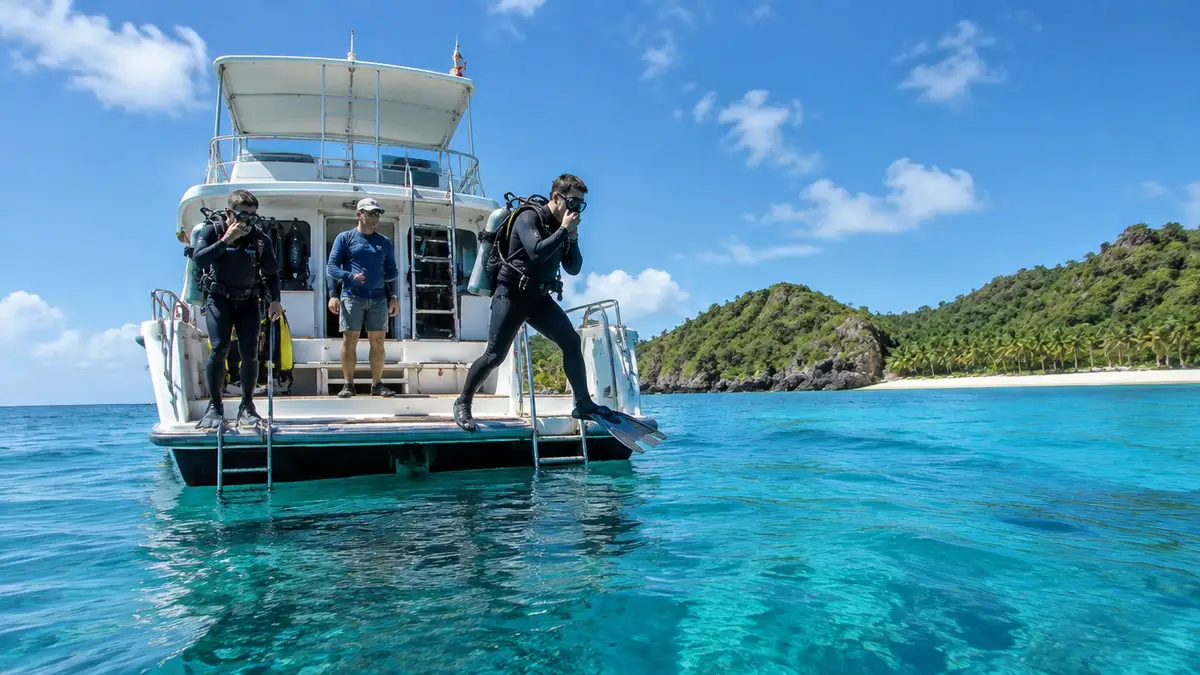
In most destinations, you'll dive from a day boat that visits two (sometimes three) sites and returns in the early afternoon.
A typical boat day
| Time | What happens |
|---|---|
| 07:00–07:30 | Arrive at the dive centre; sign in, show your certification card and logbook, pick up rental gear |
| 07:45 | Walk or drive to the boat; gear is often loaded for you |
| 08:00 | Boat departs; set up your BCD and regulator on your tank, check gear |
| 08:45 | Arrive at site 1; dive briefing |
| 09:00 | Kit up, buddy check, giant stride or back-roll entry; 45–60 minute dive |
| 10:00 | Back on board; surface interval of about 60–90 minutes with snacks, water and sun |
| 11:30 | Briefing and dive 2 at a new site (often shallower) |
| 12:45 | Lunch on board or on return |
| 14:00 | Back at the dive centre; rinse gear, fill in your logbook, pay |
Getting in and out of the water
- Giant stride: from a platform or stern, hold your mask and regulator, look ahead, and step out with one big stride.
- Back roll: from small boats and RIBs; sit on the edge, hold your mask and regulator, and roll backwards on the count.
- Negative entry: in currents, divers sometimes descend immediately with an empty BCD, but only when briefed and experienced.
- Exits: usually by ladder. Remove your fins in the water (keep your mask on and regulator in until you're holding the ladder), or hand up your BCD first on small boats.
Shore diving
In places like Bonaire, Eilat and Aqaba, parts of Dahab and the Mediterranean, you walk in from the beach, a jetty or rocks.
- Freedom: dive when you like; no boat schedule; often cheaper
- Relaxed pace: great for new divers who want to practise
- Challenges: carrying gear, walking over rocks or through waves, longer surface swims
Tips: wear boots and open-heel fins for rocky entries; put fins on in waist-deep water; watch the waves and time your entry between sets; always plan your exit point before you go in.
Liveaboard (dive safari)
On a liveaboard, you sleep on the boat for several days and dive remote sites. Days typically include 3–5 dives:
- 06:30: first dive before breakfast (the "early morning dive")
- 09:30: second dive
- 13:00: third dive after lunch
- Late afternoon or evening: fourth dive or night dive
Everything, from food to tank fills, is taken care of. It's the most dive-intensive way to travel, and best after some experience. See our liveaboard guide.
What to bring on a dive day
- Certification card (or digital card) and logbook
- Your own mask, dive computer and any personal gear
- Swimsuit worn under clothes; towel; warm top or windbreaker
- Reef-safe sunscreen, hat, sunglasses
- Reusable water bottle and snacks
- Seasickness remedy if needed (try it on land first)
- Cash for tips, park fees or lunch
- Dry bag for phone and valuables
Our packing checklist covers everything for a whole trip.
Dive centre etiquette
- Be on time. Boats wait for tides and weather, not latecomers.
- Tell the crew your experience honestly. When was your last dive? How many dives have you done?
- Keep your gear together in one spot on the boat; don't spread it around.
- Don't put masks or cameras in the rinse bucket meant for the other one; many boats have separate buckets.
- Tip according to local custom if you had good service.
Refresher dives
If you haven't dived for 6–12 months or more, most centres will ask you to do a refresher or a check dive first. Don't be offended. It's a quick way to shake off the rust and make the rest of your trip more relaxed.
Common first-day mistakes
- Forgetting your certification card or logbook
- Arriving late and rushing your gear set-up
- Not telling the guide your real experience level
- Skipping breakfast (or eating a huge greasy one)
- Getting sunburned during the surface interval
- Forgetting to rinse and dry your personal gear at the end of the day
After the dives
Rinse your mask, computer and any personal gear in fresh water. Fill in your logbook with depth, time, conditions and what you saw, and get the guide's stamp or signature if you like. Rehydrate, eat, and rest. And remember the no-fly rules if you're travelling soon.
Frequently asked questions
How many dives do you do in a day?
Most day trips include two dives. Liveaboards typically offer three to five a day. Beginners often feel best with two dives a day.
How long is a surface interval between dives?
Usually around 60–90 minutes on day boats. Your dive computer tracks it and adjusts your limits for the next dive.
Keep reading
What Does Your First Scuba Dive Feel Like? An Honest Description
The breathing, the silence, the weightlessness: what your first dive is really like.
Types of Scuba Dives: Reef, Wall, Wreck, Drift, Night, Cave and More
Reef, wall, wreck, drift, night or cave? What each dive involves and when you're ready.
How Much Does Scuba Diving Cost? Courses, Dives, Gear and Trips (2026)
Realistic 2026 prices for courses, fun dives, gear and trips by region, plus ways to save.