Can I Scuba Dive? Age, Swimming Ability and Medical Requirements
Most healthy people from age 10 can learn to scuba dive. Here are the real requirements for age, swimming and health, and how to know when you need a doctor's sign-off.
On this page
This article is general information, not medical advice. Only a doctor, ideally one with diving medicine training, can decide whether you are fit to dive. If you have any condition listed below or any doubt about your health, speak to a physician before booking a course.
Good news first: you don't need to be young, athletic or a strong swimmer to scuba dive. People learn in their 60s and 70s, and many people with disabilities dive with adapted training. There are some real requirements, though, and it is much better to know them before you pay for a course.
Minimum age for scuba diving
The major training agencies (PADI, SSI, NAUI and others) have broadly similar age rules:
| Age | What is allowed (typical) |
|---|---|
| 8–9 years | Pool-only programmes such as PADI Bubblemaker or SSI Scuba Rangers, max about 2–5 m |
| 10–11 years | Junior Open Water certification, max 12 m, must dive with a certified parent/guardian or professional |
| 12–14 years | Junior Open Water, max 18 m, must dive with a certified adult |
| 15+ years | Full adult Open Water certification (junior certs upgrade automatically) |
There is no upper age limit. Older divers simply need to be medically fit, and a doctor's check-up is sensible for anyone over about 45, or earlier if you have risk factors for heart disease. For more on children, see diving with kids.
How well do you need to swim?
You need basic water comfort, not competition fitness. For the Open Water course, the standard agency requirements are:
- A 10-minute float or tread water without any swimming aids, using any method you like.
- A 200-metre continuous swim with any stroke and no time limit, or a 300-metre swim with mask, snorkel and fins.
A try-dive usually needs no formal swim test, but you should still be comfortable in water where you can't touch the bottom. If you can't swim yet, take a few swimming lessons first. It will make your whole diving experience more relaxed. See also fitness for diving.
The diver medical questionnaire
Before any in-water training, every student fills in a diver medical questionnaire. The one used by most agencies worldwide was developed by the Diver Medical Screen Committee with the WRSTC and UHMS. It is a one-page list of yes/no questions about your health.
- If you answer "no" to everything, you sign it and start training.
- If you answer "yes" to any question, you need a doctor to evaluate you and sign the physician's form before any in-water activity, even in a pool.
Download the current questionnaire from your chosen agency's website and complete it at home before your trip. If you need a doctor's approval, get it from your own physician. Trying to find a diving doctor on holiday is stressful and can cost you days of your course.
Be honest. The questionnaire exists to protect you. Hiding a condition doesn't make it safer underwater, and it may also invalidate your dive insurance.
Medical conditions that may affect diving
Some conditions are serious concerns for diving; many others are fine once they are well controlled and a doctor has signed off. The list below is general; individual assessment is what counts.
Conditions that usually need careful medical evaluation
- Lung conditions: asthma, COPD, a history of collapsed lung (pneumothorax), lung surgery. Air trapping in the lungs can cause dangerous injury as pressure drops during ascent. Many people with mild, well-controlled asthma are cleared to dive after testing; others are not.
- Heart and circulation: heart disease, previous heart attack, heart surgery, arrhythmias, uncontrolled high blood pressure, a known patent foramen ovale (PFO).
- Neurological conditions: epilepsy or seizures, fainting, serious head injuries, migraines with neurological symptoms.
- Diabetes: many people with diabetes dive under specific protocols, but it needs medical approval and careful blood sugar management.
- Ear, nose and sinus problems: ear surgery, perforated eardrum, chronic sinusitis, or difficulty equalizing when flying.
- Pregnancy: diving is not recommended during pregnancy, because the effects on the unborn baby are not well understood.
- Mental health and medication: panic disorder, claustrophobia, and any medication that causes drowsiness or affects judgement.
- Recent surgery or injury, and conditions affecting fitness such as significant obesity.
Temporary reasons not to dive
Colds, flu, blocked sinuses, ear infections, a hangover, dehydration, extreme tiredness or stomach illness are all reasons to skip a dive and come back another day. A blocked nose makes equalizing difficult and increases the risk of ear injury. See diving and health for more.
Where to find a diving doctor
A general practitioner can sign the medical form, but a doctor trained in diving and hyperbaric medicine will understand the specific risks much better. Useful places to look include:
- DAN (Divers Alert Network) runs medical information lines and can refer you to diving physicians in many regions.
- National diving medical societies, such as the UK Sports Diving Medical Committee (UKSDMC) or SPUMS in Australia and the Pacific, publish lists of referee doctors.
- Hyperbaric centres near popular dive areas often provide dive medicals.
Other things that matter
Glasses and contact lenses
Soft contact lenses are generally fine under a mask. Alternatively, you can buy a mask with prescription (corrective) lenses. Wait until you have fully recovered from laser eye surgery before diving. Ask your eye surgeon how long that is.
Weight and fitness
There is no weight limit, but good cardiovascular fitness matters. You may need to swim against a current, climb a boat ladder in full gear, or help your buddy. If you get out of breath climbing stairs, talk to your doctor and work on fitness first.
Anxiety
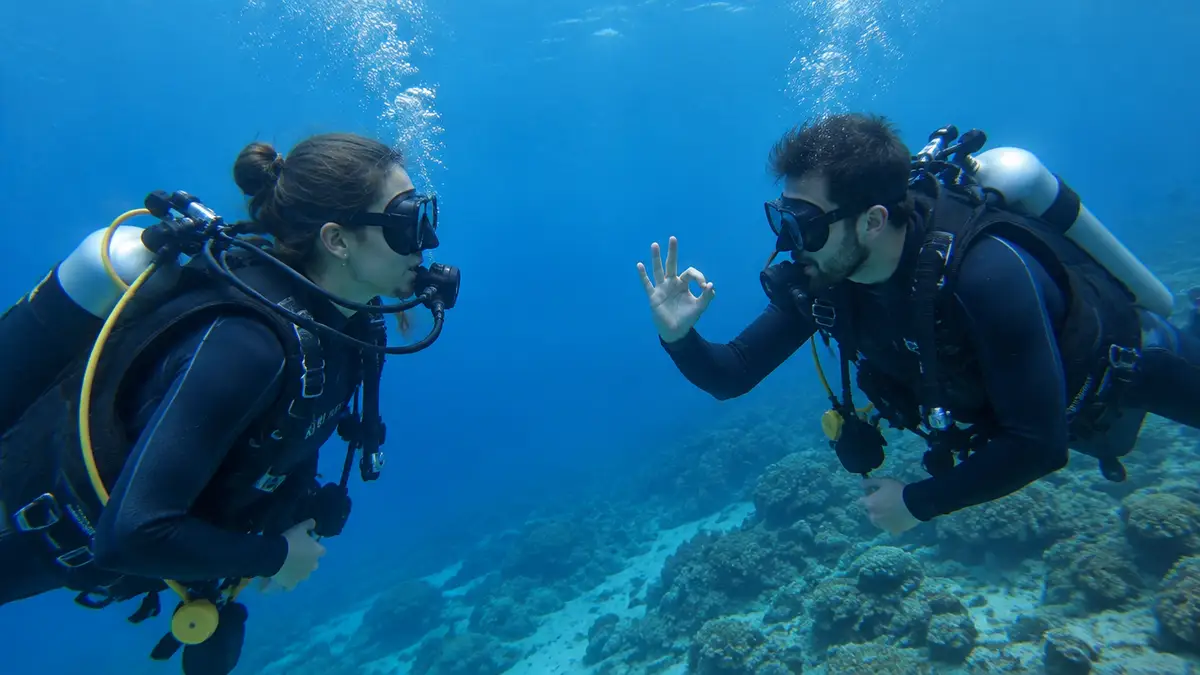
Feeling nervous is completely normal and not a reason to stop. A good instructor will go at your pace. Read how beginners overcome diving fears.
Frequently asked questions
Can I scuba dive if I can't swim?
You can do a try-dive in some places with very close instructor supervision, but to get certified you must complete a 200 m swim (or 300 m with mask, snorkel and fins) and a 10-minute float. Learning to swim first is strongly recommended.
Can I dive with asthma?
Possibly. It depends on how severe your asthma is, what triggers it and how well it is controlled. Many divers with mild, well-controlled asthma are cleared after assessment by a diving doctor. You must answer the questionnaire honestly and get a physician's sign-off.
Is there an age limit for scuba diving?
The minimum age for certification is 10 (junior). There is no maximum age; older divers just need to be medically fit to dive.
Do I need a medical certificate to scuba dive?
Only if you answer "yes" to any question on the diver medical questionnaire, or if local law requires one (some countries and dive centres always ask for a medical certificate). Otherwise, the signed questionnaire is enough.
Keep reading
Discover Scuba Diving: What to Expect on Your First Try-Dive
How an intro dive works step by step, what it costs and how to get the most out of it.
Scared of Scuba Diving? How Beginners Overcome the 6 Most Common Fears
Panic, depth, sharks, claustrophobia in the mask: practical ways beginners get past them.
Scuba Diving Glossary: 60 Diving Terms Every Beginner Should Know
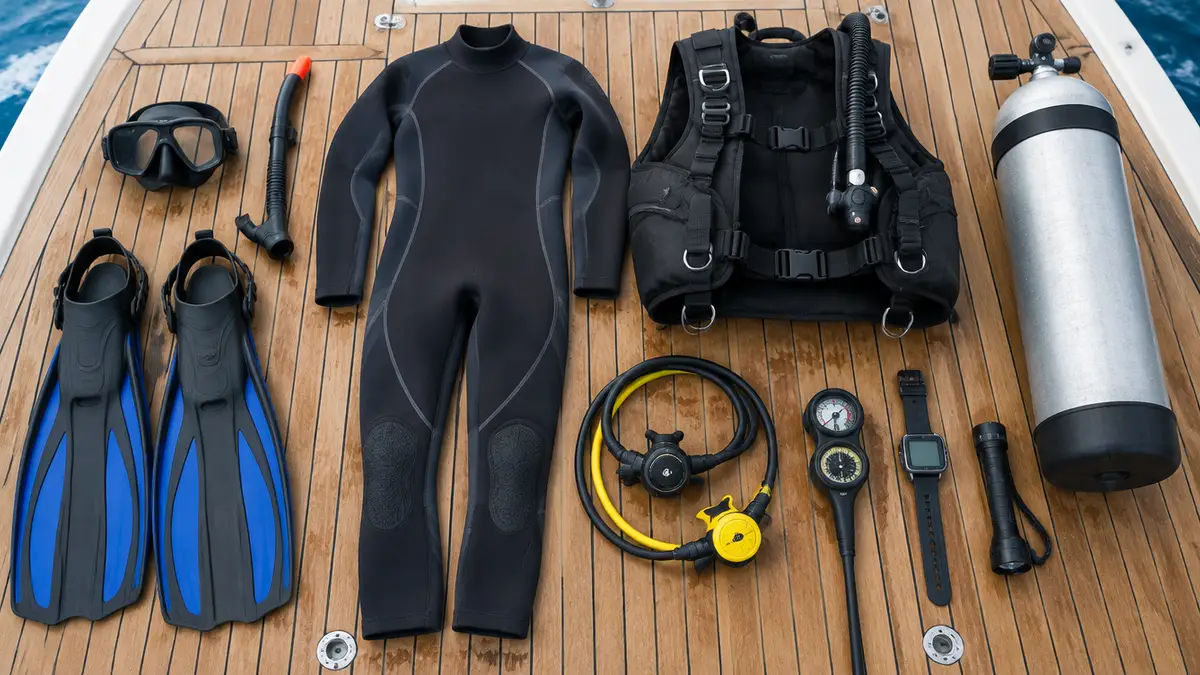
BCD, octopus, NDL, neutral buoyancy: the diving words you'll hear, in plain English.