Discover Scuba Diving: What to Expect on Your First Try-Dive
A try-dive is the easiest way to find out whether scuba is for you. You get a few hours with an instructor and no commitment to a full course.
On this page
A try-dive is a short, supervised introduction to scuba diving for people with no experience. PADI calls it Discover Scuba Diving (DSD), SSI calls it Try Scuba, and dive centres also use names like "intro dive" or "baptism dive". Whatever the name, the idea is the same: you learn a few essential skills in shallow water, then make a real dive with an instructor right next to you.
It is not a certification. You can't dive on your own afterwards. It is a taster, and a very good one.
Who can do a try-dive?
- Anyone aged 10 or older (8+ for pool-only programmes).
- You need to be medically fit. You will complete the same diver medical questionnaire as course students.
- You should be comfortable in water. There is usually no formal swim test, but you need to feel reasonably at ease.
How a try-dive works, step by step
1. Paperwork and briefing (30–45 min)
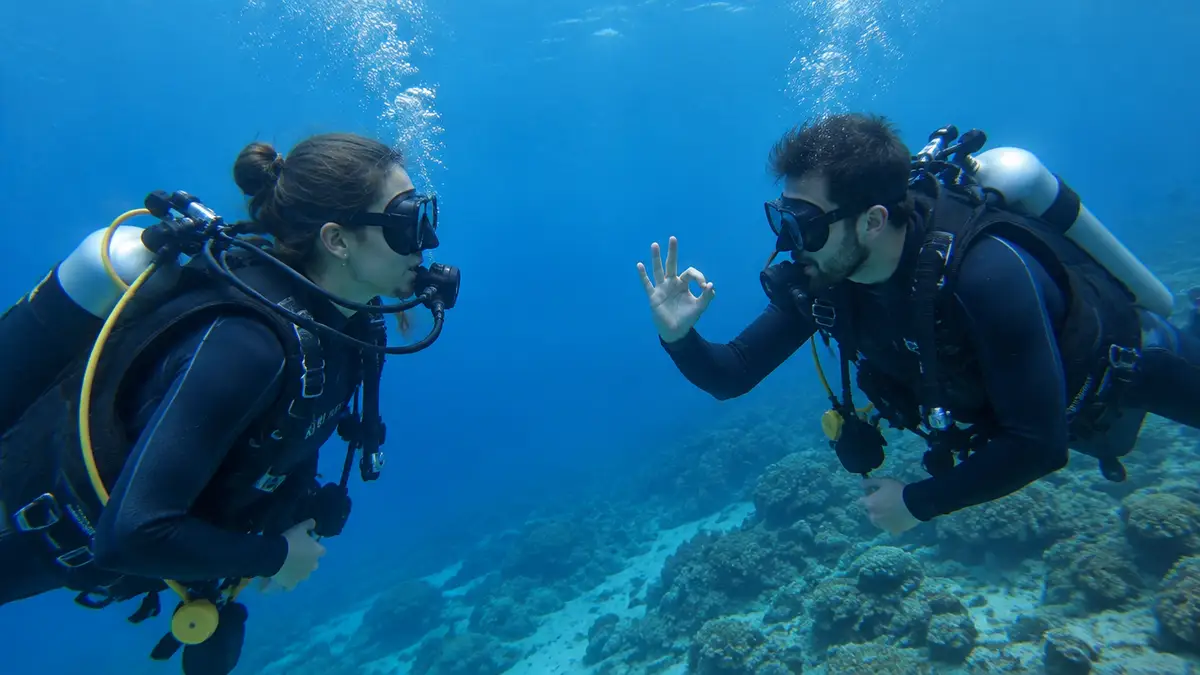
You'll fill in the medical questionnaire and a liability release. Then the instructor explains the basics: how the equipment works, why you must never hold your breath, how to equalize your ears, and the key hand signals ("OK", "problem", "up").
2. Getting kitted up
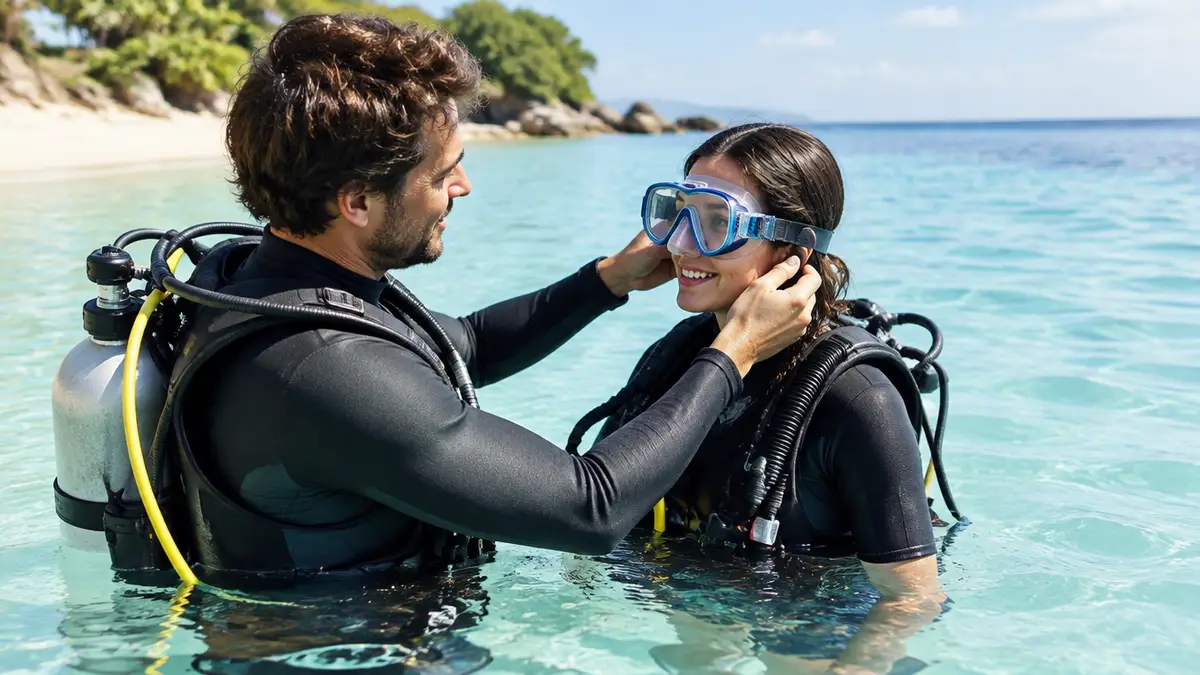
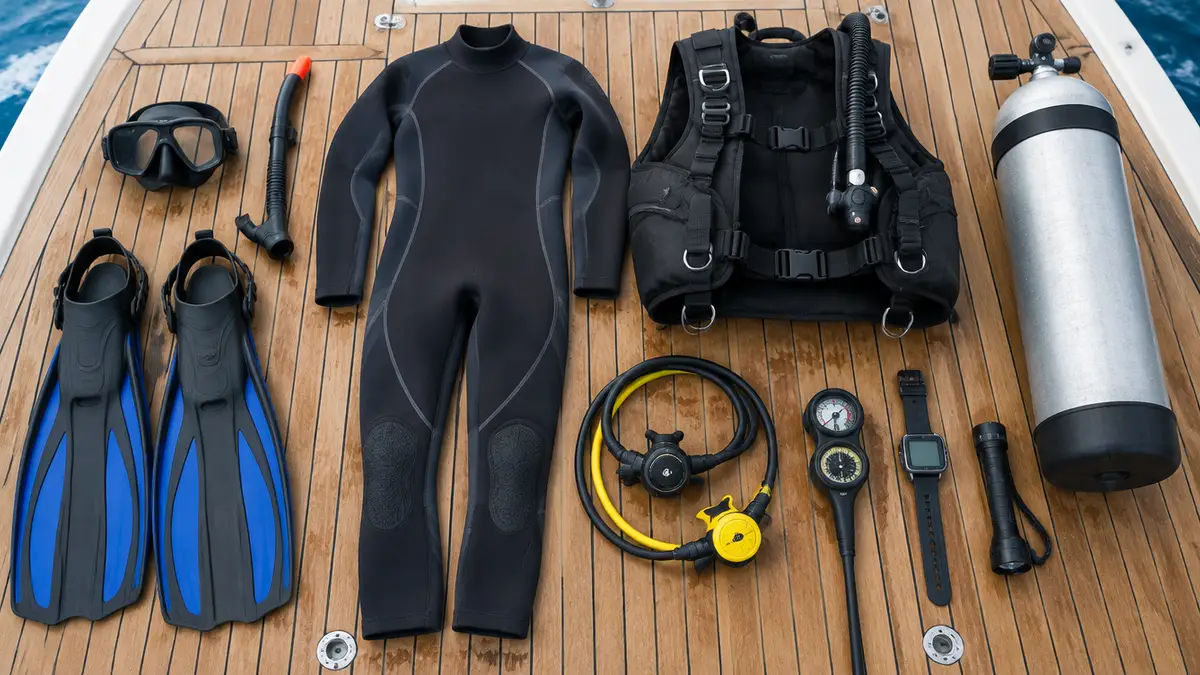
The dive centre provides everything: wetsuit, mask, fins, BCD, regulator, tank and weights. The instructor sets up your gear and checks the fit. Tell them if the mask leaks or the wetsuit feels too tight.
3. Skills in shallow water
In a pool or in water where you can stand, you'll put your face in and breathe from the regulator. Most people find this strange for a minute and then surprisingly easy. You'll typically practise:
- Breathing slowly and continuously from the regulator
- Recovering your regulator if it comes out of your mouth
- Clearing a little water from your mask
- Equalizing your ears as you go down
- Inflating and deflating the BCD at the surface
4. The open-water dive (30–45 min)
Then comes the real thing. The instructor stays within arm's reach and often holds your BCD strap at first. Maximum depth is usually 12 metres, and many try-dives stay at 5–8 m, where colours are brightest. You'll swim slowly over the reef, look at fish, maybe a turtle, and the instructor will manage your buoyancy for you.
5. Back on the surface
Most people surface grinning. Some centres offer a second dive the same day or the next. Many also let you credit the try-dive towards the Open Water course if you sign up within a set period.
Pool or open water?
Some programmes are pool-only; others move from confined water to the sea. If you're very nervous, a pool session first is a gentle start. If you're on holiday somewhere with a calm, shallow reef, like the Red Sea, Koh Tao or Bonaire, a beach-entry try-dive is magic. Our list of the best places for your first dive can help.
How much does a try-dive cost?
Prices vary a lot by country. As a rough 2026 guide:
| Region | Typical price (1 dive) |
|---|---|
| Egypt, Thailand, Philippines, Indonesia | US$60–120 |
| Mediterranean Europe | €70–130 |
| Caribbean, Mexico | US$100–180 |
| Australia, Maldives, USA | US$150–300 (often including boat trip) |
Check whether the price includes equipment, the boat, marine park fees and photos. See our full cost of scuba diving breakdown.
Tips for a great first dive
- Sleep well and skip alcohol the night before. See sleep, food and alcohol.
- Don't dive with a cold. Blocked sinuses make equalizing painful.
- Equalize early and often, before you feel any pressure, and every metre or so on the way down.
- Breathe slowly and deeply, like a calm yawn. It saves air and keeps you relaxed.
- Move slowly. Use your fins, not your arms. You'll see more fish.
- Signal if anything feels wrong. Instructors expect it, and stopping for a moment is always fine.
- Don't touch anything. Coral is alive and some creatures sting. See ocean etiquette.
The flying rules apply to try-dives too. Wait at least 12 hours after a single dive before flying, and longer after repeat dives. Details in flying after diving.
After the try-dive: what next?
If you loved it, the next step is the Open Water Diver course, which lets you dive independently with a buddy to 18 m. If you're not sure yet, try snorkeling more, or do a second try-dive somewhere else.
Frequently asked questions
Is a try-dive safe?
Yes, when run by a reputable dive centre. The instructor-to-student ratio is small (often 1:2 or 1:4 in open water), depths are shallow, and the instructor controls your buoyancy. Being honest on the medical form and following the briefing are the most important things you can do.
How deep is a Discover Scuba dive?
The maximum is 12 metres (40 feet), and many try-dives stay shallower.
Does a try-dive count towards certification?
Often yes. With PADI, the first confined-water session of Discover Scuba Diving can be credited towards the Open Water course if the same instructor or centre confirms it. Ask before booking.
Can I do a try-dive if I wear glasses?
Yes. Wear soft contact lenses, or ask whether the dive centre has a rental mask with corrective lenses.
Keep reading
Scared of Scuba Diving? How Beginners Overcome the 6 Most Common Fears
Panic, depth, sharks, claustrophobia in the mask: practical ways beginners get past them.
Scuba Diving Glossary: 60 Diving Terms Every Beginner Should Know
BCD, octopus, NDL, neutral buoyancy: the diving words you'll hear, in plain English.
What Do You Need to Start Scuba Diving? (Less Than You Think)
The honest minimum: desire, basic water comfort and a good instructor. Rent gear at first.