Diving in the Maldives: Atolls, Mantas, Whale Sharks and Liveaboards
Nearly 1,200 coral islands in 26 atolls, warm clear water and famous big-animal encounters. The Maldives is a dream destination, and many sites suit newer divers.
On this page
- Best season
- Dec–Apr (dry, NE monsoon)
- Water temp
- 27–30 °C
- Visibility
- 15–40 m
- Difficulty
- to (channels)
- Beginners
- Good; currents at some sites
- Fun dive
- ~US$70–120
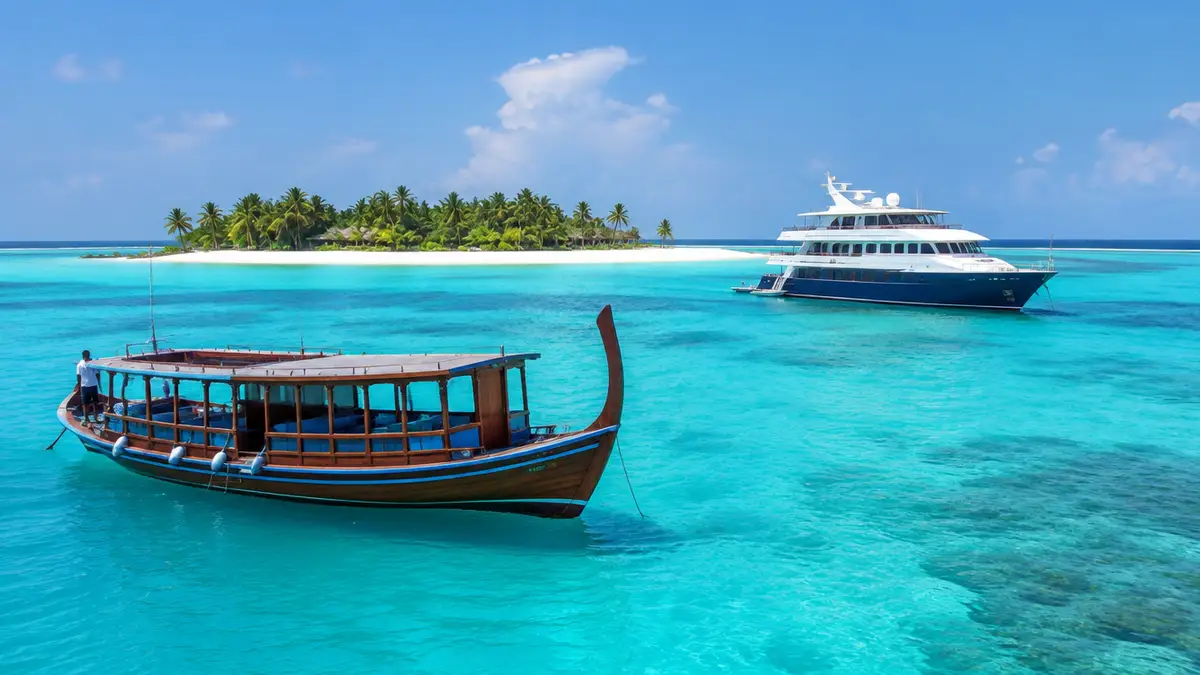
The Maldives is a chain of atolls in the Indian Ocean. Ocean water flows in and out of the atolls through channels (kandus), bringing nutrients that attract sharks, rays and big schools of fish. Inside the atolls, calm lagoons and reefs ("thilas" and "giris", underwater pinnacles) offer easier diving.
Resort diving or liveaboard?
| Resort-based | Liveaboard | |
|---|---|---|
| Best for | Beginners, non-diving partners, families, courses | Keen divers wanting the best sites |
| Dives per day | 1–3 | 3–4 |
| Site variety | Sites near your resort | Many atolls and famous sites |
| Cost | Resort prices vary hugely; local guesthouses are cheaper | About US$1,500–3,500/week |
Since the 2010s, local island guesthouses (for example on Maafushi, Dhigurah, Thoddoo and Fulidhoo) have made the Maldives much more affordable, with dive centres offering reasonably priced fun dives and courses.
Popular atolls and highlights
- South Ari Atoll: famous for whale sharks year-round along the outer reef (often seen snorkeling), plus mantas.
- North and South Malé Atolls: close to the airport, lots of resorts; famous sites like Manta Point (Lankan), Banana Reef and Kuda Haa.
- Baa Atoll (Hanifaru Bay): a UNESCO Biosphere Reserve with seasonal manta feeding aggregations (roughly June–November). Snorkeling only in the bay, with regulations.
- Fuvahmulah: in the far south, renowned for tiger sharks and other sharks; for experienced divers.
- Addu Atoll: the British Loyalty wreck and manta cleaning stations.
- Vaavu and Felidhoo: famous channel dives with grey reef sharks, and night dives with nurse sharks at Alimatha.
When to go
| Season | Conditions |
|---|---|
| Dec–Apr (northeast monsoon) | Dry, sunny, calm seas; best visibility on eastern sides of atolls; strong currents bring sharks to channels |
| May–Nov (southwest monsoon) | More rain and wind; plankton-rich water on western sides, which means more mantas and whale sharks; lower prices |
Water is warm year-round (27–30 °C). Coral bleaching events have affected Maldivian reefs in recent hot years; many reefs are recovering, and fish life remains excellent.
Is it good for beginners?
Yes, with the right sites. Lagoons, house reefs and inner-atoll thilas are calm and ideal for courses. Channel dives, where the ocean flows through gaps in the atoll rim, can have strong currents and are for experienced divers with drift and SMB skills. Tell your dive centre your experience, and consider the drift specialty.
What you'll see
- Manta rays at cleaning stations; whale sharks (South Ari)
- Grey reef, whitetip and blacktip sharks, nurse sharks; hammerheads at a few deeper sites (advanced)
- Eagle rays, turtles, Napoleon wrasse, huge schools of snapper, fusiliers and jacks
- Moray eels, octopus, and colourful reef fish
Typical prices (2026)
- Open Water course: about US$600–900 (local islands at the lower end)
- Fun dives: about US$70–120 per dive; resort prices higher
- Liveaboard: about US$1,500–3,500 per week, plus fees and tips
- A green tax and dive taxes may apply; check what's included
Practical tips
- Local islands follow Muslim customs: dress modestly outside designated "bikini beaches", and alcohol is only available at resorts and liveaboards
- Always carry an SMB and a whistle
- Book liveaboards for your level. Some routes are advanced only
- Keep a no-fly interval before your flight, including seaplane transfers
Sample 10-day trip for new divers
- Fly into Malé; speedboat to a local island guesthouse in South Malé or South Ari Atoll.
- Days 1–2: check-out dives on calm house reefs and lagoon sites.
- Days 3–6: two dives a day at thilas and manta cleaning stations with a guide.
- Day 7: whale shark snorkel along the South Ari outer reef.
- Day 8: optional gentle channel dive (only if you feel confident and conditions are mild).
- Day 9: no-dive day: sandbank trip or snorkeling.
- Day 10: fly home.
Understanding Maldivian dive sites
- Thila: an underwater pinnacle rising to within a few metres of the surface, often packed with fish.
- Giri: a pinnacle that reaches close to or breaks the surface.
- Kandu: a channel between the atoll rim and the ocean, with strong currents and big fish.
- Faru: a reef along the atoll rim or a ring-shaped reef.
Frequently asked questions
Is the Maldives good for beginner divers?
Yes. There are many calm lagoon and inner-atoll sites for courses and new divers. Channel dives with strong currents are for more experienced divers.
When can I see whale sharks in the Maldives?
South Ari Atoll has whale sharks year-round, and they're often spotted near the surface along the outer reef.
Do I need to fly by seaplane after diving?
Seaplanes fly low but still count as flying. Follow standard no-fly guidelines before any flight.
Keep reading
Diving in Malaysia: Sipadan and the Perhentian Islands
The Perhentians are perfect for learning; Sipadan is a bucket-list site for when you're ready.
Diving in Mexico: Cozumel, the Yucatán Cenotes and Baja California
Easy drift dives in Cozumel, magical cenotes (with a guide) and big-animal encounters in Baja.
Diving in the Caribbean: Bonaire, Belize's Great Blue Hole and the Bahamas
Bonaire is a shore-diving paradise for beginners; Belize and the Bahamas add legendary sites.