Liveaboard Dive Safaris: What They Are, Who They Suit and How to Choose
On a liveaboard, you sleep on the boat and wake up at remote dive sites. It's the most immersive way to dive, and a trip many divers dream about.
On this page
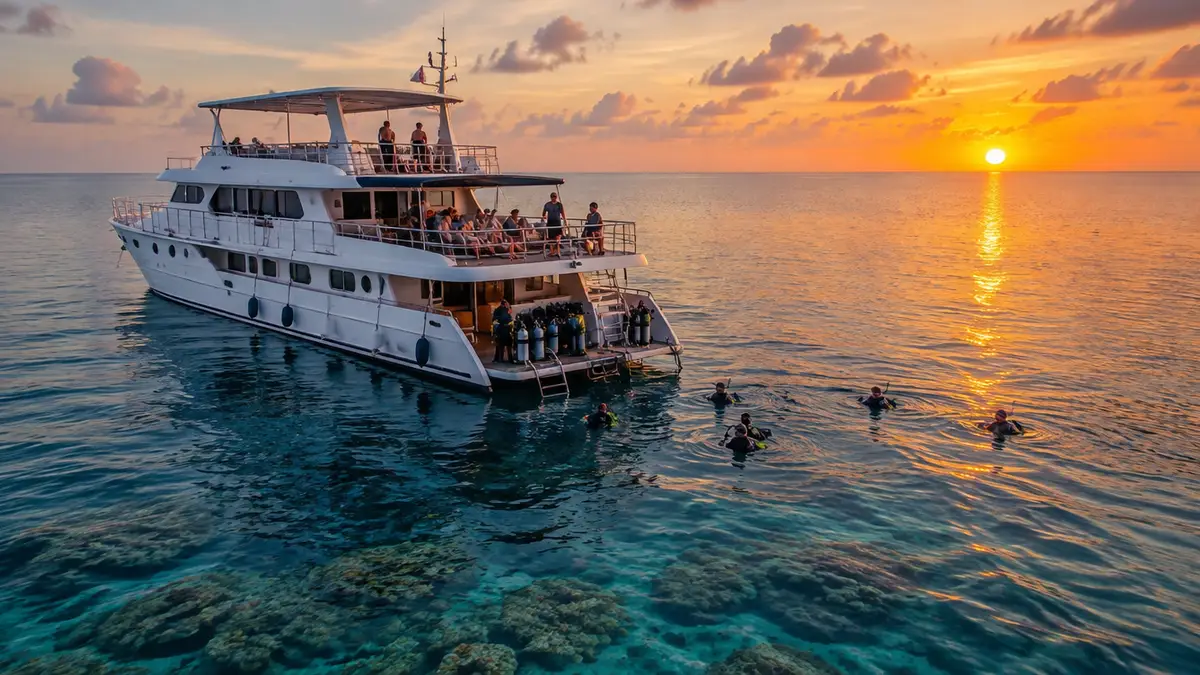
A liveaboard (also called a dive safari or dive cruise) is a boat designed for diving, where you live for several days, usually 3 to 10 nights. The boat moves between sites that day boats can't reach, so you can dive remote reefs, famous wrecks and offshore pinnacles with far fewer divers around.
A typical liveaboard day
| Time | Activity |
|---|---|
| 06:00 | Wake-up bell, coffee and a light snack; briefing |
| 06:30 | Dive 1 (early morning, often the best for big animals) |
| 08:00 | Full breakfast; boat moves to the next site |
| 10:00 | Dive 2 |
| 12:30 | Lunch, rest, sunbathing |
| 14:30 | Dive 3 |
| 17:30 | Dive 4: sunset or night dive |
| 19:30 | Dinner, logbooks, photos, early night |
You don't have to do every dive. Skipping one to rest is common and sensible.
Pros and cons
Pros
- Access to remote, pristine sites
- Lots of diving: 3–5 dives a day
- Fewer crowds at famous sites
- Everything taken care of: food, tanks, briefings
- Great social atmosphere with fellow divers
- Often good value per dive
Cons
- Seasickness risk
- Limited space and privacy
- Intense for new divers
- Little for non-divers to do
- Remote: far from medical help
- Fixed itinerary
Are liveaboards suitable for beginners?
It depends on the route. Some liveaboards welcome newly certified Open Water divers and even run courses on board (for example some Red Sea northern routes, Thailand's Similans, parts of the Maldives). Others, like the Red Sea's Brothers/Daedalus/Elphinstone routes, the Galápagos, Socorro or Komodo's current-swept sites, require Advanced certification and a minimum number of logged dives (often 30–50+).
Before booking, check:
- Required certification level and minimum logged dives
- Typical conditions: current, depth, and whether dives are drift or open-water
- Whether dives are guided
- Whether you need an SMB, dive computer and nitrox certification
Good preparation: do 20–30 dives first, take the Advanced and Nitrox courses, and get comfortable with drift diving and SMB deployment.
Popular liveaboard destinations
- Red Sea: wrecks (Thistlegorm) and offshore reefs; affordable
- Maldives: mantas, whale sharks and channel dives
- Thailand: Similan Islands and Richelieu Rock
- Indonesia: Komodo and Raja Ampat
- Philippines: Tubbataha (mid-March to mid-June)
- Australia: Ribbon Reefs, Cod Hole and Coral Sea
- Galápagos and Socorro (Mexico): advanced big-animal trips
Costs
Roughly, per person per week: €800–1,500 in the Red Sea, US$1,500–3,500 in the Maldives, US$2,000–5,000+ in Indonesia, and US$5,000–9,000+ in the Galápagos. Extras often include park fees, nitrox, gear rental, drinks, fuel surcharges and crew tips (commonly 10% or more). See cost of diving.
How to choose a liveaboard
- Route and season: check the best months. See our calendar.
- Safety: oxygen, first aid, emergency plan, satellite communication, life rafts, and an experienced crew. Read recent reviews carefully. Fires and sinkings, although rare, have happened.
- Group size and guide ratio: smaller groups mean better diving.
- Cabin type: lower-deck cabins are cheaper but can feel more motion and engine noise; upper-deck cabins are brighter and often more stable for seasickness.
- Diving style: are dives from the main boat or tenders (RIBs)? Are they guided? Is nitrox included?
- Food and dietary needs
Tips for your first liveaboard
- Bring seasickness medication (tested on land), and choose a mid-ship cabin if you're prone
- Pack light and soft: bags are stored in cabins with limited space
- Bring a thicker wetsuit than usual. Repeated dives cool you down
- Label your gear and keep it in your assigned space
- Stay hydrated, rest, and skip dives when tired
- Get dive insurance with evacuation cover
- Plan a 24-hour no-fly interval after the last dive. See flying after diving
Liveaboard etiquette
- Be on time for briefings; the whole schedule depends on it
- Keep your gear in your station, and don't use other divers' rinse tanks for cameras
- Respect quiet hours and shared spaces
- Follow the crew's safety instructions, including dive-deck rules and headcounts
- Tip the crew at the end if you received good service; it's often pooled and shared
Frequently asked questions
Can Open Water divers go on a liveaboard?
Yes, on many beginner-friendly routes. Others require Advanced certification and a minimum number of logged dives. Always check the route's requirements before booking.
How many dives do you do on a liveaboard?
Usually three to five dives per day, depending on the route and your energy levels.
Keep reading
Snorkeling for Beginners: How to Start, What Gear You Need and Safety Tips
Not ready for scuba? Snorkeling shows you the reef with minimal gear and no training.
Freediving for Beginners: What It Is, How to Start and How to Stay Safe
Diving on a single breath: what freediving involves, how to learn, and the one rule you must never break.
Scuba Diving with Kids: Minimum Ages, Programmes and Safety Tips
Minimum ages, kids' programmes and how to tell whether your child is ready.