What Does Your First Scuba Dive Feel Like? An Honest Description
It's hard to describe your first breath underwater until you've taken it. Here's an honest account of what most beginners feel, from nervous excitement to the moment it clicks.
On this page
Every diver remembers their first dive. For some it's instant magic; for others it's a mix of wonder and "wait, what am I doing?" Both are normal. Knowing what to expect takes a lot of the stress away.
Before you get in: nerves and gear
Putting on a wetsuit in the heat, lifting a tank, feeling the weight belt: the first surprise is that scuba gear feels heavy and awkward on land. Don't worry. Once you're in the water, the weight disappears. Most people feel their nerves peak at this point, just before entering the water. That's completely normal. See overcoming fears.
The first breath underwater
You'll put your face in the water with the regulator in your mouth and take a breath. Many people describe a moment where their brain says, "You can't breathe underwater!" Then the air comes, easily, and you breathe out and see the bubbles rise.
- The sound: a loud hiss as you inhale, then a rumble of bubbles as you exhale. It's surprisingly noisy at first.
- The air: tank air is very dry and slightly cool. Your mouth may feel dry after the dive.
- Mouth-only breathing: your nose is inside the mask, so you breathe only through your mouth. It feels odd for a few minutes, then you stop noticing.
Going down: pressure and ears
As you descend, you'll feel pressure in your ears within the first metre or two, like on a plane but faster. You equalize by gently pinching your nose and blowing, and feel a "pop". Do it often, before it hurts. Your mask presses against your face slightly; exhale a little through your nose to fix it. See equalizing.
Weightlessness: the "flying" feeling
Once your instructor helps you get neutrally buoyant, something wonderful happens: you float. Not sinking, not rising, just hovering. Take a deep breath and you rise a little; breathe out and you sink a little. Many divers say this is the moment they fell in love with diving. It's the closest most of us get to flying.
At first, you'll probably bob up and down a bit and wave your arms. Your instructor will manage your buoyancy on a try-dive. Real control comes with practice. See buoyancy.
The silence and the slowness
Apart from your breathing, the underwater world is quiet. You might hear crackling (that's parrotfish eating coral and snapping shrimp), distant boat engines, or your buddy's bubbles. Everything moves slowly, and you'll find yourself slowing down too. Many divers describe diving as a kind of moving meditation.
What you'll see
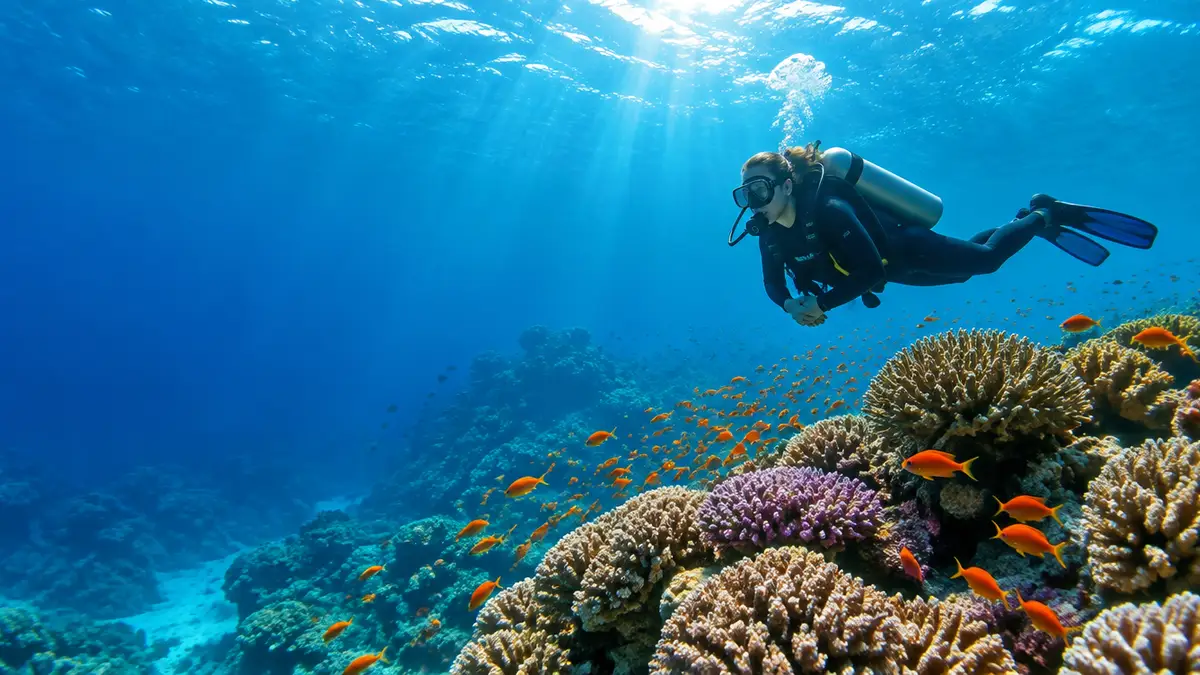
On a good reef, the first thing you notice is the sheer amount of life: clouds of small fish, corals in every shape, fish that come close to look at you. In shallow water (5–10 m), colours are vivid. Deeper down, reds fade and everything turns blue. That's why bringing a torch or diving shallow shows more colour.
Things look about 33% bigger and closer through a mask, because of how light bends between water and air.
How it feels physically
- Temperature: even in warm water, you may get cool after 30–40 minutes. That's why wetsuits matter. See wetsuits.
- Effort: diving should feel easy. If you're working hard, slow down.
- Time: 40 minutes can feel like 10. Your instructor or computer will keep track.
Common beginner feelings (all normal)
- "I'm using so much air!" Beginners always do. It improves quickly.
- "I can't control my depth." Buoyancy takes practice, sometimes many dives.
- "My mask keeps leaking." Adjust the fit, clear it, and consider buying your own.
- "I felt anxious for the first 5 minutes." Very common. Focus on breathing, and it passes.
- "I didn't want to come up!" The most common feeling of all.
After the dive
Most people surface smiling and talking non-stop. You may feel pleasantly tired, hungry and thirsty. Drink water, warm up, and write down what you saw in your logbook. Then start thinking about your next one. See the Open Water course.
Frequently asked questions
Is it hard to breathe underwater with scuba?
No. Modern regulators deliver air easily. It feels strange for the first minute because you only breathe through your mouth, but most people adapt quickly.
Does scuba diving hurt your ears?
You'll feel pressure as you descend, but equalizing early and often prevents pain. If it hurts, ascend a little and try again.
Will I feel claustrophobic?
Some people feel slightly enclosed in the mask at first, but the open underwater world usually feels spacious, not confining. Pool practice helps if you're worried.
Keep reading
Types of Scuba Dives: Reef, Wall, Wreck, Drift, Night, Cave and More
Reef, wall, wreck, drift, night or cave? What each dive involves and when you're ready.
How Much Does Scuba Diving Cost? Courses, Dives, Gear and Trips (2026)
Realistic 2026 prices for courses, fun dives, gear and trips by region, plus ways to save.
What a Dive Day Looks Like: Boat Diving, Shore Diving and Liveaboards
Boat trip, shore dive or liveaboard: an hour-by-hour look at a typical dive day.