Ocean Etiquette for Divers: Don't Touch, Don't Feed, Don't Take
Coral reefs are under pressure from warming seas, pollution and overuse. Divers can either add to the damage or be part of the solution. Here's how to be the good kind.
On this page
A healthy coral reef takes decades or centuries to grow, and a careless fin kick can break it in a second. Coral is a living animal colony, covered by a thin layer of tissue that is easily damaged by touch, sand and sunscreen chemicals. Millions of divers visit reefs every year, so small habits add up.
The golden rules
- Don't touch coral, sponges or animals. Not even "just once".
- Don't stand, kneel or lie on the reef.
- Don't feed fish or other marine life.
- Don't chase, ride, harass or corner animals.
- Don't take anything: shells, coral, starfish, sand dollars, or artefacts from wrecks.
- Don't leave anything behind: rubbish, fishing line, lost gear.
Why not touch?
- Coral: touching removes its protective mucus layer, making it vulnerable to disease. Coral also breaks easily.
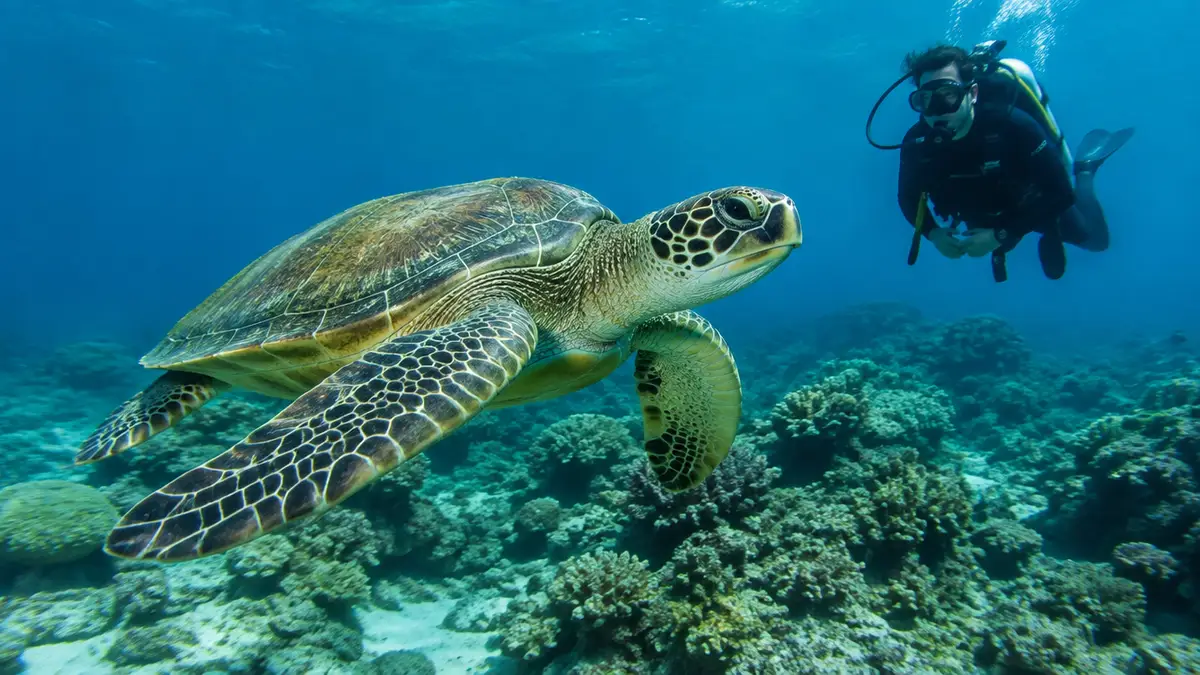
- Turtles and fish: their skin has a protective coating that hands can damage.
- Your safety: fire coral, hydroids, anemones, sea urchins, scorpionfish and stonefish can sting or injure you. See dangerous marine life.
- Stress: being touched or chased stresses animals and changes their behaviour.
If you must steady yourself, for example in a surge or when fixing gear, use one finger on bare rock or dead coral rubble, or a reef hook in strong current where permitted. But the real solution is good buoyancy control.
Why not feed fish?
Feeding changes natural behaviour, makes some fish aggressive, can make them sick (bread, for example, is not fish food), and upsets the balance of the reef ecosystem. Feeding can also attract predators and create dangerous situations for divers. Some regulated shark or ray feeding operations exist; they're controversial, and never something to do yourself.
Buoyancy is conservation
Most reef damage from divers is accidental: fins crashing into coral, gauges and octopus hoses dragging, divers kneeling to take a photo. To prevent this:
- Master neutral buoyancy and horizontal trim
- Streamline your equipment: clip your octopus and gauges; no dangling hoses
- Stay a comfortable distance above the reef, and further away when you're unsure
- Be aware of your fins. Use the frog kick near the bottom
- Don't carry a camera until your buoyancy is solid. See photography
Wildlife encounters
- Keep a respectful distance. Many marine parks set minimum distances for mantas, whale sharks, turtles and dolphins (often 2–4 m or more).
- Let animals approach you, not the other way round.
- Never block an animal's path, especially to the surface (turtles need to breathe).
- Limit flash photography on sensitive species, and follow local rules.
- Don't touch manta rays or whale sharks. Touching damages their protective coating.
Wrecks and cultural heritage
Many wrecks are war graves or protected sites. Taking souvenirs is often illegal and always disrespectful. Look, photograph and leave everything as you found it.
Reef-safe choices above water
- Sunscreen: choose mineral (zinc oxide/titanium dioxide, non-nano if possible) and avoid oxybenzone and octinoxate. Better still, wear a rash guard and hat. Some places, such as Hawaii, Palau and Bonaire, restrict harmful sunscreen ingredients.
- Plastics: bring a reusable water bottle to the dive boat.
- Souvenirs: never buy coral, turtle shell or shell jewellery.
- Seafood: avoid reef fish and endangered species on menus.
Choose responsible operators
Support dive centres that use mooring buoys instead of anchors, keep group sizes small, give environmental briefings, don't allow touching or feeding, and take part in conservation programmes such as Green Fins (UN Environment), reef clean-ups, or citizen science (fish counts, coral monitoring). See choosing a dive centre.
Be part of the solution
- Pick up rubbish when it's safe (not if it's become a habitat, or is sharp or entangled).
- Join a reef clean-up or citizen science dive.
- Report injured or entangled animals to local operators or authorities.
- Take an eco-focused specialty (such as coral reef conservation or fish identification).
- Share what you learn with other divers kindly, not by lecturing.
Frequently asked questions
Is it OK to touch coral if I'm careful?
No. Even gentle touching removes coral's protective layer and can cause disease or death of the polyps. Many corals are also sharp or can sting you.
Why can't I feed the fish?
Feeding changes natural behaviour, can make fish sick or aggressive, and disrupts the reef ecosystem.
What is reef-safe sunscreen?
Sunscreen without ingredients such as oxybenzone and octinoxate, usually mineral-based with zinc oxide or titanium dioxide. The most reef-safe option is covering up with a rash guard.
Keep reading
Dangerous Marine Life for Divers (and the Truth About Sharks)
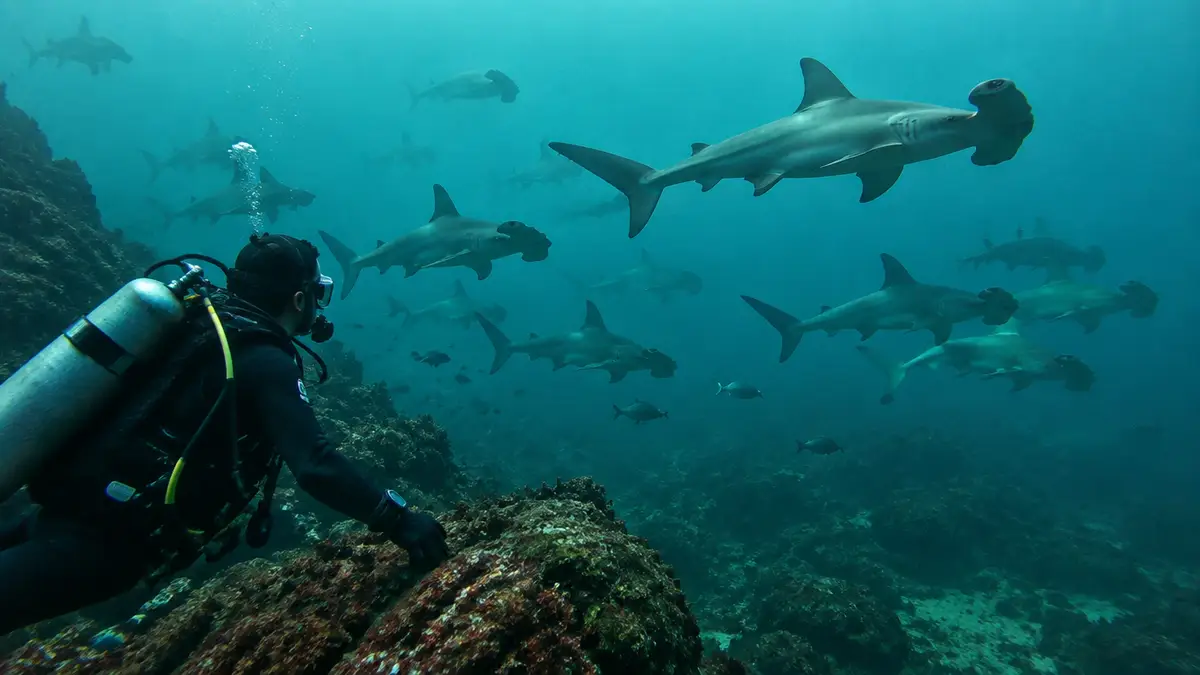
The creatures that actually injure divers are small and stationary. The truth about sharks.
The Buddy System: Why You Never Dive Alone and How to Be a Good Buddy
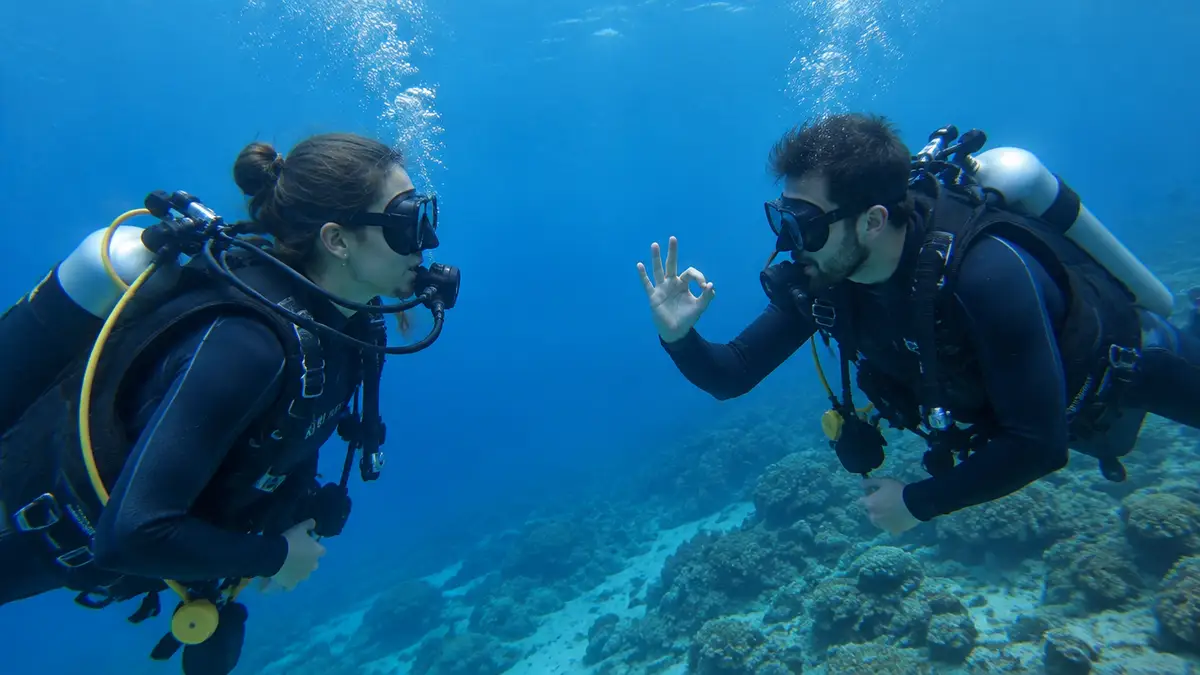
Why you never dive alone, how to stay together, and the lost-buddy procedure.
Scuba Diving Hand Signals: The Essential Signals Every Beginner Needs
OK, problem, low on air, up, down: the underwater signals you need, and how to use them.