Scuba Accessories: Weights, Dive Lights, Knives, SMBs, Gloves and Boots
Beyond the main kit, a handful of small accessories make diving safer and more comfortable. Some are essential; others can wait.
On this page
Walk into a dive shop and you'll see walls of gadgets. Most beginners need only a few of them. Here's what each accessory does, and how important it is when you're starting out.
Weights
Your body, wetsuit and BCD float. Lead weights counteract that so you can descend and stay neutral. Weight systems include:
- Weight belt: nylon belt with lead blocks and a quick-release buckle. Simple and universal.
- Soft-weight pouches / pocket belts: lead shot in pouches, gentler on hips.
- Integrated weights: quick-release pockets in the BCD.
- Trim weights: small non-releasable weights to fine-tune horizontal position.
How much weight? It depends on body composition, suit thickness, tank type and salt vs fresh water. A rough starting point in salt water: 2–4 kg with a 3 mm suit, 5–8 kg with a 7 mm suit. Do a proper buoyancy check. Most beginners carry too much. Weights are always provided by dive centres; don't travel with lead.
Surface marker buoy (SMB / DSMB)
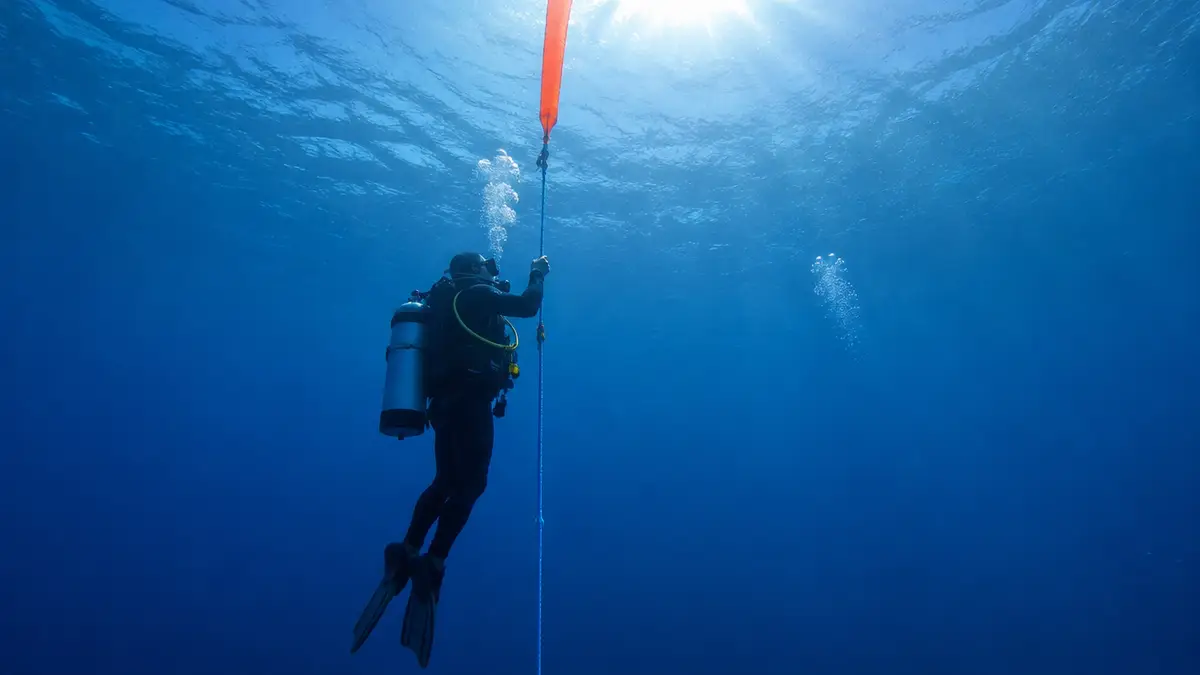
A long inflatable tube (usually orange or yellow, about 1–1.8 m) that you inflate at the surface, or from your safety stop if it's a "delayed" SMB, to show boats where you are. It's one of the most important safety items in open water, and in many places it's mandatory.
- Carry one on every ocean dive once you're certified
- Learn to deploy it from depth on a reel or spool in a course or with a guide before relying on it
- Pair it with a whistle (and ideally a signal mirror or a dive-alert horn) for the surface
Reels and spools
Used to deploy a DSMB from depth, or as a guideline on wrecks. A finger spool (20–30 m) is compact and tangles less than a ratchet reel, and is a good first choice.
Dive lights (torches)
- Primary torch: essential for night dives. Look for 800–1,500+ lumens, a comfortable handle or Goodman strap, and a rechargeable battery.
- Backup torch: a small light for night dives, in case the main one fails.
- Daytime use: a light brings back the reds and oranges that water filters out, and helps you look into crevices and wreck interiors.
- Marker light / strobe: a small blinking light on your tank for night dives, so your buddy can find you.
Never shine a torch directly into another diver's eyes, or keep it fixed on an animal. It stresses marine life.
Knives and line cutters
A dive knife is for cutting yourself free of fishing line, net or rope, not a weapon. Many divers now prefer a line cutter (a small hooked blade) or trauma shears, which cut monofilament better and are safer. Mount it where you can reach it with either hand, such as on the BCD shoulder or waist strap. Check local rules: knives are banned in some marine parks and some countries.
Gloves
Good for cold water, wrecks, quarries and holding descent lines. In warm water, gloves tempt people to touch the reef, and they're banned in several marine parks (including many Red Sea and Caribbean sites). If you don't need them for warmth, leave them out.
Boots
Neoprene boots (3–7 mm) with hard soles are needed for open-heel fins. They protect your feet on rocky entries, hot sand and boat decks, and add warmth.
Other useful extras
- Compass: for navigation; many computers include a digital one.
- Slate or wetnotes: write messages to your buddy or guide.
- Tank banger / shaker: gets attention underwater.
- Dry bag: keeps your phone and towel dry on the boat.
- Mesh gear bag: for carrying and rinsing gear.
- Save-a-dive kit: spare mask strap, fin strap, O-rings, zip ties, silicone grease.
- Defog, mask case, reef-safe sunscreen.
- Rash guard or dive skin: for warm water and sun protection.
Priorities for new divers
| Priority | Accessory |
|---|---|
| Essential early | SMB + whistle, boots (if using open-heel fins), save-a-dive kit |
| Soon | Line cutter, compact backup torch, finger spool |
| When needed | Primary torch (night diving), gloves (cold water), slate, compass |
| Don't buy | Weights (provided), tanks (provided) |
See our packing checklist so you don't forget anything.
Frequently asked questions
Do I need a dive knife?
You need a way to cut fishing line or rope if you get tangled. A small line cutter or shears is usually more practical and safer than a large knife.
Should I bring my own weights on holiday?
No. Lead is heavy and every dive centre provides weights. Bring a soft-weight pocket belt if you like, and fill it on site.
Keep reading
What Scuba Gear to Buy First (and What to Rent): A Beginner's Buying Order
Mask, snorkel, fins and a computer first; the rest can wait. A realistic buying order and budget.
Underwater Photography and Video for Beginners: Cameras, Light and Technique
Cameras, housings, why everything looks blue, and how to shoot without harming the reef.
How to Choose a Dive Mask: Fit Test, Types, Fogging and Prescription Lenses
Single or double lens, the 10-second fit test, stopping fog and prescription options.